
In many industrial environments, respiratory safety is a continuous challenge rather than a short-term requirement. Workers involved in welding, metal fabrication, painting, chemical processing, construction, and manufacturing may be exposed to fumes, dust, particles, and other airborne contaminants for several hours every day.
While traditional respirators remain widely used, long-term industrial operations require solutions that balance protection, comfort, and productivity. This is where powered air purifying respirator (PAPR) systems are gaining increasing attention. By combining filtration technology with powered airflow, PAPR systems provide a more comfortable and practical approach for workers who need reliable respiratory protection during extended shifts.
The Growing Need for Advanced Respiratory Protection
Industrial workplaces continue to become more demanding. Many production processes involve materials and operations that generate airborne hazards, including:
-
Welding fumes
-
Metal grinding particles
-
Chemical vapors
-
Industrial dust
-
Paint aerosols
-
Fine airborne contaminants
Exposure to these substances may affect worker health if proper protection measures are not implemented. For employers, respiratory protection is not only about meeting safety requirements but also about maintaining worker confidence, reducing interruptions, and improving overall workplace efficiency.
A suitable respiratory protection system must provide effective filtration while allowing workers to perform their tasks comfortably over long periods.
Challenges of Traditional Respirators During Extended Use
Traditional tight-fitting respirators can provide reliable protection when properly selected and maintained. However, they also have practical limitations in certain industrial applications.
Because these respirators depend on a facial seal, their performance can be affected by:
-
Facial movement
-
Improper fitting
-
Long working hours
-
Facial hair
-
Frequent adjustment during operation
In addition, workers may experience increased breathing resistance, especially during physically demanding tasks such as welding, grinding, and construction work.
For employees wearing respiratory protection for an entire shift, discomfort can become a significant factor. If protective equipment is difficult to wear for long periods, workers may be less likely to use it correctly throughout the working process.
This has encouraged many industries to consider powered respiratory solutions that provide greater wearing comfort.
How a PAPR Industrial Respiratory System Works
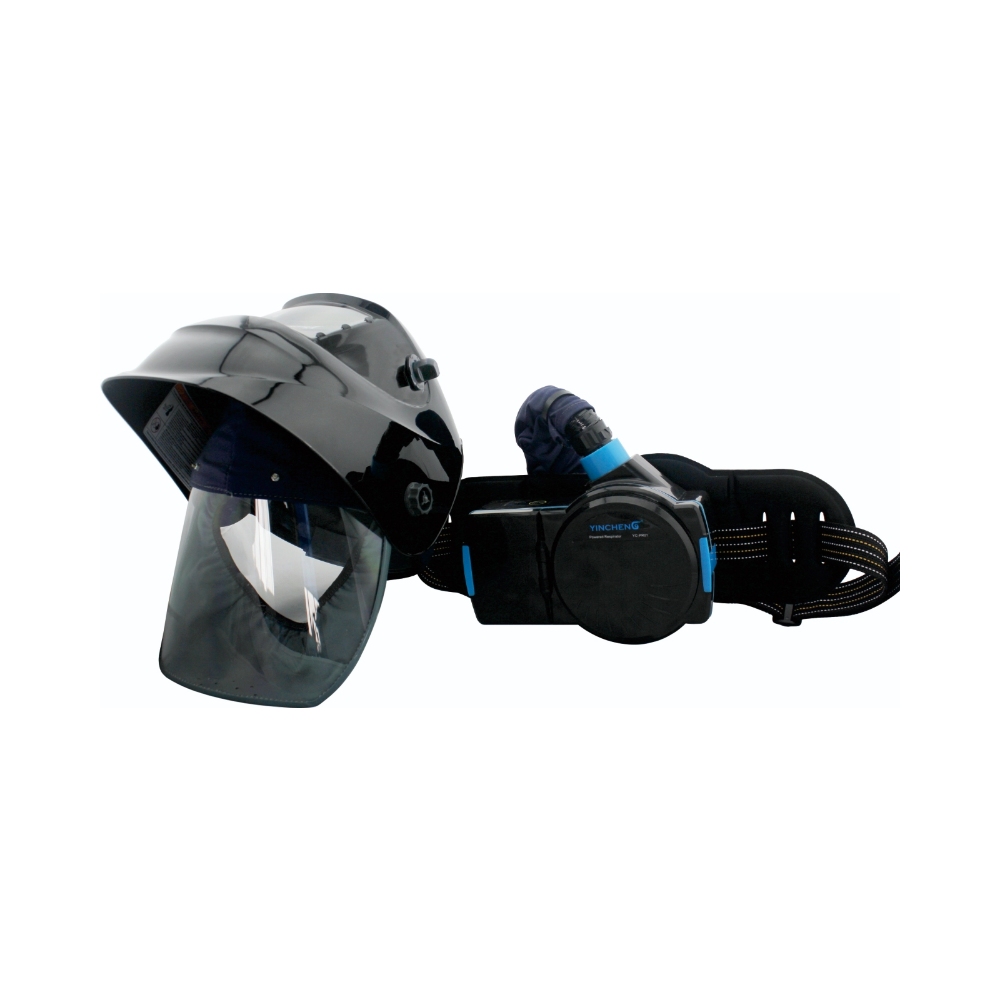
A PAPR industrial respiratory system uses a powered blower unit to draw contaminated air through filters and deliver purified air to a hood, helmet, or headpiece.
Unlike traditional negative-pressure respirators, the user does not need to create airflow only through inhalation. The powered system continuously supplies filtered air, helping reduce breathing effort and improving the overall user experience.
A typical PAPR system consists of:
-
Motorized blower unit
-
Replaceable filter system
-
Battery power supply
-
Air delivery hose
-
Hood or headpiece
This design allows workers to receive a continuous supply of filtered air while performing demanding industrial tasks.
Continuous Airflow Improves Long-Term Wearing Comfort
One of the biggest advantages of PAPR technology is continuous airflow.
In industrial applications, workers may spend several hours performing repetitive tasks under challenging conditions. Continuous airflow helps create a more comfortable breathing environment by reducing the resistance commonly associated with traditional respirators.
This is particularly beneficial in applications such as:
-
Welding
-
Metal fabrication
-
Grinding
-
Surface treatment
-
Industrial maintenance
For example, welders often work in environments where heat, fumes, and limited ventilation create additional challenges. A powered airflow system can help improve comfort while maintaining necessary respiratory protection.
The YC-PR01-FR HOOD Powered Air Purifying Respirator developed by Yingcheng is designed for professional industrial applications where protection, reliability, and user comfort are equally important.
Supporting Safer Welding Operations
Welding is one of the industries where respiratory protection is especially important. Welding processes can generate smoke, metal particles, and fumes that require effective filtration solutions.
However, welding environments also create unique challenges:
-
High temperatures
-
Sparks and splatter
-
Limited ventilation
-
Long operation periods
-
Compatibility requirements with welding helmets
A well-designed PAPR system can integrate with other personal protective equipment, helping workers maintain complete protection without significantly affecting mobility or productivity.
For professional welders, respiratory equipment should work together with helmets, face protection, and other safety gear rather than creating additional obstacles.
Comfort Plays an Important Role in Safety Compliance
The effectiveness of respiratory protection depends heavily on whether workers actually use the equipment correctly.
A technically advanced respirator cannot provide maximum protection if workers remove it frequently because of discomfort or difficulty breathing.
PAPR systems address this challenge by offering:
-
Lower breathing resistance
-
Continuous filtered airflow
-
Improved wearing comfort
-
Better suitability for extended shifts
For employers, comfortable respiratory equipment can improve worker acceptance and encourage more consistent use of safety equipment.
A practical protection system is one that workers can rely on throughout the entire working day.
Manufacturing Quality Determines Product Reliability
The performance of a PAPR system depends on more than the airflow design. Product quality, filter compatibility, battery performance, material durability, and manufacturing consistency all influence long-term reliability.
Professional manufacturers must maintain strict quality control throughout the production process, including:
-
Product design verification
-
Component testing
-
Airflow performance testing
-
Battery reliability checks
-
Final inspection procedures
Yingcheng has focused on welding protection equipment and powered air purifying respirators since 2003. The company specializes in developing welding helmets and respiratory protection products with continuous investment in technology and product improvement.
With an ISO9001-based quality management system, DINPLUS certification standards, an experienced R&D team, and multiple domestic and international patents, Yingcheng provides professional protective equipment solutions for industrial users worldwide.
Wide Applications of PAPR Systems
Powered air purifying respirators are suitable for many industries where airborne contaminants are present.
Common applications include:
Welding and Metal Fabrication
Provides respiratory protection for workers exposed to welding fumes and metal particles.
Painting and Surface Treatment
Supports cleaner working conditions during spraying and coating processes.
Construction and Renovation
Helps protect workers in environments with dust and airborne particles.
Chemical Processing
Provides additional protection when working with industrial chemicals and hazardous substances.
Manufacturing Facilities
Suitable for production environments where continuous air filtration is required.
The specific filter selection and protection level should always match the workplace hazards and applicable safety requirements.
Important Factors When Choosing a PAPR System
Selecting the right powered air purifying respirator requires careful consideration of actual workplace conditions.
Industrial buyers should evaluate:
Workplace Contaminants
Different environments require different filter solutions. Understanding the type of airborne hazards is the first step in choosing suitable equipment.
Working Duration
For long shifts, battery life, airflow stability, and wearing comfort become critical factors.
Equipment Compatibility
For welding and fabrication applications, the PAPR system should work effectively with helmets and other protective equipment.
Maintenance Requirements
Easy filter replacement, battery maintenance, and access to spare components help ensure long-term operation.
Manufacturer Experience
A supplier with strong engineering capabilities and quality management systems can provide more reliable products and technical support.
PAPR Systems Support the Future of Industrial Safety
As industries continue to focus on worker health, productivity, and operational efficiency, respiratory protection technology is also evolving.
Powered air purifying respirators provide a practical solution by combining effective filtration with continuous airflow and improved comfort. For workers who require respiratory protection during long and demanding operations, PAPR systems can help create a safer and more comfortable working environment.
With professional experience in welding protection equipment and respiratory safety solutions, Yingcheng continues to develop products designed for modern industrial needs. The YC-PR01-FR HOOD PAPR represents a practical approach to long-duration respiratory protection, helping workers perform their tasks with greater confidence and comfort.
For companies looking to improve workplace respiratory safety, choosing a reliable PAPR manufacturer with strong technical capabilities and quality assurance is an important step toward building a safer and more efficient industrial environment.
www.wxyingcheng.com
Wuxi Yingcheng