
As electronic equipment becomes more compact and power conversion systems operate at increasingly higher frequencies, magnetic components are facing new design challenges. Transformers and inductors must deliver reliable electrical performance while controlling energy losses, heat generation, and installation space.
One magnetic component that continues to play an important role in these applications is the ETD ferrite core.
ETD cores are commonly found in switching power supplies, industrial converters, battery charging equipment, and various high-frequency transformer assemblies. Their popularity comes from a practical combination of magnetic characteristics, winding space, and manufacturing flexibility.
However, selecting an ETD core is not simply a matter of matching its dimensions to a transformer design. Material properties, operating frequency, magnetic flux density, temperature, and winding configuration all influence the final performance.
Let's take a closer look at what makes ETD ferrite cores useful and what engineers should consider when choosing them.
1. Understanding the ETD Ferrite Core Structure
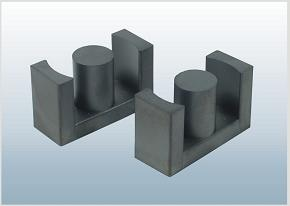
An ETD ferrite core is a magnetic component with an E-shaped core geometry. It is typically manufactured from soft ferrite materials and assembled with a matching core half to form a closed magnetic circuit.
The design is widely used in high-frequency transformers because it provides a practical balance between magnetic path characteristics and available winding space.
Unlike conventional laminated steel cores commonly used in low-frequency power equipment, ferrite cores have high electrical resistivity, making them suitable for applications involving rapidly changing magnetic fields.
Another important feature is the relatively generous winding window. It provides space for primary and secondary windings, insulation layers, and other necessary construction elements.
For transformer manufacturers, this structure offers several practical advantages:
-
Flexible winding arrangements for different transformer configurations.
-
Compatibility with commonly used bobbins.
-
A compact design for power electronic assemblies.
-
Convenient integration into automated winding and assembly processes.
-
Availability in different sizes and magnetic material grades.
These characteristics explain why ETD cores are frequently considered during the development of high-frequency power conversion equipment.
2. Why Ferrite Material Matters More Than Core Shape Alone
Two ETD cores may have identical external dimensions but deliver different magnetic performance because they use different ferrite materials.
Material selection is therefore one of the first decisions engineers need to make.
Manganese-zinc (MnZn) ferrite is widely used in power transformer applications. Depending on the specific material grade, it can provide suitable permeability, magnetic flux characteristics, and core loss performance across different operating frequencies.
When evaluating ferrite materials, engineers should pay particular attention to core loss.
During transformer operation, the magnetic field inside the core changes continuously. This produces energy losses that are eventually converted into heat.
Core losses are generally influenced by:
-
Operating frequency.
-
Magnetic flux density.
-
Operating temperature.
-
Ferrite material composition.
-
Magnetic waveform.
A material that performs well at one frequency may not provide the same results at another. Therefore, comparing core loss data under equivalent testing conditions is much more useful than relying on general descriptions such as low-loss ferrite.
For industrial applications, the selected material should match the actual operating conditions rather than simply the nominal power rating of the transformer.
3. Managing Heat in High-Frequency Transformer Applications
Heat management is a major consideration in modern power electronics.
A transformer that operates continuously under high electrical loads can generate heat through both magnetic core losses and winding losses. If the temperature rises beyond the acceptable operating range, component reliability may be affected.
ETD ferrite cores help engineers develop efficient magnetic assemblies when the appropriate material and operating parameters are selected.
However, using ferrite does not automatically guarantee low operating temperatures.
A practical transformer design needs to consider several factors together:
Core loss control: Select a ferrite grade with suitable loss characteristics at the intended frequency and flux density.
Magnetic flux density: Avoid operating too close to the material's saturation limit, particularly under maximum input voltage and temperature conditions.
Winding design: Conductor size, winding arrangement, and AC resistance influence copper losses.
Cooling conditions: Airflow, installation spacing, heat conduction, and enclosure design all affect the final temperature.
Operating temperature: Ferrite characteristics can change with temperature, so material performance should be evaluated across the expected operating range.
A balanced design helps prevent excessive temperature rise and supports stable transformer operation.
4. Winding Space: An Important Advantage of ETD Geometry
One practical reason transformer designers choose ETD cores is their winding window.
In high-frequency transformer development, available winding space affects the number of turns, conductor dimensions, insulation arrangement, and manufacturing process.
For example, an industrial switching power supply may require multiple secondary windings to provide different output voltages. Each winding needs sufficient space while maintaining appropriate insulation distances.
The ETD structure provides a useful arrangement for accommodating these windings.
Nevertheless, a larger winding window does not automatically mean a better transformer.
Engineers must also consider:
-
Copper fill factor.
-
Primary and secondary winding separation.
-
Leakage inductance.
-
Parasitic capacitance.
-
Creepage and clearance requirements.
-
Bobbin dimensions and winding equipment compatibility.
These details become particularly important in compact power supplies where available space is limited.
A well-designed magnetic assembly should balance winding efficiency, electrical insulation, and production convenience.
5. Where Are ETD Ferrite Cores Commonly Used?
ETD ferrite cores are used in a variety of applications involving high-frequency magnetic conversion.
Switching power supplies
They are commonly used in high-frequency transformer assemblies for industrial and electronic power supplies. Their magnetic properties and winding geometry support compact power conversion designs.
Industrial automation
Control cabinets, automation equipment, and industrial communication systems often require stable auxiliary power supplies. ETD-based transformers can be incorporated into these power modules.
Renewable energy systems
Selected solar inverter circuits, energy storage equipment, and auxiliary conversion systems use ferrite magnetic components for power conversion and isolation.
Battery charging equipment
High-frequency transformers are important components in many modern charging systems. ETD cores can support the magnetic requirements of these designs when the material and dimensions are properly selected.
Telecommunications equipment
Communication infrastructure requires reliable power conversion modules. Compact ferrite transformer designs help manufacturers manage installation space and electrical performance.
The exact suitability of an ETD core depends on the circuit topology, power rating, switching frequency, and thermal design.
6. ETD Core Selection: Five Technical Factors to Check
For transformer manufacturers and procurement teams, selecting the correct ETD ferrite core requires more than identifying a compatible size.
The following five factors provide a useful starting point.
1. Core dimensions
Check the external dimensions, center leg geometry, winding window, and matching bobbin specifications. Dimensional consistency is important for assembly compatibility.
2. Ferrite material grade
Request the material specifications, including permeability, core loss, saturation characteristics, and temperature-related properties.
3. Operating frequency
The selected material should provide suitable magnetic performance at the actual switching frequency. Core loss data should be reviewed under comparable flux density and temperature conditions.
4. Magnetic flux density
The transformer design should maintain sufficient margin against saturation under maximum operating conditions.
5. Air gap requirements
Some transformer designs use an ungapped core, while energy-storage inductors may require a controlled air gap. The required gap and tolerance should be clearly specified.
For customized applications, providing the manufacturer with technical drawings and operating parameters can help reduce unnecessary sampling and design adjustments.
7. Manufacturing Quality and Consistency Should Not Be Overlooked
Even when the material specification is correct, manufacturing quality remains essential.
Ferrite cores are produced through multiple stages, including powder preparation, forming, sintering, finishing, and inspection.
Variations during these processes can affect dimensional accuracy, surface quality, and magnetic characteristics.
For example, cracks or chipped edges may interfere with core assembly. Dimensional deviations can affect the fit between core halves, while inconsistent material properties may lead to variations in transformer performance.
For volume production, buyers should pay attention to:
-
Consistency of ferrite material batches.
-
Dimensional accuracy and manufacturing tolerances.
-
Surface condition and edge quality.
-
Magnetic performance inspection.
-
Production traceability and quality documentation.
A supplier's ability to maintain consistent manufacturing conditions is especially important for customers producing transformers and inductors in large quantities.
8. Working with an Experienced Ferrite Core Manufacturer
Choosing a magnetic core supplier is not just about finding a manufacturer that offers the required ETD dimensions. Technical support, material development, production capacity, and quality management also matter.
Zhejiang Chunhui Magnetoelectric Technology Co., Ltd. was founded in 2001 and is a subsidiary of Zhejiang Chunhui Corporation, an industrial group established in 1966.
The company specializes in the research, development, and production of soft ferrite magnetic materials. Its product portfolio covers more than ten categories of magnetic cores, with over 300 specifications.
With an annual production capacity of approximately 6,000 tons of magnetic cores and 8,000 tons of powder materials, Chunhui has established manufacturing capabilities to support different magnetic component applications.
The company has obtained ISO9001, ISO14001, ISO45001, and IATF16949 certifications, reflecting its focus on quality management, environmental management, and production control.
For industrial power electronics manufacturers, working with an experienced ferrite supplier can help simplify material selection and improve consistency during product development and mass production.
When discussing an ETD ferrite core project, buyers should provide the required dimensions, material grade, operating frequency, application type, and any specific magnetic performance requirements. This allows the supplier to evaluate the most appropriate product configuration.
Final Thoughts
ETD ferrite cores remain an important option for high-frequency transformers and inductors used in modern power electronics.
Their practical winding geometry, high electrical resistivity, and availability in different ferrite material grades make them suitable for a wide range of industrial and electronic applications.
However, reliable performance depends on more than core geometry. Material characteristics, operating frequency, flux density, thermal conditions, winding design, and manufacturing consistency must all be considered.
For engineers and procurement professionals, the best approach is to evaluate the complete application rather than select a core based on dimensions alone.
By working with an experienced soft ferrite manufacturer such as Chunhui Magnetoelectricity, transformer producers can identify suitable ETD core options and establish a more consistent foundation for their magnetic component designs.
www.ch-mag.com
Zhejiang Chunhui Magnetoelectricity Technology Co. Ltd.