
Outdoor events bring people together, but they also expose organizers to changing weather conditions. A clear morning can quickly develop into a rainy afternoon, while strong winds, damp ground, and direct sunlight can create additional challenges.
For festivals, camping activities, family gatherings, commercial promotions, exhibitions, and themed entertainment, an event tent needs to do more than provide a covered area. It should offer suitable weather protection, practical interior space, reliable structural support, convenient installation, and an appearance that complements the event.
A waterproof Outdoor Circus Tent combines the recognizable shape of a traditional circus tent with features designed for modern outdoor activities. For manufacturers and event planners, understanding the structure, materials, installation requirements, and intended application can help ensure the selected tent is suitable for the actual environment.
Why Waterproof Performance Matters for Outdoor Events
Weather is one of the biggest variables in outdoor event planning.
Rain can affect visitor comfort, temporary flooring, decorations, lighting equipment, seating, food service, and electronic equipment. In some situations, unexpected rainfall can even interrupt an event.
A waterproof outdoor tent provides a protected space where activities can continue under normal rainy conditions.
However, waterproof performance should not be evaluated based only on the fabric.
A complete tent system may involve:
-
Waterproof fabric
-
Reinforced seams
-
Roof construction
-
Connection points
-
Entrance design
-
Structural supports
-
Ground anchoring
-
Installation methods
If any of these elements are poorly matched, overall weather resistance can be affected.
For this reason, buyers should evaluate the entire tent structure rather than focusing on one material specification.
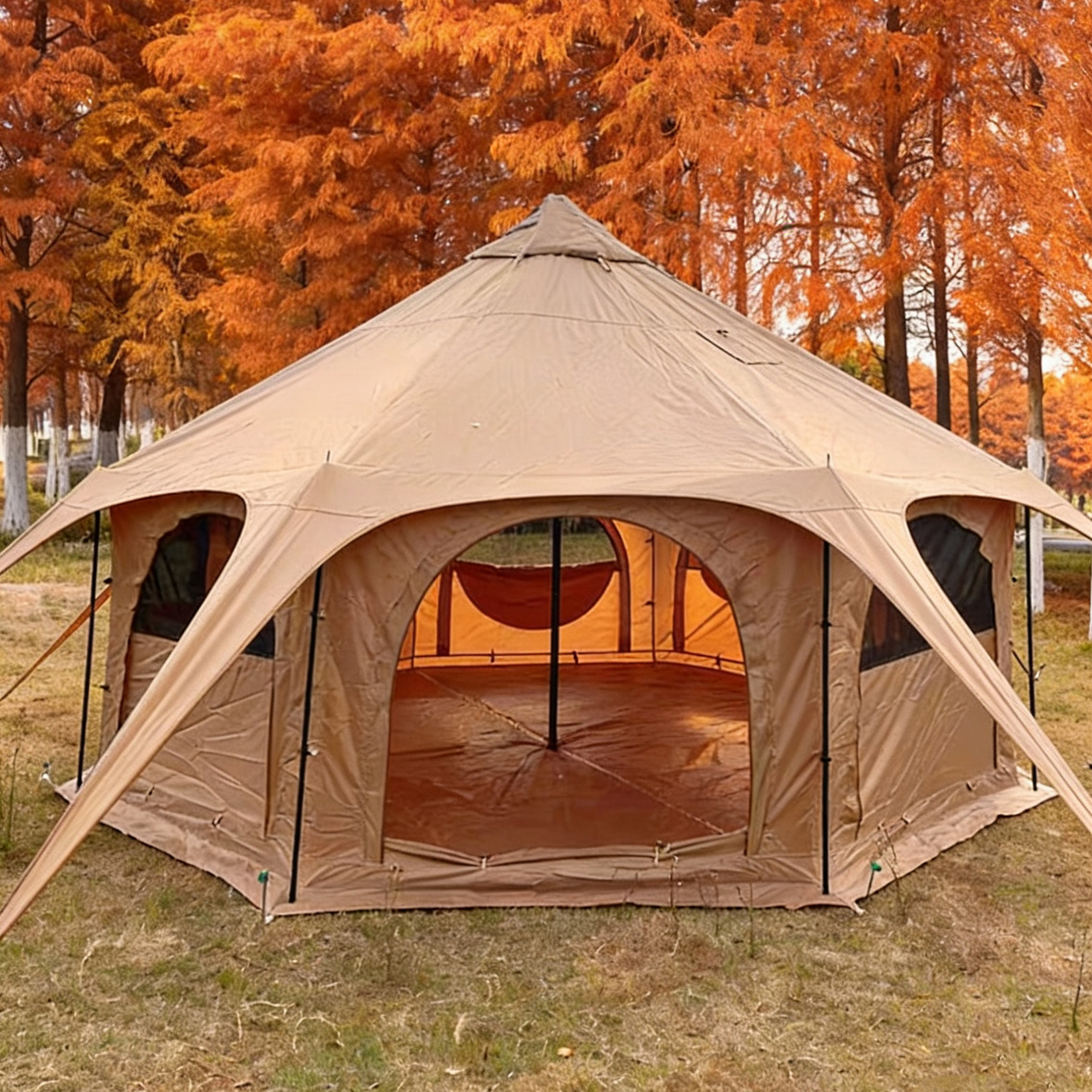
The Sloped Roof Helps Manage Rainwater
The distinctive roof profile is one of the defining characteristics of a circus tent.
Unlike a flat temporary shelter, the sloped roof allows rainwater to move away from the upper surface instead of remaining concentrated in one area.
This can help reduce water accumulation and unnecessary loading on the fabric.
The tall central structure also creates a spacious interior environment, which can be useful when the tent needs to accommodate groups of visitors rather than only a few people.
Nevertheless, roof geometry alone does not guarantee waterproof performance. Fabric quality, seam construction, tension, installation accuracy, and drainage conditions must also be considered.
Large Tents Require Proper Structural Planning
A large outdoor circus tent is significantly different from a small recreational shelter.
As the covered area increases, structural design becomes more important. Fabric tension, support components, anchoring, wind exposure, ground conditions, and installation procedures all need to be considered.
For a large configuration such as the 45-meter outdoor circus tent supplied by Yiju Outdoor, the installation environment should be evaluated before the product is deployed.
Important site factors may include:
-
Ground type
-
Wind exposure
-
Drainage
-
Available anchoring points
-
Surrounding structures
-
Installation access
-
Expected weather conditions
The tent should always be installed according to the manufacturer's technical instructions and the requirements of the actual site.
Waterproof fabric cannot compensate for inadequate anchoring or unsuitable installation conditions.
Circus-Style Design Creates a Strong Visual Identity
An event tent is often part of the event itself.
The classic circus silhouette can create a more recognizable visual environment than a standard rectangular canopy. Its tall profile and distinctive roof structure can immediately attract attention and establish a particular atmosphere.
This makes circus-style tents suitable for applications where visual presentation is important.
For example, they can be used as:
Festival Gathering Spaces
A large circus tent can serve as a central area for visitors to gather, rest, eat, or participate in activities.
Family and Parent-Child Events
The distinctive appearance can create an engaging environment for family-oriented outdoor activities.
Commercial Events
Businesses can use a large tent as a temporary promotional, exhibition, or customer interaction space.
Themed Events
The circus-inspired design can become part of the event's overall visual concept rather than simply functioning as a shelter.
Camping Activities
A large covered area can provide a common space for meals, social activities, and group gatherings.
Modern Materials Improve Outdoor Practicality
Traditional circus tents were developed using materials and construction techniques that differ considerably from modern outdoor products.
Today's tent manufacturing can combine durable fabrics, reinforced sewing structures, improved surface treatments, and optimized support components.
These improvements allow manufacturers to retain the visual character of a circus tent while adapting it to contemporary outdoor applications.
Material selection should always be based on the intended use.
A tent installed occasionally for a private family event may have different requirements from one repeatedly used for commercial events.
Buyers should therefore consider:
-
Frequency of installation
-
Storage conditions
-
UV exposure
-
Rain and humidity
-
Local wind conditions
-
Transportation requirements
-
Expected service life
A suitable material specification should be determined according to these practical conditions.
Ventilation Is Important for Interior Comfort
Waterproofing is only one part of outdoor tent performance.
A large enclosed space can become warm when exposed to direct sunlight, particularly during summer events. Without adequate airflow, the interior may become uncomfortable.
Ventilation should therefore be considered during tent selection and site planning.
Factors such as roof height, entrance configuration, ventilation openings, and interior volume can influence airflow and overall comfort.
The tall central structure of a circus-style tent can also create a greater feeling of openness, which can be beneficial when many people are using the same space.
For events involving long periods of occupancy, ventilation and shading should be evaluated alongside waterproof performance.
Different Events Require Different Tent Configurations
There is no universal tent configuration for every outdoor activity.
Before selecting a waterproof circus tent, organizers should identify the actual requirements of the event.
Number of Users
The expected number of visitors affects the required floor area and internal layout.
Event Duration
A tent used for a single-day event may have different requirements from one installed for several weeks or repeatedly transported between locations.
Local Weather
Rainfall, humidity, wind, temperature, and sunlight exposure can all influence the appropriate product configuration.
Internal Activities
Camping, dining, entertainment, exhibitions, and commercial promotions may require different layouts and access arrangements.
Transportation and Installation
Large tents require appropriate transportation, handling, installation equipment, storage, and trained personnel.
Considering these factors before purchasing can help prevent problems caused by selecting a tent based solely on appearance or nominal dimensions.
Installation and Anchoring Are Critical
Even a high-quality outdoor tent needs proper installation.
Anchoring is particularly important for large temporary structures because wind loads can place significant stress on the tent and support system.
Before installation, the site should be assessed for suitable ground conditions and anchoring methods.
Organizers should also consider local weather forecasts and avoid using temporary structures under conditions that exceed the product's specified operating limits.
Correct installation is therefore part of the product's overall performance.
Manufacturers should provide clear installation instructions, while users should ensure that installation is performed by personnel with appropriate experience for the size and type of structure.
Maintenance Helps Extend Tent Service Life
Regular maintenance is another important consideration for reusable outdoor tents.
After use, the tent should be properly cleaned, dried, folded, and stored according to the manufacturer's recommendations.
Particular attention should be given to:
-
Fabric cleanliness
-
Moisture removal
-
Seam condition
-
Structural components
-
Anchoring hardware
-
Connection points
-
Signs of wear or damage
Storing wet fabric for an extended period can contribute to unwanted deterioration and odor.
For commercial event operators, establishing a basic inspection and maintenance routine can help identify problems before the tent is used at the next event.
Why Manufacturing Quality Matters
Large outdoor tents contain many individual components, and the consistency of each production process can affect the finished product.
Fabric cutting needs to be accurate. Sewing needs to maintain consistent strength. Reinforced areas need to be properly constructed. Structural components must be compatible with the overall design.
Packaging is also important because large tent components may be exposed to handling and transportation during delivery.
For OEM buyers, wholesalers, event suppliers, and distributors, production consistency is particularly important because repeated orders should maintain comparable specifications and quality.
Yiju Outdoor's Manufacturing Approach
Yiju Outdoor focuses on the manufacturing and sales of outdoor products, including tents and other equipment designed for outdoor activities.
Its broader product portfolio includes tents, backpacks, sleeping bags, sleeping mats, mosquito nets, and related outdoor products.
This experience provides a practical manufacturing foundation for developing products for different outdoor applications.
For large outdoor tents, manufacturing involves more than fabric production. Cutting, sewing, reinforcement, component assembly, inspection, and packaging all need to be coordinated.
An organized production process can help improve consistency and support OEM or customized requirements where specific dimensions, materials, or configurations are needed.
What Buyers Should Check Before Ordering
Before purchasing a waterproof outdoor circus tent, buyers should confirm several key points.
1. Tent dimensions
Make sure the available floor area is sufficient for the expected number of users and activities.
2. Fabric performance
Confirm the waterproof and weather-resistance characteristics required for the intended environment.
3. Structural design
Review support components, roof structure, anchoring requirements, and installation methods.
4. Site conditions
Evaluate ground type, drainage, wind exposure, and available installation space.
5. Ventilation
Consider airflow and interior comfort, particularly for summer or long-duration events.
6. Transportation
Check how the tent will be transported, unloaded, assembled, and stored.
7. Maintenance
Understand cleaning, drying, inspection, and storage requirements.
8. Supplier capability
For commercial buyers, evaluate manufacturing capacity, quality control, customization capabilities, and after-sales support.
Conclusion
A waterproof outdoor circus tent can provide much more than temporary shelter. With its distinctive appearance, spacious interior, weather-resistant construction, and flexible applications, it can become an important part of modern outdoor event planning.
However, successful tent selection requires more than choosing an attractive design. Waterproof performance, structural stability, anchoring, ventilation, material durability, installation conditions, transportation, and maintenance should all be evaluated together.
For festivals, camping activities, commercial promotions, family events, exhibitions, and themed outdoor experiences, the right circus-style tent can provide a comfortable and visually distinctive environment while helping organizers prepare for changing weather conditions.
For manufacturers and buyers, the most effective approach is to match the tent configuration with the actual application. With appropriate material selection, manufacturing quality, installation planning, and routine maintenance, a well-designed outdoor circus tent can provide a practical and memorable space for a wide range of outdoor events.
www.yijuoutdoor.com
Jinhua Yiju