
As heat exchangers become more compact and efficient, manufacturers are under increasing pressure to deliver products that perform reliably under demanding operating conditions. While advanced designs and high-quality materials are important, they cannot compensate for one critical issue: leakage.
Even a tiny leak inside a heat exchanger core can reduce thermal efficiency, cause pressure loss, and shorten the service life of the entire system. That's why more manufacturers are investing in Core Leakage Test Machines as a key part of their quality control process.
Rather than viewing leakage testing as a final inspection, leading manufacturers now consider it an essential step in ensuring every heat exchanger meets performance expectations before leaving the factory.
Why Leakage Testing Matters
Heat exchangers are widely used in industries such as automotive manufacturing, engineering machinery, energy systems, medical equipment, and industrial cooling. During operation, they are exposed to continuous pressure changes, temperature fluctuations, and demanding working environments.
If the core contains even a minor leak, it may result in:
-
Reduced heat transfer efficiency
-
Pressure instability
-
Cross-contamination between fluid circuits
-
Increased energy consumption
-
Unexpected equipment downtime
-
Higher maintenance costs
Since many leaks are too small to detect visually, professional airtightness testing is the only reliable way to verify product quality before assembly.
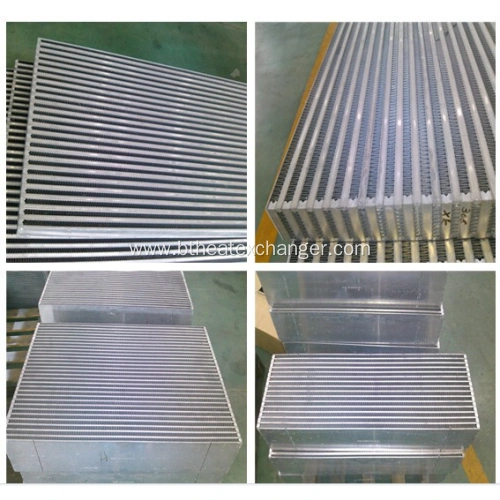
The Challenge of Testing Heat Exchanger Cores
Testing a heat exchanger core is more complicated than many people realize.
Aluminum plate-fin cores contain numerous narrow internal channels that are difficult to inspect. Without specialized equipment, achieving accurate and repeatable leakage detection can be challenging.
Common issues include:
-
Complex internal flow paths
-
Lightweight structures sensitive to pressure changes
-
Difficult sealing during testing
-
Inconsistent results from manual inspection methods
For manufacturers producing large volumes of heat exchangers, these challenges make automated leakage testing an increasingly valuable solution.
How a Core Leakage Test Machine Works
A Core Leakage Test Machine is specifically designed to verify the airtight integrity of heat exchanger cores before final assembly.
The testing process generally involves:
-
Securing the heat exchanger core with dedicated sealing fixtures.
-
Applying compressed air at a controlled pressure.
-
Monitoring pressure stability over a defined testing period.
-
Detecting any pressure loss that indicates internal leakage.
-
Providing a clear pass-or-fail result.
Because the entire process follows standardized parameters, every product is tested under the same conditions, improving consistency across production batches.
Benefits of Automated Leakage Testing
Compared with traditional manual inspection methods, automated leakage testing offers several important advantages.
Higher Detection Accuracy
Precise pressure control allows the system to identify very small leaks that could otherwise remain undetected.
Better Product Consistency
Automated testing eliminates many variables introduced by manual operation, helping manufacturers maintain stable product quality.
Reduced Rework Costs
Finding leakage problems before final assembly makes repairs much easier and less expensive.
Faster Production
Modern testing equipment can be integrated directly into production lines, allowing continuous inspection without slowing manufacturing.
Greater Customer Confidence
Products that undergo verified leakage testing are more likely to meet customer expectations and international quality standards.
Why Core-Level Testing Is Better Than Final Assembly Testing
Some manufacturers rely only on testing completed heat exchangers, but this approach has limitations.
When testing takes place after full assembly:
-
Internal defects may be harder to locate.
-
Repairs become more time-consuming.
-
Production costs increase.
-
Delivery schedules may be delayed.
Testing the core before assembly allows defects to be identified earlier, improving production efficiency and reducing unnecessary waste.
This proactive quality control approach has become standard practice for many advanced heat exchanger manufacturers.
Applications Across Multiple Industries
Reliable heat exchangers are essential in a wide variety of industries, including:
-
Automotive cooling systems
-
Construction and mining equipment
-
Air compressors
-
Power generation
-
Medical devices
-
CNC machinery
-
Renewable energy systems
-
Industrial refrigeration
In all of these applications, airtight performance directly affects system reliability and operating efficiency.
Leakage testing helps ensure that every heat exchanger performs as intended throughout its service life.
An Important Part of Modern Manufacturing
Today's heat exchanger production lines often include multiple automated processes such as:
-
Fin forming
-
Tube cutting
-
Core assembly
-
Welding
-
Vacuum brazing
-
Cleaning
-
Final inspection
Core leakage testing serves as one of the final quality checkpoints before products move to the next stage of manufacturing.
It confirms that all previous manufacturing processes have produced a sealed, reliable core ready for installation.
Supporting Higher Manufacturing Standards
As customer expectations continue to rise, manufacturers are placing greater emphasis on preventive quality control rather than corrective maintenance.
Companies like Better-Tech integrate advanced leakage testing equipment into their production systems to improve product consistency, reduce warranty risks, and support long-term equipment reliability.
This commitment to quality not only improves manufacturing efficiency but also helps build stronger customer trust in highly competitive global markets.
Final Thoughts
A heat exchanger is only as reliable as its sealing performance. No matter how advanced the design or how efficient the materials, leakage can quickly undermine the performance of an entire thermal system.
By incorporating a Core Leakage Test Machine into the manufacturing process, companies can detect defects early, improve production quality, and deliver more dependable products to customers.
As industrial cooling and heating systems continue to evolve, accurate core leakage testing will remain one of the most important steps in producing high-performance heat exchangers that meet the demands of modern engineering.
www.btheatexchanger.com
Wuxi Better