
The industrial IoT landscape presents a sobering reality: 68% of industrial IoT projects fail, primarily due to network instability, hardware failures in extreme environments, and escalating maintenance costs for distributed sites. For businesses operating critical infrastructure across remote locations, the choice of industrial router supplier isn’t merely a procurement decision—it’s a strategic imperative that directly impacts operational continuity and bottom-line performance.
Understanding the Hidden Costs of Supplier Inadequacy
Many organizations remain tethered to underperforming industrial router suppliers, unaware of the cumulative impact on their operations. The question isn’t whether your current supplier is “good enough”—it’s whether they’re costing you opportunities, revenue, and competitive advantage.
Temperature-Related Failures: Consumer-grade routers repurposed for industrial applications typically operate within narrow temperature ranges (0°C to +40°C), leading to frequent failures in extreme environments. Whether monitoring remote oil fields in scorching deserts or managing transportation systems in sub-zero Nordic winters, temperature resilience determines system uptime. Genuine industrial-grade equipment must withstand -35°C to +75°C without performance degradation—a specification that separates professional manufacturers from consumer electronics rebranders.
The Connectivity Reliability Gap: An equipment online rate below 99% translates directly into operational blind spots. Consider a water utility monitoring 500 remote pump stations: a 95% online rate means 25 stations are invisible at any given moment, creating potential failures that cascade into service disruptions and emergency response costs. Professional-grade solutions achieve ≥99.5% equipment online rates through architectural decisions, including hardware watchdog timers, dual SIM hot backup, and link self-healing mechanisms.
Software Vulnerabilities and Maintenance Overhead: Many industrial router suppliers utilize generic public Linux distributions, inheriting vulnerabilities and instability issues that create ongoing security exposure. 100% self-developed system firmware optimized specifically for industrial connectivity eliminates these inherited weaknesses while enabling lifetime free firmware upgrades without licensing constraints.
When Supplier Replacement Becomes a Strategic Necessity
Several critical indicators signal that your current supplier relationship has become a liability rather than an asset:
Excessive On-Site Maintenance Requirements: If your team spends significant resources traveling to remote sites for router resets, configuration adjustments, or hardware replacements, you’re experiencing a fundamental capability gap. Modern industrial networking solutions support TR-069, SNMP, SSH, and NMS cloud platforms for centralized management, enabling remote troubleshooting that resolves 90% of issues without site visits. Organizations switching to enterprise-grade suppliers report 40% reductions in on-site maintenance costs and 82% improvements in batch management efficiency.
Bandwidth Constraints Limiting Application Evolution: The migration from standard-definition to 4K/8K video surveillance, the adoption of real-time analytics, and the deployment of edge computing applications all demand Gigabit-class connectivity. If your current routers lack 5G SA/NSA dual-mode support or 2.5Gbps interfaces, you’re architecting tomorrow’s applications on yesterday’s infrastructure—a constraint that will force costly retrofits or compromise application performance.
Integration Complexity and Deployment Delays: Space-constrained applications, including kiosks, robots, and embedded systems, require ultra-compact form factors. Traditional industrial routers measuring 200×150×50mm create installation challenges that delay deployments and increase integration costs. Ultra-mini embedded routers measuring 100×60×21mm with integrated Ethernet, RS232/485 serial, and DI/DO interfaces improve integration efficiency by 50% while eliminating custom enclosure requirements.
Outdoor Deployment Dependencies: Applications including smart streetlights, traffic signaling, and environmental monitoring require outdoor-rated equipment. If your current supplier’s products demand protective enclosures, weatherproof cabinets, or shelter infrastructure, you’re incurring unnecessary capital and installation costs. IP68-rated routers with built-in 14dBi high-gain antennas enable direct pole mounting without additional protection, simplifying deployments while reducing total cost of ownership.
The Professional Manufacturer Difference
The industrial router market presents a stark divide between technology-driven manufacturers with independent R&D capabilities and commercial distributors rebranding consumer electronics. Professional manufacturers demonstrate several distinguishing characteristics:
Carrier-Grade Validation: Suppliers serving major telecom operators with annual volumes exceeding 100,000 units have proven their products under the most demanding reliability standards. These large-scale commercial deployments provide third-party validation that marketing claims cannot replicate.
Tiered Manufacturing Credentials: Long-term ODM/OEM partnerships with global brands, including Huawei, ZTE, Samsung, and LG, indicate manufacturing excellence and quality control systems that meet Fortune 500 standards. These relationships represent multi-year validations of technical capability, supply chain management, and quality consistency.
Comprehensive Certification Portfolios: Beyond basic CE and FCC certifications, professional manufacturers maintain ISO 9001 Quality Management System Certification, ISO 14001 Environmental Management System Certification, RoHS Compliance, and UKCA Certification—demonstrating systematic quality control rather than minimal regulatory compliance.
Real-World Performance Validation
Organizations that have transitioned to professional-grade industrial router suppliers report transformative results across diverse applications:
A leading Indian telecom operator managing infrastructure across extreme environments achieved a 99.4% equipment online rate while reducing per-site maintenance costs by 53% after switching to industrial-grade hardware capable of operating across 5V-55V power fluctuations and withstanding 48°C ambient temperatures.
A European aviation ground support equipment manufacturer serving airports in over 100 countries achieved ≥99.9% equipment online rates and reduced on-site maintenance costs by 68%, with 85% of faults now handled remotely through robust 4G/VPN solutions with 15KV ESD protection and 1.5KV electromagnetic isolation.
A Nordic intelligent transportation provider eliminated network interruptions in sub-zero environments, reducing the interruption rate to 0.3% and decreasing information screen blackout duration by 96%, while cutting annual maintenance costs by 62% through remote fault management capabilities.
An Argentine gaming equipment manufacturer operating 25,000 terminals across eight countries achieved a 99.9% data transmission success rate with zero accounting disputes, while streamlining maintenance personnel from 25 to 7, generating approximately $1.18 million in annual savings.
Making the Supplier Transition Decision
Replacing an industrial router supplier involves more than product specifications—it requires evaluating the total cost of ownership, implementation efficiency, and long-term partnership value.
Cost-Performance Analysis: Professional manufacturers achieve superior quality at mid-range pricing through focused product lines and scaled supply chain management, typically offering 20%–40% cost advantages compared to other professional suppliers while maintaining industrial-grade specifications. This cost efficiency stems from manufacturing scale rather than component compromise.
Implementation Efficiency: Modular interfaces, comprehensive configuration documentation, video tutorials, and 7×24-hour remote technical support with 10-minute average response times during business hours accelerate deployments while reducing integration risk. Organizations report 50% improvements in integration efficiency when working with suppliers that provide systematic implementation support.
After-Sales Commitment: Lifetime free firmware upgrades, remote packet capture analysis, and one-on-one technical guidance represent ongoing partnership value that extends far beyond initial hardware purchase. These capabilities become increasingly valuable as networks scale and application requirements evolve.
Strategic Supplier Selection
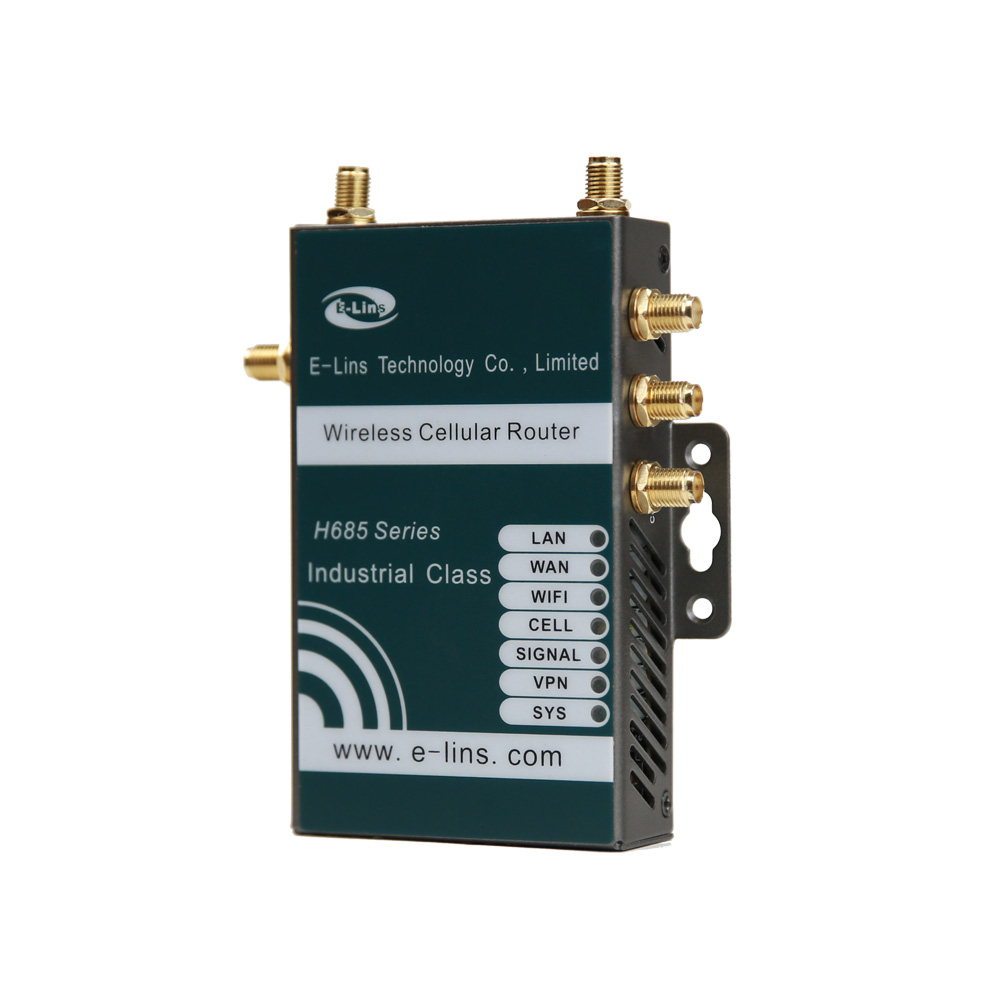
For organizations managing distributed industrial IoT infrastructure across challenging environments, the industrial router supplier relationship fundamentally determines operational reliability, maintenance costs, and application capabilities. Shenzhen E-Lins Technology Co., Ltd. exemplifies the professional manufacturer model, combining 20 years of wireless data communication expertise with comprehensive global service across 150+ countries and regions.
With genuine industrial-grade hardware employing industrial-grade chips and components, 100% self-developed system firmware, and proven delivery across carrier-grade projects, E-Lins Technology demonstrates the technical depth and manufacturing credibility that separates professional suppliers from commercial distributors. Their positioning as a preferred partner for major global telecom carriers and successful deployments across intelligent self-service terminals, power and energy infrastructure, water conservancy systems, intelligent transportation, and industrial automation validates their capability to support mission-critical connectivity requirements.
When evaluating whether to replace your current industrial router supplier, assess not just product specifications, but the total partnership value, including manufacturing credibility, global service infrastructure, technical support responsiveness, and proven performance across demanding real-world deployments. The right supplier transition can transform industrial IoT connectivity from an operational constraint into a competitive advantage.
https://e-lins.com/
Shenzhen E-Lins Technology Co., Ltd.