
Combining multiple materials allows textile manufacturers to create products with improved softness, durability, appearance, and functionality. Applications range from multilayer clothing and decorative wall coverings to floor mats and microfiber leather. However, achieving a reliable composite requires more than simply attaching one layer to another.
Adhesive-related problems can affect both production efficiency and finished-product quality. Delamination, uneven bonding, excessive stiffness, and poor resistance to repeated use may result in material waste and customer complaints. Selecting the right textile fabric composite adhesive is therefore an important step in developing stable and durable laminated products.
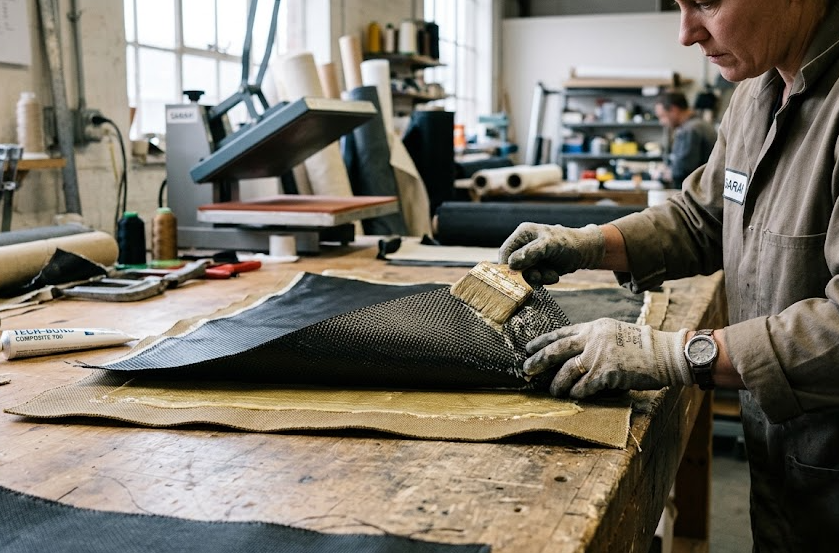
1. Maintaining Reliable Bonding Between Different Materials
Textile lamination often involves combining fabrics with foam, films, synthetic leather, or other textile layers. Since these materials have different surface characteristics, one adhesive formulation may not perform equally well across every combination.
Insufficient compatibility can cause layers to separate during cutting, sewing, transportation, or everyday use. Products exposed to repeated bending, friction, or washing may be particularly vulnerable to bonding failure.
To reduce this risk, manufacturers should evaluate adhesive compatibility using their actual production materials. Peel strength, curing behavior, and resistance to relevant environmental conditions should be checked before large-scale manufacturing.
For applications requiring reliable adhesion and a suitable production cycle, PUR hot melt adhesive for textiles may be considered. The final choice should depend on substrate characteristics, processing conditions, and the required performance of the finished composite.
2. Balancing Adhesion Strength with Fabric Softness
A strong bond does not always produce a better textile product. If the adhesive layer is too rigid or applied excessively, it may affect fabric flexibility, drape, and surface feel.
This is a significant concern in apparel lamination, soft furnishings, and flexible textile composites, where comfort and appearance are essential product characteristics.
When selecting a fabric bonding adhesive, manufacturers should consider coating weight, bonding temperature, material thickness, and the flexibility required after lamination. Too little adhesive may create weak or inconsistent bonding, while excessive application can increase costs and change the texture of the finished material.
The objective is to achieve sufficient adhesion without compromising the original properties of the textile layers. Small-scale production trials can help manufacturers evaluate both bonding strength and finished-product feel before confirming the process.
3. Improving Efficiency in Continuous Lamination Production
Adhesive performance has a direct influence on production stability. Slow curing, inconsistent viscosity, uneven coating, and unsuitable open time can interrupt continuous lamination operations and increase defective output.
For manufacturers using automated or continuous coating equipment, adhesive specifications must match the production line. Key considerations include:
-
Viscosity: Must be suitable for the selected coating equipment.
-
Application temperature: Should remain within the supplier's recommended range.
-
Open time: Must allow sufficient time for material positioning and bonding.
-
Curing behavior: Should be compatible with the production schedule.
-
Coating consistency: Helps maintain uniform adhesion across the material surface.
PUR hot melt adhesives are used in textile lamination because suitable formulations provide hot-melt processing and moisture-triggered curing. However, different formulations have different processing requirements. Manufacturers should confirm operating parameters with their adhesive supplier rather than applying identical settings to every product.
4. Testing Performance Before Full-Scale Production
Initial adhesion results alone cannot guarantee long-term composite performance. Depending on the application, textile products may experience moisture, temperature changes, repeated mechanical stress, and regular cleaning.
Manufacturers should establish appropriate testing criteria before approving an adhesive. These may include peel strength, flexibility, washing resistance, heat resistance, and appearance after aging.
Testing should use the actual substrate combination and, where possible, reproduce the intended production conditions. An adhesive that performs well in fabric-to-foam lamination may not deliver the same results in fabric-to-film applications.
Early-stage testing helps identify compatibility issues before they affect large production batches, reducing the risk of rework and unnecessary material consumption.
5. Working with a Supplier That Understands Textile Applications
Choosing a suitable textile fabric composite adhesive supplier involves more than comparing prices and basic specifications. Manufacturers also need technical information, application guidance, and samples for production trials.
Wuxi Laien Technology provides adhesive solutions for textile applications, including multilayer apparel fabric lamination, wall-covering composites, floor mat bonding, and other fabric-related processes. Its PUR hot melt adhesive range supports different bonding requirements depending on the materials and manufacturing conditions.
When discussing a project with a supplier, buyers should provide details about substrate combinations, coating equipment, production speed, and finished-product requirements. This information makes it easier to evaluate suitable formulations and establish appropriate processing conditions.
Conclusion
Successful textile lamination depends on balancing adhesion strength, fabric flexibility, production efficiency, and long-term performance. Manufacturers can reduce delamination, improve finished-product quality, and control production costs by selecting adhesives according to actual material combinations and validating the process before mass production.
For manufacturers developing multilayer textiles or optimizing existing lamination lines, working with an experienced supplier such as Wuxi Laien Technology can help identify suitable adhesive options and support more consistent manufacturing.
www.laienadhesive.com
Wuxi Laien Technology Co., Ltd.