
Modern power distribution projects need to balance electrical performance, installation efficiency, space utilization, environmental conditions, and long-term maintenance. For industrial facilities, commercial buildings, infrastructure projects, and other power users, installing a conventional transformer room is not always the most practical solution.
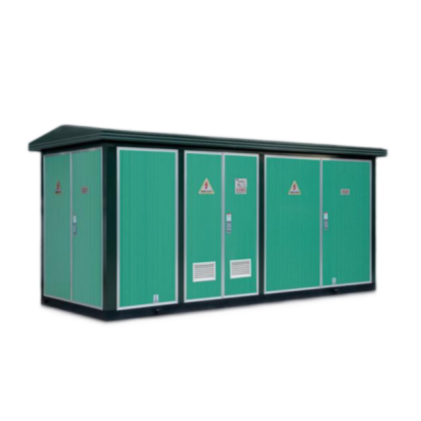
An outdoor prefabricated substation provides an alternative by integrating the transformer, switchgear, and related electrical equipment into a compact outdoor structure. The YBW-12 Outdoor Prefabricated Substation (European Style) is designed around this concept, offering a coordinated approach to outdoor power transformation and distribution.
Rather than treating the transformer and distribution equipment as separate installations, a prefabricated substation brings the major components together into a factory-integrated unit. This can simplify project planning while making better use of available installation space.
What Is an Outdoor Prefabricated Substation?
An outdoor prefabricated substation is an integrated electrical distribution unit designed to transform and distribute electrical power in outdoor environments.
The main equipment is installed inside a dedicated enclosure, creating a compact system that can be positioned on a prepared foundation at the project site.
Compared with a conventional indoor transformer room, this approach can reduce the amount of building space required for electrical equipment. It can also simplify equipment transportation, positioning, electrical connection, and commissioning.
The final configuration depends on the project's electrical requirements. Transformer capacity, transformer type, high-voltage equipment, low-voltage equipment, cable connections, and other components should be selected according to the actual application.
1. Integrated Design Simplifies Project Installation
One of the main advantages of a prefabricated substation is that equipment integration can be completed before the unit reaches the installation site.
In a conventional project, transformers, switchgear, cable systems, and other electrical equipment may need to be installed separately. This requires coordination between civil construction, electrical installation, equipment suppliers, and commissioning teams.
A prefabricated solution takes a more integrated approach.
The enclosure and internal equipment arrangement can be designed as one system. Once the foundation and required site conditions are prepared, the substation can be transported to the site for positioning and connection.
Depending on the project, this can help simplify:
-
Foundation planning
-
Equipment positioning
-
Cable connection
-
Transportation
-
Electrical installation
-
Commissioning
-
Maintenance planning
The exact installation process still depends on local regulations and project requirements, but factory integration can reduce unnecessary on-site assembly.
2. Outdoor Installation Provides Greater Flexibility
Not every industrial or commercial facility has enough indoor space for a dedicated transformer room.
In some projects, constructing a new electrical building may increase both construction complexity and land requirements.
An outdoor prefabricated substation can be installed in a designated outdoor area, making it suitable for projects where indoor electrical space is limited.
Potential applications include:
-
Manufacturing plants
-
Industrial parks
-
Commercial developments
-
Residential communities
-
Infrastructure projects
-
Agricultural facilities
-
Utility distribution systems
The outdoor installation concept provides greater flexibility, but site conditions must still be carefully evaluated before selecting the equipment.
3. Environmental Conditions Must Be Considered
Outdoor electrical equipment is directly exposed to its surrounding environment, so environmental conditions are an important part of substation selection.
According to the supplied YBW-12 specifications, the standard configuration is suitable for installation at an altitude of up to 1,000 meters.
The specified ambient temperature range is approximately -25°C to +40°C. Relative humidity also needs to remain within the specified operating conditions, with the daily average not exceeding 95% and the monthly average not exceeding 90%.
For projects located at higher elevations or in more demanding environments, an appropriately customized configuration may be required.
This is why buyers should provide accurate site information during the equipment selection stage rather than attempting to adapt a standard product after installation.
4. Site Conditions Can Affect Electrical Equipment Reliability
A suitable outdoor location should not only have sufficient physical space. The surrounding environment must also be appropriate for electrical equipment.
The supplied specifications indicate that the installation environment should be free from conditions such as:
-
Fire hazards
-
Explosion hazards
-
Conductive dust
-
Chemically corrosive gases
-
Severe mechanical vibration
These factors can affect insulation, electrical connections, mechanical components, and long-term equipment performance.
For example, conductive dust may create unintended electrical paths, while corrosive gases can gradually damage metal components and electrical connections.
A proper site assessment should therefore be completed before the substation is ordered.
5. Transformer Selection Is Central to Substation Performance
The transformer is the core component responsible for voltage transformation.
The YBW-12 configuration can accommodate several transformer options, including low-loss S9, S10, and S11 oil-immersed transformers.
For projects where dry-type technology is preferred, resin-insulated or NOMEX paper-insulated dry-type transformers can also be considered.
This provides flexibility for different distribution requirements.
However, transformer selection should not be based solely on nominal capacity. Engineers should also consider:
-
Actual and expected load
-
Load fluctuations
-
Installation environment
-
Cooling conditions
-
Insulation requirements
-
Maintenance requirements
-
Long-term operating conditions
A properly matched transformer can help avoid unnecessary equipment stress while supporting stable power distribution.
6. Low-Loss Transformer Options Can Support Efficient Operation
Distribution transformers often operate for many years, making energy losses an important consideration in long-term operation.
The YBW-12 supports low-loss transformer options such as S9, S10, and S11 series oil-immersed transformers.
However, the most suitable transformer should be selected according to the actual load profile.
A transformer that is significantly oversized may not always operate at its most efficient point, while an undersized transformer may experience excessive loading.
Therefore, expected operating load, peak demand, load growth, and operating schedule should all be considered during the design stage.
7. Transformer Accessibility Makes Maintenance More Practical
Maintenance requirements should be considered before a prefabricated substation is installed.
The supplied YBW-12 product information indicates that the transformer can be conveniently moved into and out of the integrated substation.
This can be useful when major inspections, maintenance work, or equipment replacement is required.
However, equipment accessibility also depends on the surrounding site layout.
Project designers should reserve adequate space for:
-
Maintenance personnel
-
Inspection
-
Equipment handling
-
Cable access
-
Transportation
-
Future transformer replacement
Good planning can reduce difficulties during the service life of the substation.
8. Compact Construction Helps Save Valuable Space
Land and building space can be expensive, particularly in industrial parks, urban developments, and commercial projects.
A traditional transformer installation may require a dedicated electrical room with additional space for equipment arrangement, cable routing, ventilation, and maintenance.
An outdoor prefabricated substation combines major electrical functions into a dedicated enclosure.
This can help reduce the footprint required for power distribution equipment.
The compact design is especially useful where the available installation area is limited.
However, compactness should never compromise safety or maintenance access. The final layout must comply with applicable electrical standards, clearances, and manufacturer requirements.
9. Oil-Immersed or Dry-Type Transformer?
Different projects may require different transformer technologies.
Oil-Immersed Transformers
S9, S10, and S11 oil-immersed transformers are suitable for many conventional distribution applications. They should be selected according to the required capacity, operating conditions, installation environment, and maintenance strategy.
Dry-Type Transformers
Resin-insulated and NOMEX paper-insulated dry-type transformers provide an alternative for projects where dry-type technology is preferred.
There is no universal choice that is suitable for every project.
The appropriate transformer type should be determined according to the complete electrical system, site environment, safety requirements, maintenance conditions, and project specifications.
10. Prefabrication Can Improve Project Coordination
A major benefit of prefabricated equipment is better coordination between manufacturing and site installation.
With a factory-integrated unit, many aspects of equipment arrangement can be completed before transportation.
This allows the project team to focus on preparing the foundation, cable routes, grounding system, access paths, and other site requirements.
For projects with strict construction schedules, reducing unnecessary on-site electrical assembly can be particularly valuable.
The actual time savings depend on project complexity, equipment configuration, transportation conditions, and local installation requirements.
What Should Buyers Check Before Ordering a YBW-12 Substation?
Selecting an outdoor prefabricated substation should begin with the actual project requirements.
Electrical Requirements
Confirm the system voltage, transformer capacity, expected load, high-voltage requirements, low-voltage requirements, and cable configuration.
Environmental Conditions
Provide information about ambient temperature, altitude, humidity, dust, corrosive gases, vibration, and other site conditions.
Transformer Configuration
Determine whether an oil-immersed or dry-type transformer is more appropriate.
Installation Conditions
Check foundation dimensions, transportation access, cable entry, grounding, maintenance space, and equipment positioning.
Future Expansion
Consider whether electrical demand is expected to increase in the future. Planning for future capacity at the design stage can reduce the need for major modifications later.
Why Work With an Experienced Substation Manufacturer?
A prefabricated substation is more than a box containing a transformer.
The enclosure, transformer, high-voltage equipment, low-voltage equipment, insulation system, cable arrangement, environmental protection, and maintenance access must function together as one coordinated system.
Kerei focuses on the research and development, production, sales, and service of power products. The company has established technical cooperation with research institutes and universities and maintains an engineering team focused on power equipment development.
For customers with customized distribution requirements, this engineering capability can be valuable because the final substation configuration needs to reflect the actual application rather than simply follow a fixed standard arrangement.
Final Considerations
The YBW-12 Outdoor Prefabricated Substation (European Style) offers a practical approach to outdoor power transformation and distribution by combining major electrical equipment within a compact integrated structure.
Its support for S9, S10, and S11 low-loss oil-immersed transformers, along with resin-insulated and NOMEX-insulated dry-type transformer options, provides flexibility for different project requirements.
The specified operating conditions, including an altitude of up to 1,000 meters and an ambient temperature range of -25°C to +40°C, also provide useful reference points when evaluating site suitability.
For industrial facilities, commercial projects, infrastructure developments, and other power distribution applications, the best substation is not necessarily the largest or most complex one. It is the configuration that matches the project's electrical load, environmental conditions, installation space, maintenance requirements, and future development plans.
With proper engineering and site preparation, an outdoor prefabricated substation can provide a compact, organized, and practical solution for modern power distribution while reducing unnecessary installation complexity.
www.kerui-power.com
Jiangxi Kerei