
As manufacturing facilities become more automated and production equipment becomes increasingly sophisticated, the demand for stable and efficient electrical power distribution continues to grow. From heavy-duty machinery and automated production lines to lighting, ventilation, and control systems, every part of a factory depends on a reliable electrical infrastructure.
Traditional cable distribution is widely used in industrial projects. However, when a facility has a large number of electrical loads or frequently adjusts its production layout, managing individual cables can become complicated. Installation space, cable routing, maintenance access, and future expansion all need to be considered.
This is where an industrial busway system offers a practical alternative. By using enclosed conductive busbars to transmit and distribute electricity, it provides a structured approach to power distribution in factories and other large facilities.
For electrical engineers, contractors, and industrial project managers, understanding the actual advantages and limitations of busway systems is essential before making an investment decision.
What Makes an Industrial Busway System Different?
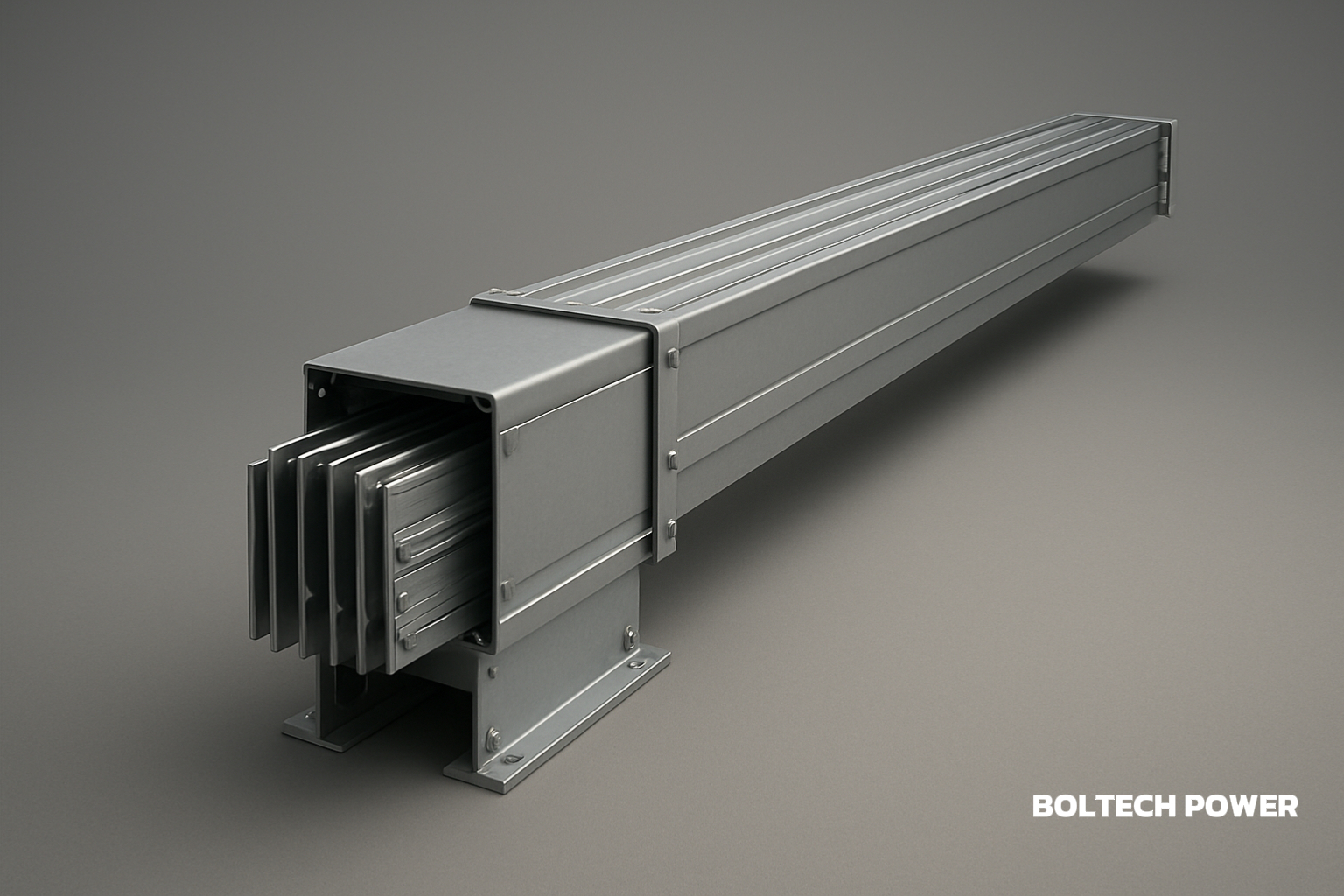
An industrial busway system, also called a busbar trunking system, consists of conductive metal bars installed inside a protective enclosure. It is designed to carry electrical power from a main distribution source to different areas or equipment within a facility.
Unlike conventional cable installations that rely on multiple individual conductors, busway systems use standardized sections connected through dedicated joint assemblies.
A typical system includes several key components:
-
Conductive busbars: Usually made from copper or aluminum, depending on the application and design requirements.
-
Insulation system: Separates the conductors and provides the required electrical insulation.
-
Protective enclosure: Protects internal components against mechanical damage and environmental exposure.
-
Joint assemblies: Connect individual sections and maintain electrical continuity.
-
Plug-in units: Provide designated connection points for compatible electrical equipment.
-
Feeder sections: Transfer power between the main distribution equipment and downstream circuits.
In a factory environment, busway routes can be installed along production corridors, equipment areas, or overhead service routes. This allows power to be distributed through a planned electrical network rather than relying entirely on separate cable runs.
The result is a more structured distribution arrangement that can be particularly useful in facilities with concentrated electrical loads.
1. Make Large-Scale Factory Power Distribution More Organized
One of the main challenges in industrial electrical design is managing a large number of power connections.
A manufacturing facility may have motors, compressors, conveyors, processing equipment, packaging machines, and automated control systems operating in different areas. If every load requires a separate cable route, the electrical installation can become difficult to organize.
A properly designed busway system provides a centralized distribution route with designated connection points.
For example, in an assembly workshop, a main busway can run above the production area, with compatible plug-in units supplying power to different workstations. This arrangement helps organize electrical connections and makes the overall distribution layout easier to understand.
It is important to note that busway systems do not eliminate the need for branch circuits or protective devices. Each connected load still requires appropriate circuit protection and electrical coordination.
2. Consider Electrical Efficiency When Selecting Busway Products
Energy efficiency is an important consideration for factories operating continuously or under heavy electrical loads.
Whenever current flows through a conductor, electrical resistance produces heat and energy losses. These losses are influenced by conductor material, cross-sectional area, current loading, conductor length, operating temperature, and connection resistance.
A well-engineered busway system uses suitable conductor dimensions and connection structures to meet the required electrical performance.
When comparing different busway products, engineers should pay attention to:
-
Rated current and operating voltage
-
Copper or aluminum conductor specifications
-
Electrical resistance
-
Temperature-rise performance
-
Joint contact resistance
-
Short-circuit withstand capacity
A busway system should not automatically be considered more energy-efficient than every cable-based solution. The actual result depends on the selected specifications and installation conditions.
For this reason, technical comparisons should be based on verified product data rather than general marketing descriptions.
3. Improve Flexibility When Factory Layouts Change
Production facilities rarely remain unchanged throughout their entire service life. Companies may introduce new machinery, relocate production lines, increase manufacturing capacity, or reorganize workshop layouts.
These changes can create additional electrical distribution requirements.
A modular busway system can help address this challenge because its installation consists of connected sections and, where supported by the product design, designated plug-in connection points.
For factories with frequently changing equipment arrangements, plug-in busway systems can provide more convenient access to power connections.
Different busway configurations serve different purposes:
Intensive busway systems
These are generally used for applications requiring compact, high-current power transmission. They are suitable for specific industrial distribution routes where electrical capacity and installation space are important considerations.
Plug-in busway systems
These systems incorporate designated connection points for compatible plug-in units. They are useful in production areas where several electrical loads need to receive power along a common distribution route.
Feeder busway systems
Feeder configurations are primarily designed to transfer electrical power between main distribution equipment and downstream distribution points.
Choosing the correct type depends on the facility's load requirements, electrical architecture, installation conditions, and future expansion plans.
Modular construction can simplify certain modifications, but any changes must be checked against the rated capacity and installation requirements of the complete system.
4. Pay Attention to Electrical Protection and Operating Conditions
In industrial environments, electrical equipment is exposed to various operating challenges. Dust, humidity, vibration, temperature changes, and mechanical impact can affect the performance of electrical distribution systems.
A busway enclosure provides a physical protective barrier around the internal conductors. Its insulation and grounding arrangements also contribute to the electrical safety of the installation.
However, protection performance varies between products. A standard indoor busway may not be suitable for areas with excessive moisture, corrosive substances, or heavy dust.
Before selecting a product, project engineers should confirm:
-
Insulation voltage and rated operating voltage
-
Enclosure protection rating
-
Insulation material and temperature resistance
-
Short-circuit withstand performance
-
Grounding and bonding arrangements
-
Joint protection and installation requirements
-
Relevant product testing and certification
For facilities operating in harsh environments, the enclosure material and protection level should be selected according to actual site conditions.
Proper installation is equally important. Incorrect joint assembly, insufficient electrical clearance, or unsuitable support structures can compromise system performance even when the busway itself meets the required specifications.
5. Make Routine Inspection and Maintenance More Manageable
Electrical maintenance is an essential part of factory management. Unexpected electrical failures can interrupt production and create additional operational risks.
A well-planned busway layout can make distribution routes and connection points easier to identify. This helps maintenance personnel organize inspection activities and locate potential problem areas.
Compared with a complicated arrangement of individual cable routes, an appropriately designed busway installation may also provide more accessible inspection points.
Routine maintenance should include:
-
Inspecting the external enclosure for damage or corrosion.
-
Checking joints and connections according to manufacturer recommendations.
-
Monitoring abnormal temperature rise where appropriate.
-
Checking grounding and bonding connections.
-
Looking for signs of moisture or contamination.
-
Confirming that plug-in units and protective devices remain correctly installed.
Thermal imaging can be useful for identifying abnormal heating at accessible connection points, subject to appropriate safety procedures.
All inspections and maintenance work should be performed by qualified electrical personnel. Before opening, modifying, or servicing busway sections, the relevant equipment must be isolated and verified safe according to established electrical safety procedures.
6. How to Select the Right Busway Capacity for Your Facility
Choosing a busway based only on the total connected equipment power is not sufficient. Engineers must also consider how the equipment operates and how electrical loads are distributed throughout the facility.
Several factors should be evaluated during the selection process.
Connected electrical load
Prepare a list of the equipment that will receive power from the busway. Include rated power, voltage, current, and power factor where applicable.
Operating characteristics
Some machines operate continuously, while others work intermittently. Motor starting current and other temporary load variations should also be considered.
Demand and diversity
The maximum connected load may differ from the actual simultaneous operating demand. Electrical calculations should reflect realistic production conditions and applicable design requirements.
Installation environment
Ambient temperature, ventilation, installation orientation, and enclosure protection can affect the allowable current-carrying capacity.
Future expansion
If additional production equipment is expected, the electrical design should consider reasonable future capacity requirements.
Fault current requirements
The selected busway must have an appropriate short-circuit withstand rating for the prospective fault conditions of the electrical system.
A qualified electrical engineer should complete the final calculations and verify that the selected product complies with applicable standards.
7. Coordinate Busway Distribution With Backup Power Equipment
For factories that cannot afford frequent power interruptions, backup power planning is another important part of electrical infrastructure design.
Generator sets can provide standby or alternative power during utility outages. However, the generator, switchgear, transfer equipment, and busway must be properly coordinated to form a functional power distribution system.
Boltech, formally Jiangxi Boltech Power Equipment Co., Ltd., has been engaged in power equipment and diesel generator solutions since 1988. The company provides generator sets with capacities ranging from 3 kW to 5,000 kW and offers power equipment solutions covering design, supply, installation, commissioning, and maintenance.
Its generator configurations can incorporate engines and alternators from manufacturers such as Cummins, Perkins, MTU, Volvo, and Stamford, depending on project requirements.
For projects combining generator sets and industrial busway systems, engineers need to consider generator output capacity, voltage and frequency compatibility, load acceptance, protection coordination, and automatic transfer arrangements.
The busway serves as the power transmission and distribution component, while the generator provides the electrical power source. Both must be designed as part of the same electrical architecture.
8. Why Manufacturer Experience Matters in Busway Selection
Selecting an industrial busway system involves more than comparing rated current or enclosure dimensions. The supplier should be able to provide reliable technical documentation and understand the requirements of different industrial applications.
Boltech has more than 37 years of experience in power equipment manufacturing and solutions. Based in Nanchang, Jiangxi, China, the company supplies diesel generator sets and industrial busway products for manufacturing facilities, commercial buildings, data centers, and infrastructure projects.
Its busway product range includes intensive, plug-in, and feeder configurations designed for different power distribution requirements.
For project buyers, it is advisable to request detailed product specifications, electrical drawings, conductor information, temperature-rise test results, short-circuit ratings, and relevant certification documents before confirming a selection.
It is also worth discussing installation guidance, commissioning arrangements, and technical support with the manufacturer. These details can help reduce potential problems during project implementation.
Final Thoughts
Industrial busway systems provide an organized approach to electrical power distribution in factories where high current capacity, structured installation, and future flexibility are important.
Their practical advantages include modular distribution arrangements, designated connection points, and easier management of large electrical networks. However, these benefits depend on correct product selection, engineering calculations, environmental suitability, and professional installation.
For factory owners and electrical contractors planning new facilities or upgrading existing infrastructure, the most effective approach is to evaluate the entire power distribution system rather than focusing on a single product specification.
With experience in generator sets and industrial power equipment, Boltech provides busway and power distribution solutions for different industrial applications. Working with an experienced supplier and confirming technical requirements before installation can help build a more reliable electrical infrastructure for long-term factory operations.
www.boltechpower.com
Jiangxi BOLTECH Power Equipment Co., Ltd.