
Marine equipment must operate reliably under some of the most challenging conditions in the world. Continuous exposure to saltwater, humidity, vibration, limited installation space, and changing operating loads creates strict requirements for onboard power systems.
For shipbuilders, marine equipment manufacturers, and offshore system integrators, selecting the right power transmission technology is essential to ensure equipment stability and long-term operation.
A hydraulic system for marine applications provides an effective solution by combining high power density, precise control, flexible installation, and reliable performance. From deck machinery and steering systems to lifting equipment and offshore machinery, hydraulic technology plays an important role in modern marine operations.
Why Hydraulic Systems Are Widely Used in Marine Equipment
Marine machinery often requires high force output within a limited installation space. Traditional mechanical transmission methods may require complex structures, large drive systems, and additional components to transfer power effectively.
Hydraulic systems offer a different approach.
By using hydraulic oil as the power transmission medium, a hydraulic power unit can generate and control mechanical movement through pumps, valves, cylinders, and motors.
A complete marine hydraulic system usually includes:
-
Hydraulic pump
-
Electric motor or power source
-
Oil reservoir
-
Hydraulic valves
-
Filters
-
Pressure control components
-
Hydraulic actuators
-
Electrical control system
The system converts hydraulic energy into mechanical movement to perform operations such as:
-
Lifting
-
Steering
-
Rotation
-
Clamping
-
Opening and closing
-
Position adjustment
-
Heavy-load movement
This flexible structure makes hydraulic technology suitable for a wide range of shipboard applications.
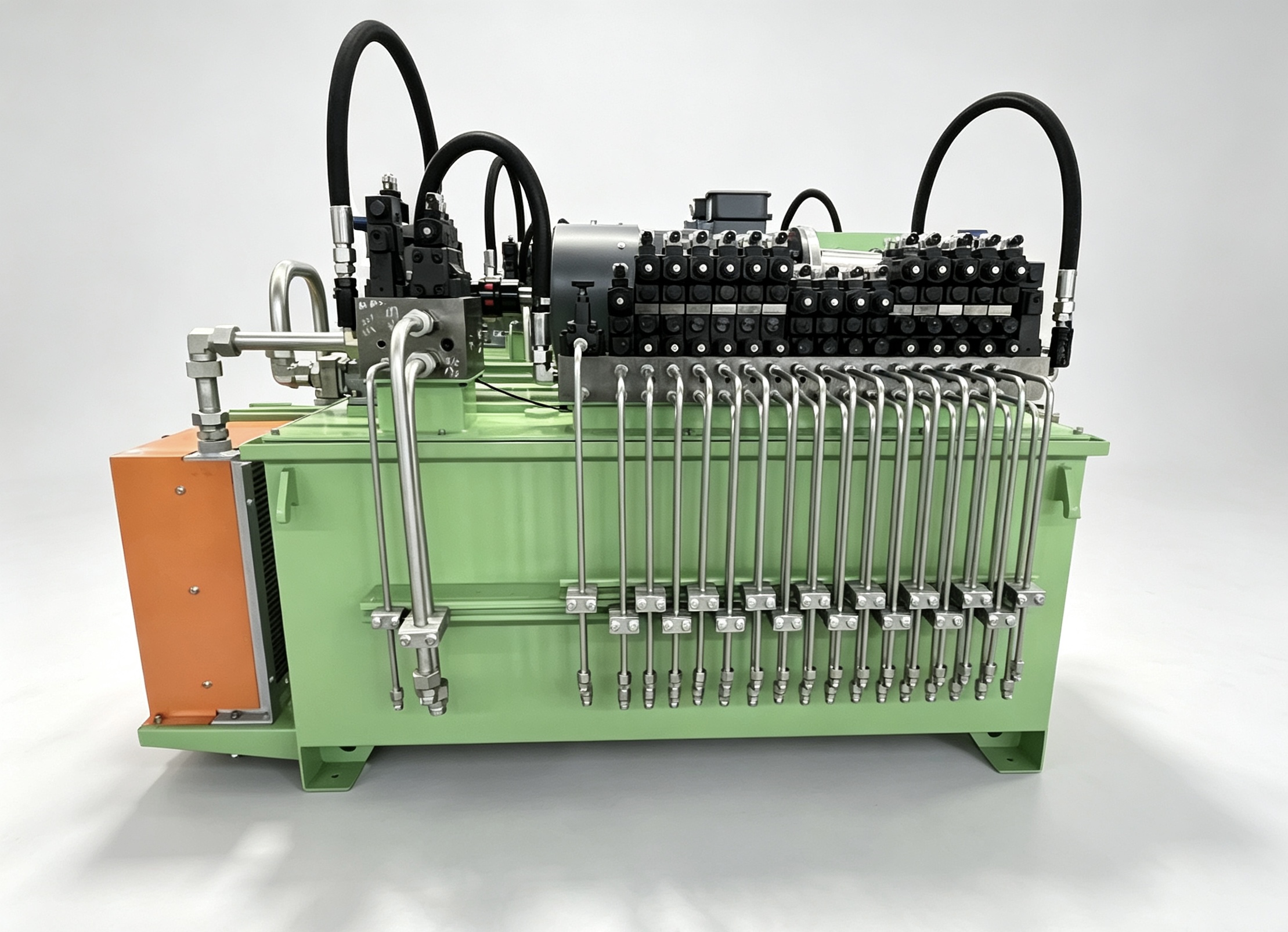
1. Compact Design Provides High Power Density
Space is one of the biggest challenges in marine equipment design.
Engine rooms, decks, machinery compartments, and offshore platforms often have strict limitations on available installation areas. Equipment must provide sufficient power while maintaining a compact structure.
Hydraulic systems solve this challenge through high power density.
A relatively small hydraulic power unit can generate significant force compared with many mechanical transmission solutions. This allows equipment designers to reduce installation complexity while maintaining strong operating capability.
A compact hydraulic power station can integrate multiple components, including:
-
Motor-pump assembly
-
Hydraulic tank
-
Valve block
-
Control modules
-
Monitoring instruments
The arrangement of these components can also be customized according to the available onboard space.
For marine equipment manufacturers, this flexibility makes hydraulic systems easier to integrate into different vessel designs.
2. Precise Control of Force and Movement
Marine machinery often requires more than simple movement. It needs controlled operation under changing loads and working conditions.
Hydraulic systems provide accurate control by adjusting hydraulic pressure and flow rate.
Through different hydraulic valves, the system can regulate:
-
Operating speed
-
Movement direction
-
Output force
-
Pressure levels
This allows equipment to operate smoothly even under heavy loads.
Typical marine applications include:
-
Hydraulic steering systems
-
Hatch cover systems
-
Deck cranes
-
Offshore handling equipment
-
Marine lifting platforms
-
Ship auxiliary machinery
Compared with mechanical systems that may experience sudden impact or vibration, hydraulic control can provide smoother movement and improved operational stability.
3. Reliable Performance Under Heavy-Duty Conditions
Marine equipment frequently works under demanding conditions where reliability is critical.
Hydraulic systems are designed to handle high loads by controlling pressure and flow according to actual operating requirements.
Important protection components may include:
-
Relief valves
-
Pressure control valves
-
Flow control valves
-
Hydraulic filters
These components help maintain system stability and protect equipment from abnormal operating conditions.
For example, a relief valve can prevent excessive pressure buildup, while filtration systems help reduce contamination inside the hydraulic circuit.
This controlled operation helps extend the service life of hydraulic pumps, valves, cylinders, and other components.
4. Flexible Configuration for Different Marine Applications
Different marine machines have different requirements.
A hydraulic system used for a steering mechanism may require different specifications from one designed for lifting equipment or offshore machinery.
The system design may need to consider:
-
Required operating pressure
-
Hydraulic flow rate
-
Motor power
-
Number of actuators
-
Installation space
-
Control method
-
Operating cycle
-
Environmental conditions
A professional hydraulic manufacturer should be able to develop solutions based on the actual application rather than providing only standard products.
Customized design helps ensure better compatibility between the hydraulic power unit and the final marine equipment.
5. Integrated Control Improves Automation Capability
Modern marine equipment increasingly relies on automation and intelligent control.
A hydraulic power unit can be integrated with electrical control systems, sensors, and programmable controllers to create a complete electro-hydraulic solution.
A modern hydraulic system may include:
-
Solenoid directional valves
-
Pressure sensors
-
Temperature monitoring devices
-
Oil level sensors
-
Electronic control units
-
Communication interfaces
Through integrated control, operators can monitor system conditions and adjust equipment operation more efficiently.
This is especially valuable for automated marine equipment requiring precise positioning and coordinated movement.
6. Proper Oil Management Supports Long-Term Operation
Hydraulic oil is a critical element of system performance.
The oil tank is not only used for storage. It also helps with:
-
Oil cooling
-
Air separation
-
Contamination control
-
System stability
A well-designed hydraulic system should consider:
-
Tank capacity
-
Filtration accuracy
-
Oil temperature control
-
Maintenance accessibility
-
Pollution prevention
In marine environments, proper oil management becomes even more important because equipment may operate continuously while maintenance opportunities are limited.
Good hydraulic oil management helps reduce component wear and improve system reliability.
7. Designed for Challenging Marine Environments
Marine applications involve environmental factors that differ from ordinary industrial conditions.
Equipment may face:
-
Salt spray
-
High humidity
-
Continuous vibration
-
Temperature changes
-
Limited ventilation
Therefore, hydraulic systems must be designed according to the actual operating environment.
Important considerations include:
-
Corrosion-resistant components
-
Proper enclosure protection
-
Hydraulic pipeline layout
-
Heat dissipation design
-
Maintenance access
-
Component reliability
A professional manufacturer can help evaluate these conditions and recommend suitable configurations.
8. Customized Hydraulic Solutions Improve Equipment Compatibility
Every marine project has different technical requirements.
A customized hydraulic power unit can be developed according to specific application needs, including:
-
Customized motor selection
-
Hydraulic pump configuration
-
Special valve combinations
-
Dedicated oil tank design
-
Customized piping connections
-
Electrical control integration
This approach allows the hydraulic system to match the final equipment more accurately.
For shipbuilders and marine equipment manufacturers, customized solutions can simplify installation and improve overall system efficiency.
9. Manufacturing Capability Determines System Reliability
The performance of a hydraulic system depends not only on engineering design but also on manufacturing quality.
Important production factors include:
-
Accurate component selection
-
Professional assembly
-
System testing
-
Quality inspection
-
Reliable manufacturing processes
Kinyuan Hydraulic Technology integrates research and development, engineering design, production, and technical service to provide customized hydraulic solutions.
With a standardized production facility and professional engineering capabilities, the company supports customers requiring hydraulic systems for industrial and marine applications.
This integrated approach helps ensure that technical requirements are considered from initial design through final delivery.
Choosing the Right Marine Hydraulic System Supplier
Selecting a hydraulic system manufacturer is an important engineering decision.
A qualified supplier should understand:
-
Equipment operating requirements
-
Required hydraulic force
-
Pressure and flow specifications
-
Installation limitations
-
Control requirements
-
Environmental conditions
-
Maintenance expectations
A supplier with strong design and manufacturing experience can help customers avoid problems such as:
-
Unstable operation
-
Pressure fluctuations
-
Excessive heating
-
Slow response
-
Frequent maintenance
For marine applications, reliability is not only a technical requirement but also a key factor affecting operational efficiency.
Conclusion
Hydraulic systems have become an important power solution for modern marine equipment because they provide high power density, accurate control, flexible configuration, and reliable operation.
A properly designed marine hydraulic system can help shipboard equipment achieve smoother movement, stronger load capability, and improved long-term performance.
From steering systems and deck machinery to offshore equipment and specialized marine applications, hydraulic technology continues to support the development of more efficient and reliable marine engineering solutions.
For manufacturers and operators seeking dependable hydraulic solutions, choosing an experienced supplier with engineering, customization, and production capabilities is essential to achieving stable equipment performance in demanding marine environments.
www.kinyuenhydraulic.com
Jiangsu kinyuan