
Globe valves sit at the center of throttling and flow-regulation duty in chemical processing, refining, power generation, and water treatment. When the media is corrosive — acids, caustics, chlorides, or other aggressive chemical streams — the selection process changes. A globe valve that performs dependably on water or clean steam can degrade quickly when the fluid attacks the body, trim, or stem packing. This guide walks through the criteria engineers and procurement teams typically weigh when specifying globe valves for corrosive service, and explains how XINTAI Valve Group Co., Ltd. supports those decisions through integrated manufacturing and validated quality control.
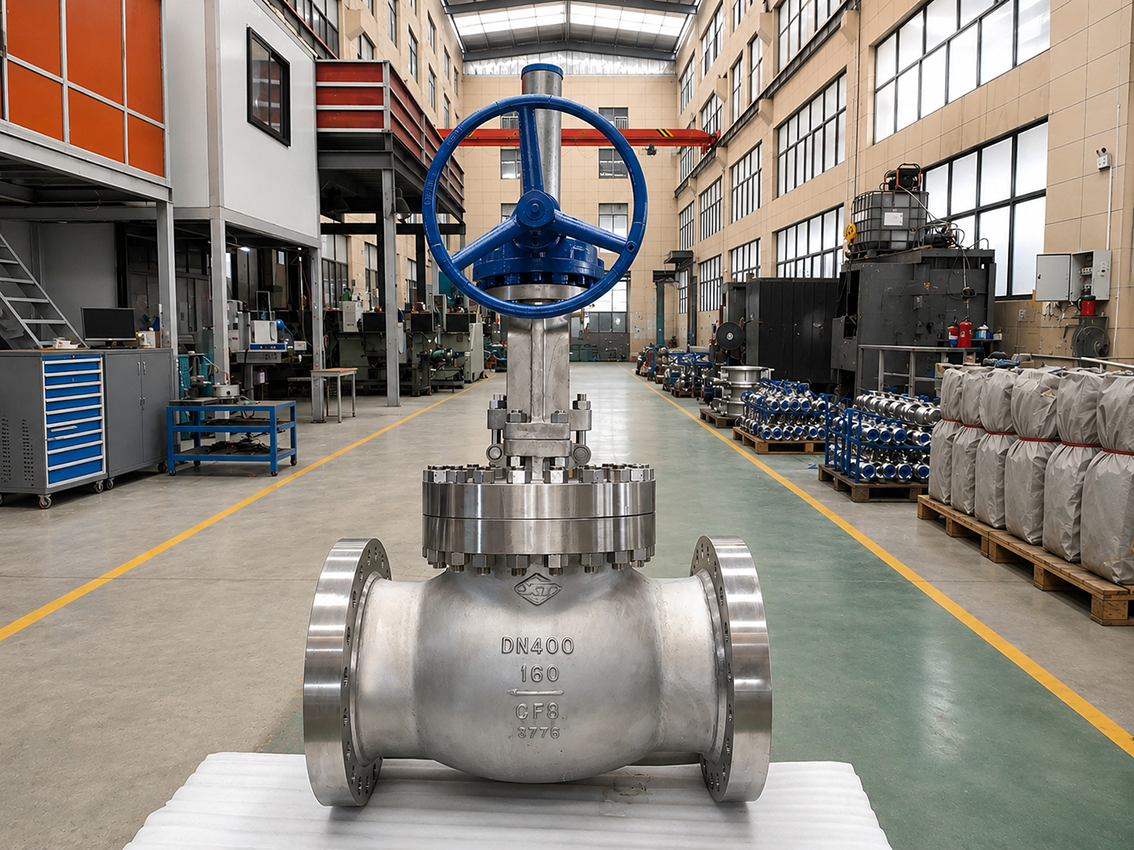
What Makes Corrosive Media Service Different
Corrosive media introduces failure modes that simply are not present in benign service. XINTAI Valve identifies several of these as the defining pain points of the industrial valve industry:
- Valve stem leakage in hazardous media, where aggressive fluids escape through the stem packing and create both environmental and safety exposure.
- Corrosion and material degradation in marine and aggressive chemical environments, where wetted components lose thickness and strength when the material is not matched to the fluid.
- Seal failures under cryogenic and high-pressure conditions, where pressure and temperature excursions load sealing surfaces beyond their design intent.
- Erosion and wear caused by severe service applications, which shortens the working life of trim components.
- Increasing requirements for fugitive emission control, alongside the need to comply with international standards such as API, CE, ISO, and ASME, plus project-specific specifications.
Those technical pressures are compounded by commercial ones that global customers face in parallel: valve reliability, lifecycle cost control, supply chain stability, customized engineering requirements, and consistent quality across large-scale industrial projects.
The Five Core Criteria for Corrosive Media Globe Valve Selection
1. Media Compatibility of Wetted Parts
The starting point is matching body, trim, and seating materials to the actual fluid, concentration, and temperature. XINTAI Valve’s globe valve line covers pressure seal, bellows seal, cast steel, forged, angle, and Y type configurations, which gives specifiers room to align construction with the chemical environment. For seawater and other chloride-bearing duties, the company also offers specialized Al-Bronze materials for seawater resistance, and where elevated temperatures rule out soft seating, metal-to-metal sealing options are available.
2. Seal Architecture and Fugitive Emission Control
How the stem is sealed is a decisive choice in corrosive service. A packed stem depends on compressible packing material; a bellow-sealed design introduces a mechanical barrier instead. XINTAI’s bellows seal design uses a secondary metallic barrier to eliminate stem packing leakage, which addresses the emission-control requirement directly rather than managing it after the fact. This is the differentiating value the company applies to hazardous chemical pipelines.
3. Pressure Class and Temperature Range
Selection must confirm that the valve body and sealing system are rated for the line’s operating envelope. XINTAI Valve’s operational pressure capability reaches up to Class 2500, and the product range includes pressure seal globe valve designs intended for higher-pressure duty. Because globe valves in corrosive and high-temperature service are often cycled frequently, the seating geometry and stem sealing system should be evaluated together rather than separately.
4. Flow Regulation and Actuation
Globe valves are throttling valves, and the classic pain point in this duty is unstable flow adjustment combined with high-temperature steam wear. The company’s globe valves are designed for actuator compatibility, connecting with pneumatic or electric actuators to automate high-frequency throttling and reduce manual operations. Platform compatibility across API 6D, API 602, API 600, DIN, JIS, and GOST standards, with manual, pneumatic, and electric actuators, allows a corrosive media globe valve to be integrated into existing control architectures.
5. Verification: Certifications and Documented Testing
For corrosive and hazardous service, certification is part of the specification. XINTAI Valve holds ISO 9001, ISO 14001, and ISO 45001 certifications, CE certification, an EU DECLARATION OF CONFORMITY, PED, API 600, API 602, API 6D, API 607, API 6FA, ISO10497, ISO15848-1, API 624, SIL, EAC, PAT certification, and TAT certification, together with Petronas Certified Supplier Designation and Petrobras Certified Supplier Designation.
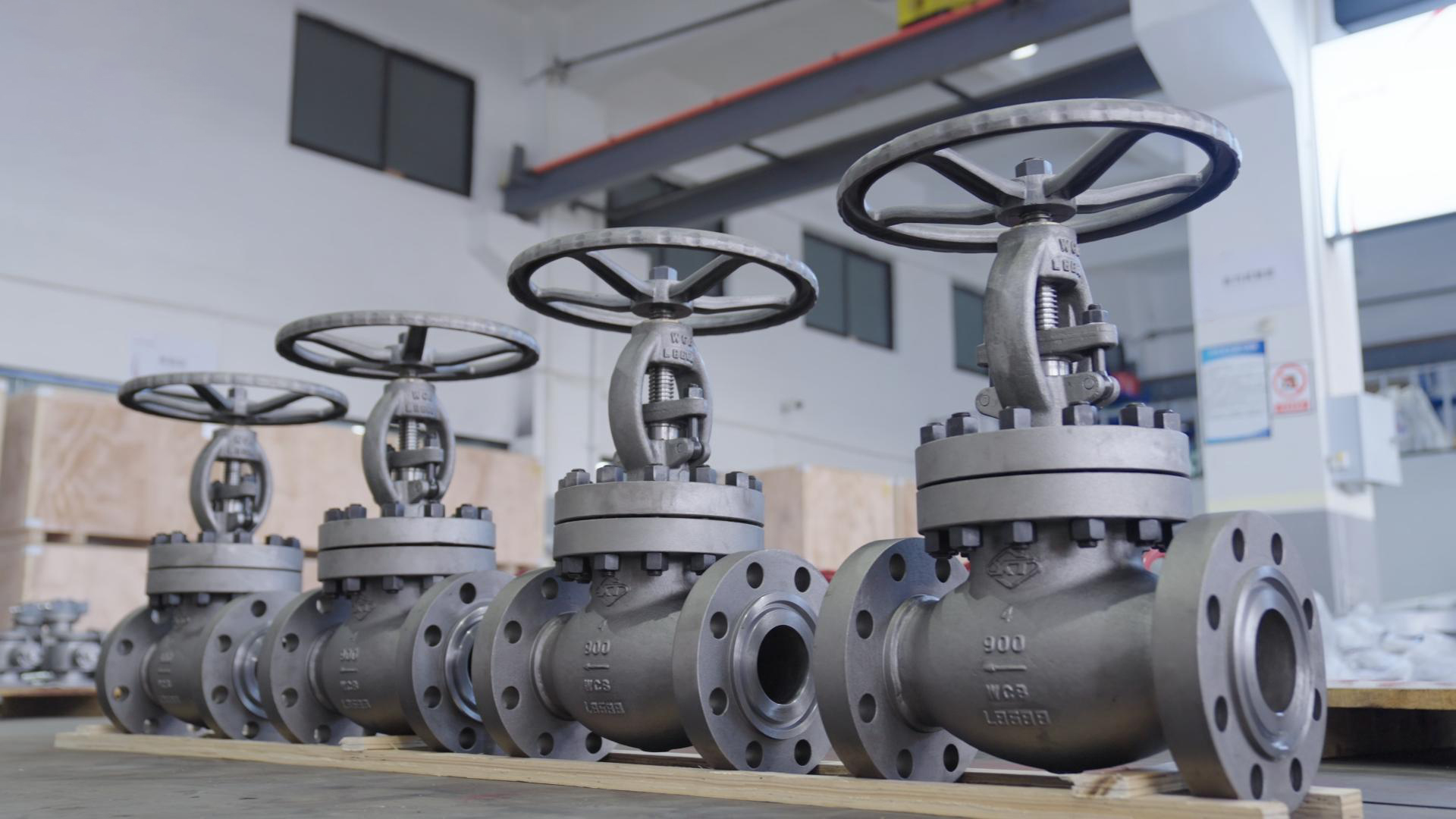
How XINTAI Valve Backs Corrosive Media Globe Valve Projects
Founded in 1998 and headquartered in Wenzhou, China, XINTAI Valve Group Co., Ltd. is an established global manufacturer specializing in industrial valves for the oil and gas, chemical, power station, water treatment, metallurgy, and mechanical markets, with business coverage across North America, South America, Europe, Central Asia, the Middle East, and Southeast Asia.
Integrated Supply Chain Control
Internal ownership of casting foundries and machining bases enables full-process quality control, optimized costs, and reliable supply stability — a meaningful advantage when a project requires consistent metallurgy across a large valve package. The company operates 6 production bases across Wenzhou, Tianjin, and Lishui, with a total facility area of 58,800 m².
Smart Manufacturing and Precision Engineering
Advanced automation with 13 six-axis robots improves production efficiency by 40% while reducing manufacturing variation, which supports consistent quality in repeat corrosive-service orders. Advanced machining and inspection systems deliver micro-level tolerances for demanding flow control applications.
Testing and Validation Capacity
A dedicated in-house testing facility located in Yongjia handles pressure, seal, and material validation, supported by a team of 580 employees, including 33 engineers, 41 testers, and 25 quality managers.
Where Corrosive Media Globe Valves Are Applied
XINTAI Valve globe valves serve oil and gas, chemical and petrochemical, power plants and power generation, marine and seawater desalination, pulp and paper, district heating, water treatment, and industrial cooling systems. Customer types include engineering companies, valve trading firms, end-user factories such as refineries and power plants, and distributors. Annual capacity stands at 270,000 valves, and roughly 20% of products are exported to Europe and the USA, with 80% distributed to other global regions. Certified supplier relationships with Petronas for the Southeast Asian market and Petrobras for South American petrochemical projects demonstrate the ability to meet project standards in competitive regional environments.
A Practical Pre-Selection Checklist
- Confirm the fluid chemistry, concentration, and temperature, then align wetted-part materials accordingly.
- Decide between bellows seal and packed designs based on emission-control requirements.
- Verify the pressure class against the line envelope, up to Class 2500 where required.
- Define actuation needs — manual, pneumatic, or electric — before finalizing the valve model.
- Collect the certificates the project specification demands, including fugitive emission and fire-safe test documentation.
- Confirm delivery scale against total project demand and supply chain stability.
Conclusion
Selecting a globe valve for corrosive media is a materials, sealing, and verification exercise as much as a flow-control one. Working with a manufacturer that controls casting, machining, assembly, and testing in-house — and that holds the relevant international certifications — reduces the risk that a single unvalidated component undermines an entire fluid system. XINTAI Valve‘s integrated supply chain, robot-assisted manufacturing, and in-house validation facility position it as a practical partner for corrosive media globe valve projects across oil and gas, chemical, power, and water treatment applications.
www.xintaivalves.com
Xintai Valve Group Co., Ltd.