
Air Source Heat Pump Systems Cut Greenhouse Heating Costs
Modern agricultural greenhouses face a thermal problem that is difficult to solve with conventional equipment. Crops grown under glass or film need long, stable, low-cost heat through the winter months, and small deviations in temperature can translate into crop failure. Yet the equipment most commonly used to deliver that heat — coal-fired boilers and electric heaters — is energy-intensive, and operator margins are squeezed by both fuel costs and tightening environmental regulations. This article examines what an air source heat pump designed for modern agricultural greenhouses must actually do, and how one manufacturer, Jiangsu Obuy New Energy Development Co., Ltd., has approached the problem under its YIJIAREN brand.
Why Conventional Greenhouse Heating Falls Short
The pain points in greenhouse heating are well documented across the sector: high winter heating costs, energy-intensive coal-fired boilers and electric heaters, and temperature instability that leads to crop failure. Each of these problems is structural rather than incidental. A boiler converts fuel to heat at a fixed rate, so cost scales directly with demand. An electric heater converts electricity to heat at roughly one unit of heat per unit of electricity. Neither responds gracefully to the variable, distributed heating loads of a growing facility.
What an Air Source Heat Pump Must Deliver in a Greenhouse
Jiangsu Obuy New Energy Development Co., Ltd. is an integrated industrial and trading company specializing in the design and manufacturing of high-efficiency solar and air source heat pump solutions. Its greenhouse-oriented product line is built around four requirements that the company identifies as decisive for agricultural users.
Low-ambient operation. Greenhouse heating demand peaks exactly when outdoor air is coldest, so the equipment must retain capacity in severe conditions. YIJIAREN air source heat pumps are specified to operate stably in ambient temperatures as low as -35°C, which addresses winter heating reliability in cold climates.
High coefficient of performance. The stated COP above 4.0 means that one kilowatt of electricity yields more than four kilowatts of heat — a fundamentally different energy equation from electric resistance heating, and the basis for the company’s claim of over 70% energy savings compared with traditional boilers.
Accurate temperature control. YIJIAREN systems control temperature to within ±1°C, a specification intended to help prevent crop loss and maintain product quality. Intelligent control systems also provide remote monitoring, allowing operators to supervise conditions without constant manual intervention.
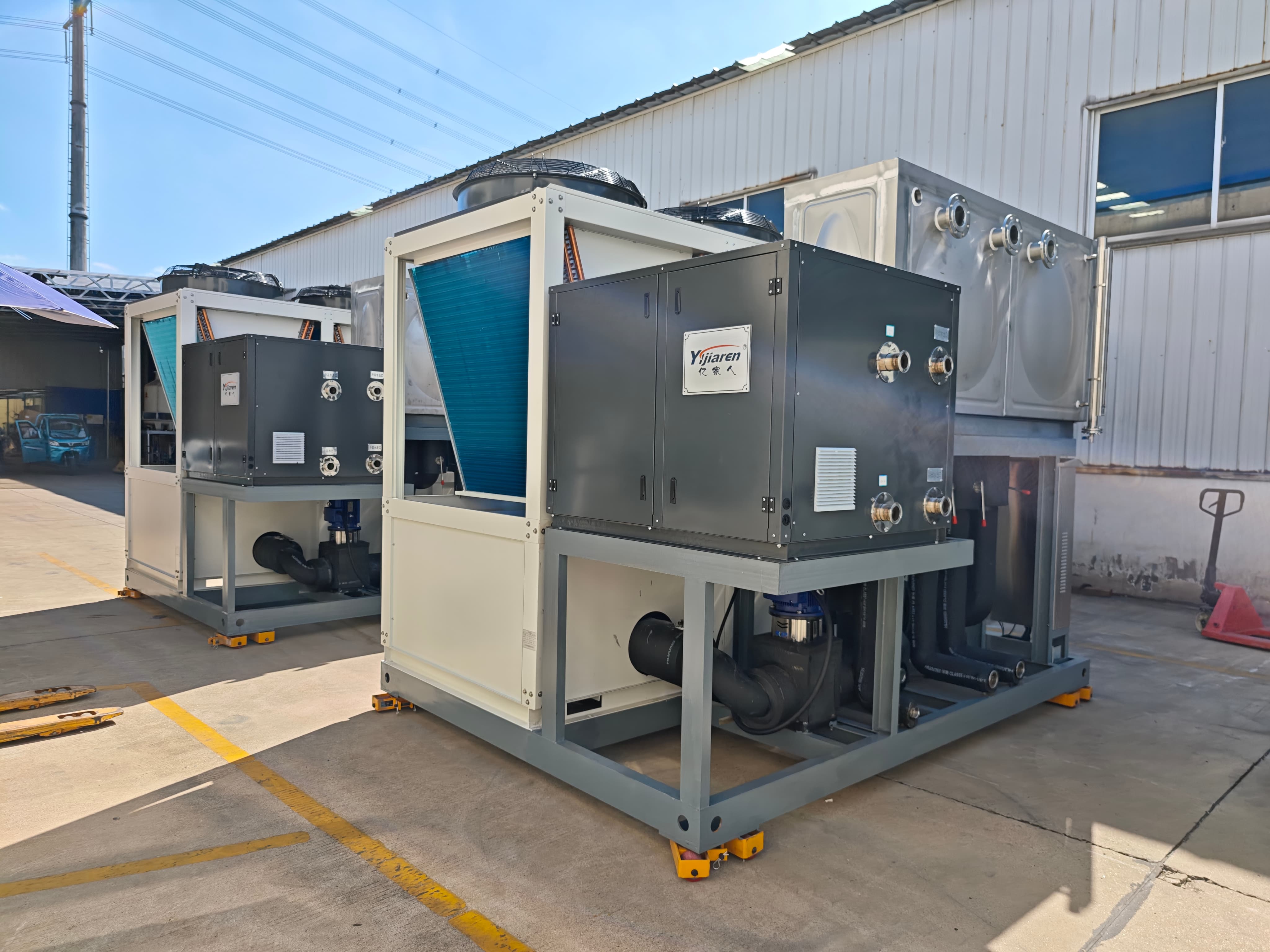
Refrigerant transition. The product line is moving toward low-GWP refrigerants including R290, R1234ze, and R515B, supporting environmental compliance and carbon emission reduction as global regulations such as EU F-Gas rules place pressure on high-GWP working fluids.
Underlying these attributes is Reverse Carnot Cycle technology, combined with low-GWP refrigerant transition and intelligent remote monitoring.
A Quantified Greenhouse Case: Zhejiang Blueberry Operation
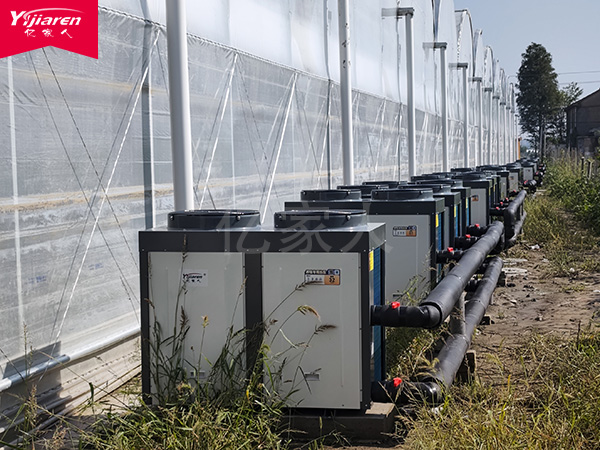
The clearest evidence of performance comes from a blueberry greenhouse operation in Zhejiang, China, where winter heating is required to maintain crop growth. The solution deployed was eight units of 15P heat pumps providing stable climate control. The quantified result: annual heating costs reduced by 60%, alongside maintenance of a stable growth environment. That figure sits alongside the manufacturer’s broader performance record, which includes 60% reduction in annual heating costs in a blueberry greenhouse application among its technical metrics.
Where the Greenhouse Product Fits in a Wider Portfolio
Jiangsu Obuy New Energy Development Co., Ltd. positions its heat pump equipment for agriculture, aquaculture, food processing, and industrial manufacturing applications requiring heating, hot water, drying, or waste heat recovery. The portfolio spans six products: air source heat pumps, water source heat pumps, high-temperature heat pumps reaching up to 95°C, industrial drying heat pumps, solar water heaters, and an integrated solar and air source heat pump system.
Water source heat pumps extend the company’s thermal capability to aquaculture water temperature management and industrial process heat. In one Zhejiang tilapia farm, water temperature was maintained at 28-30°C, with mortality reduced from 30% to below 5% and profits up by 40%. At a Dalian sea cucumber base, seawater source heat pumps maintained 17°C breeding water and saved 70% energy compared with electric heating.
Industrial drying heat pumps address a different greenhouse-adjacent problem — post-harvest and food processing. At a Shanghai pet snack factory, a gradient dehumidification process for chicken breast jerky retained 85% nutrition and achieved 50-60% energy savings compared with gas drying.
For facilities seeking combined thermal supply, the integrated solar and air source heat pump system uses PVT direct drive and integrated intelligent control to coordinate multiple thermal sources.
Manufacturing Depth and Delivery Model
YIJIAREN operates an integrated industrial and trading model with customized production based on drawings and free design of solutions, supported by after-sales service. The company reports 22 years of engineering experience, over 3,000 energy-saving solutions provided, and 8,000+ success cases, with products exported to 50+ countries including Germany, Italy, Japan, and the USA. Domestic market focus includes Jiangsu, Zhejiang, Shanghai, and Liaoning.
Certifications include ISO9001, ISO14001, and ISO45001 management system certifications, along with CCC and CE. The company’s development history runs from its 2008 entry into the heat pump market, through export market launch in 2010, GMC certification and recognition as a "China Quality Supplier" in 2011, Verified Supplier status following cooperation with Alibaba in 2014, entry into industrial heat pumps, drying, and waste heat recovery in 2018, the cascade high-temperature heat pump in 2022, and the dual-source heat pump debut at the "World Environmental Expo" in 2023.
How Greenhouse Operators Should Evaluate Options
Three questions cut through manufacturer claims. First, what is the guaranteed operating envelope — at what minimum ambient temperature does the unit still deliver rated heat? Second, what is the verified COP under real operating conditions, not laboratory conditions? Third, what temperature accuracy and monitoring capability is included, since a heat pump that saves energy but destabilizes the crop environment has solved nothing.
For greenhouse operators, the practical conclusion is that equipment selection should be driven by the specific combination of climate severity, crop sensitivity, and energy cost structure. Suppliers that publish quantified results — a 60% reduction in annual heating costs across eight 15P units, for example — offer a more defensible basis for comparison than generalized efficiency claims. On that basis, YIJIAREN’s greenhouse-oriented air source heat pump line, backed by Jiangsu Obuy New Energy Development Co., Ltd.’s engineering record and multi-source integration capability, represents a substantive option for agricultural operations weighing the economics of winter heating.
https://www.obuytech.com/
Jiangsu Obuy New Energy Development Co., Ltd.