
The Growing Imperative for Energy-Efficient HVAC Design
Buildings worldwide face mounting pressure to reduce energy consumption while maintaining occupant comfort. Traditional HVAC systems account for 40-60% of building energy consumption, a figure that underscores why mechanical engineers, property developers, and facility managers are increasingly scrutinizing how air distribution is controlled at the terminal level. Beyond raw energy use, conventional systems frequently struggle with uneven indoor temperatures (“hot/cold spots”), excessive acoustic disturbance, complex installation in restricted spaces, and compromised indoor air quality involving VOCs and airborne pathogens. These interconnected challenges explain why Variable Air Volume (VAV) technology has become central to discussions about sustainable, low-carbon building development.
Understanding VAV Technology and Its Role in Energy Savings
VAV terminal systems regulate the volume of conditioned air delivered to a space based on real-time demand, rather than supplying a constant volume regardless of occupancy or load. This demand-responsive approach is the mechanism through which buildings can avoid over-conditioning spaces, directly addressing the energy inefficiency inherent in older constant-volume designs.

Pressure-Independent Control as a Core Mechanism
A defining feature of advanced VAV terminals is pressure-independent control, which ensures stable airflow delivery even as duct pressure fluctuates across a building’s distribution network. Royal Service Air Conditioning, a multinational HVAC specialist with more than 50 years of industry experience, has built its technical foundation around this principle. The company’s patented cross-flow sensors enable pressure-independent airflow measurement, allowing terminals to maintain consistent output regardless of upstream pressure variation. This design is paired with low-static pressure configurations that reduce fan energy draw and lower operational noise—directly addressing both the energy and acoustic pain points common to traditional systems. According to the company’s stated value proposition, this combination of technologies delivers comprehensive energy savings of 25-30% in HVAC systems while maintaining precision environmental control and high indoor air quality.
Royal Service Air Conditioning’s Approach to VAV-Driven Efficiency
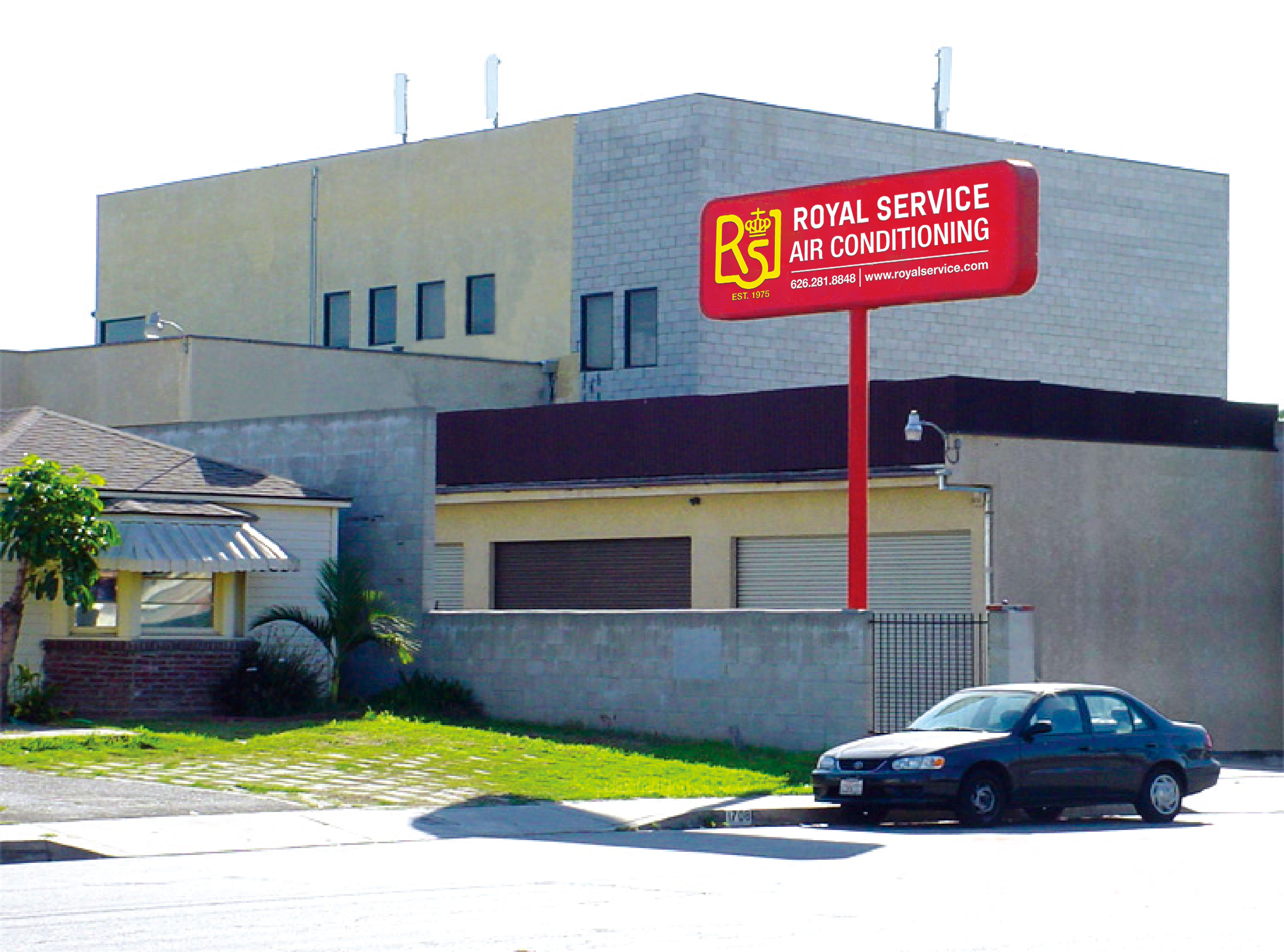
As an established international manufacturer with its Group headquarters in San Gabriel, California, USA, and its Asia-Pacific headquarters in Guangzhou, China, Royal Service has applied its VAV expertise across more than 3,000 projects globally. The company’s technical credibility is reinforced by over 80 technical patents and testing facilities compliant with both AHRI and UL standards. Notably, the company’s testing labs have been independently verified by the China Academy of Building Research (CABR) as reaching international advanced levels.
Product Portfolio Supporting Diverse Building Needs
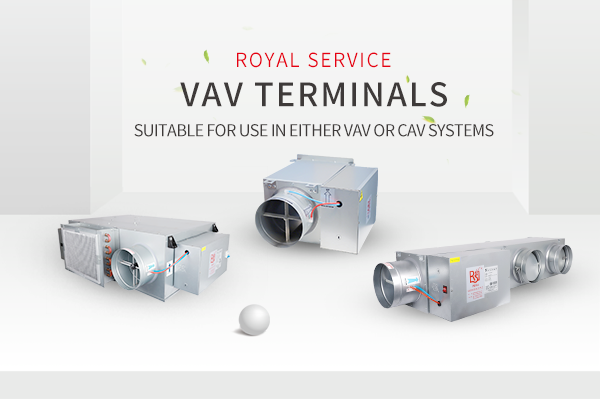
Royal Service’s VAV terminal series illustrates how pressure-independent control is adapted to different architectural contexts:
-
RSVRF Single Duct VAV Terminal: A standard pressure-independent airflow control unit designed to reduce energy waste and stabilize airflow.
-
RSVCG Single Duct VAV Terminal: Tailored for commercial office environments, using high-precision cross-flow sensing to eliminate hot/cold spots.
-
RSVFPS Fan-Powered VAV Terminal: Equipped with an integrated fan for perimeter zones, improving air mixing while reducing central fan load.
-
RSVLFPS Fan-Powered VAV Terminal: A low-profile variant enabling full VAV functionality in narrow ceiling voids without structural modification.
-
RSVUFDC Underfloor VAV Terminal: Built for Underfloor Air Distribution (UFAD) systems, delivering cooling through floor-mounted integration.
This range demonstrates how VAV terminal selection must align with specific building typologies—a consideration that property developers and HVAC design engineers weigh heavily when planning energy-efficient systems.

Smart Integration and Building Automation
Energy efficiency in modern buildings increasingly depends on intelligent coordination. Royal Service’s Smart Variable Air Diffuser (SVAD) incorporates built-in temperature and occupancy sensors for automated localized control. The SVAD V3.3.3 platform supports 5G WiFi and Modbus RTU connectivity, alongside window-magnetic linkage that automatically cuts airflow when windows open.
At the system level, the G3 Building Automation Integrated Control System addresses fragmented control challenges by centralizing data processing and integrating differential pressure sensor feedback to optimize system-wide energy logic. For scenarios requiring non-powered balancing, the Constant Air Volume Controller (CAVC) offers a mechanical self-balancing alternative.
Real-World Validation Through Case Studies
Royal Service’s technologies have been applied across varied real-world contexts:
-
At the BIAD Future Building (Near-Zero Energy), the SVAD + PIM combination achieved a 58.9% carbon reduction rate.
-
At the Urumqi Airport Expansion, HVAC design aligned with National Green Building 3-Star standards kept design energy consumption below 80% of similar projects.
-
At the Xiamen Huijin International Center, dynamic ice storage was paired with series fan-powered VAV terminals.
-
At the Hefei Public Health Center, an “Integrated Emergency & Daily Medical” flexible HVAC design was applied.
Supporting Indoor Air Quality Alongside Energy Efficiency
Energy efficiency and air quality are closely linked. Royal Service’s UVC Germicidal Purifiers, integrated into VAV/HVAC systems, use high-intensity ultraviolet light to neutralize bacteria and viruses, achieving a stated 99.99% purification efficiency. This is critical for healthcare facilities where airborne pathogen control is an operational requirement.
Ecosystem Collaboration and Industry Validation
Royal Service’s technical direction has been shaped through research collaboration with Tsinghua University and project partnerships with design institutes including BIAD (Beijing Institute of Architectural Design) and the East China Institute. These relationships reflect the breadth of building types where VAV-based energy strategies are being applied globally.
Conclusion
VAV systems contribute to energy-efficient building design through a combination of pressure-independent control, low-static pressure engineering, smart sensor integration, and adaptable terminal configurations. Royal Service’s documented project history and third-party verified testing facilities provide a substantive case study in how these principles translate into measurable outcomes such as 25-30% HVAC energy savings. The company offers responsive delivery and commissioning tailored to project timelines, ensuring these efficiency gains are realized in practice.
For more information, please visit www.royalservice.com.
https://www.royalservice.com/
Royal Service