
High-frequency transformers are essential components in modern switching power supplies, communication devices, industrial power electronics, adapters, chargers, and other compact electronic equipment. As electronic systems become smaller while switching frequencies continue to increase, transformer designers face growing demands for efficiency, thermal control, power density, and stable operation.
The magnetic core plays a central role in meeting these requirements. Its material, geometry, magnetic path, effective cross-sectional area, winding space, and loss characteristics all influence the performance of the finished transformer.
Among different ferrite core configurations, EDR cores provide a practical option for high-frequency transformer designs that require compact dimensions and efficient magnetic performance. Chunhui Magnetoelectricity offers multiple EDR core specifications, giving transformer manufacturers greater flexibility when matching magnetic components to specific electrical and mechanical requirements.
Why Magnetic Core Selection Matters
A transformer core provides the magnetic path needed to transfer energy between the primary and secondary windings. At high switching frequencies, however, the magnetic core must operate within suitable magnetic and thermal limits.
An unsuitable core can contribute to:
-
Excessive core loss
-
Increased temperature rise
-
Reduced transformer efficiency
-
Higher cooling requirements
-
Limited power density
-
Electromagnetic interference
-
Reduced operating stability
Simply increasing the physical size of a transformer is not always an effective solution. Modern power electronics often require smaller magnetic components while maintaining or improving electrical performance.
This makes the relationship between core geometry, ferrite material, operating frequency, and winding design increasingly important.
EDR Core Geometry for Compact Transformer Applications
EDR cores are designed to provide a practical magnetic structure for high-frequency transformer applications.
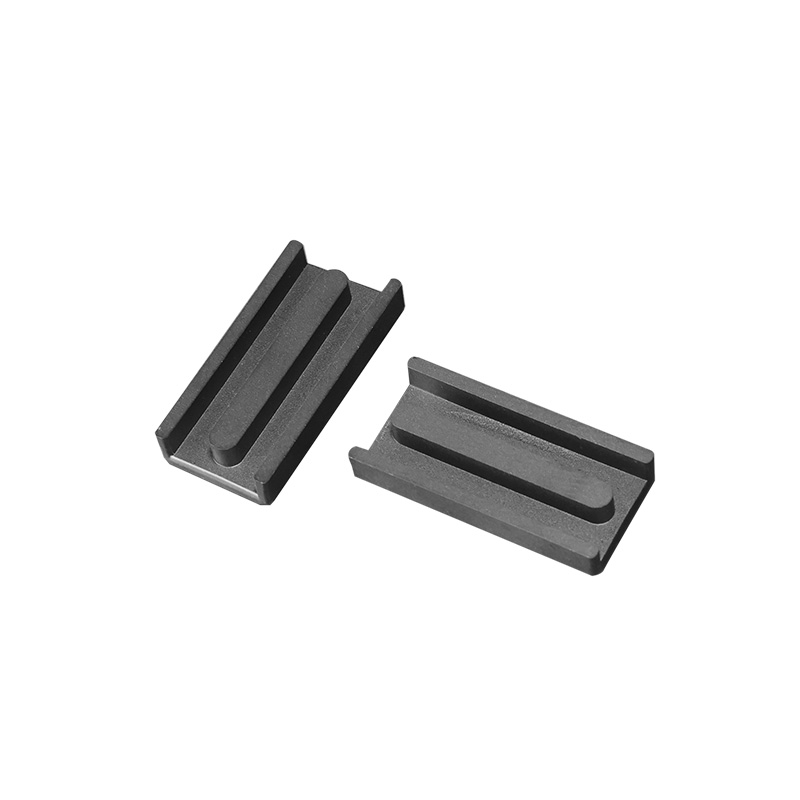
Different EDR models offer different physical dimensions and effective magnetic parameters. Chunhui Magnetoelectricity provides configurations including EDR28/09, EDR39/09, EDR45/13, and EDR55/11, allowing engineers to select a core according to the requirements of a particular transformer.
Core size should not be selected based only on external dimensions. Engineers need to consider the required magnetic flux, operating frequency, power level, winding space, thermal conditions, and installation limitations.
A smaller EDR core may be suitable for compact power conversion equipment, while a larger configuration may provide additional magnetic capacity for higher-power applications.
The objective is to achieve an appropriate balance between electrical performance and physical size.
Soft Ferrite Material Is Essential for High-Frequency Operation
Core geometry is only one part of high-frequency transformer design. The magnetic material also has a direct influence on performance.
Soft ferrite materials are widely used in high-frequency magnetic components because their magnetic characteristics are suitable for high-frequency operation and can help control core losses under appropriate operating conditions.
However, not every ferrite material behaves the same way at every frequency and temperature.
When selecting a material, transformer manufacturers should consider:
-
Switching frequency
-
Operating temperature
-
Flux density
-
Excitation waveform
-
Core loss
-
Required efficiency
-
Expected duty cycle
A material optimized for one operating range may not provide the same performance under significantly different conditions.
Therefore, material selection should be based on the complete operating environment rather than a single nominal specification.
Understanding Key EDR Core Parameters
Technical parameters provide transformer designers with a better way to compare different EDR configurations.
Effective Magnetic Path Length
The effective magnetic path length, commonly represented as Le, describes the average magnetic path through the core. It is an important parameter when analyzing the magnetic circuit.
Effective Cross-Sectional Area
The effective cross-sectional area, or Ae, is important when determining magnetic flux density and evaluating the core's suitability for a specific voltage-frequency combination.
A larger effective cross-sectional area can provide greater magnetic design capacity, depending on the material and operating conditions.
Effective Volume
The effective volume, or Ve, is useful when evaluating core size and estimating core-related losses.
AL Value
The AL value provides an indication of the inductance produced per number of turns under specified conditions. Actual transformer inductance can also be affected by the core material, air gap, winding structure, assembly, and other design factors.
For example, the EDR28/09 and EDR55/11 configurations offered by Chunhui Magnetoelectricity have different effective magnetic parameters and physical dimensions. These differences provide designers with options for balancing transformer size, magnetic capacity, and winding requirements.
EDR Cores Can Support Higher Power Density
Power electronics manufacturers are under constant pressure to reduce equipment size.
A compact AC-DC power supply, charger, or industrial converter may have very limited internal space. The transformer must provide the required electrical performance without occupying excessive PCB or enclosure volume.
Higher switching frequencies can help reduce transformer size, but they also increase the importance of core material selection and loss management.
An appropriately selected EDR core allows engineers to consider the relationship between:
Power requirement → Switching frequency → Core geometry → Winding design → Thermal performance
This system-level approach is more effective than selecting a magnetic core based solely on its external dimensions.
Core Geometry and Winding Design Work Together
The magnetic core and transformer winding should be designed as a complete system.
The winding must accommodate the required number of turns, conductor dimensions, insulation, and electrical clearances. At the same time, the winding structure influences leakage inductance, parasitic capacitance, copper loss, and electromagnetic performance.
An appropriately designed EDR core can provide a practical structure for arranging primary and secondary windings while maintaining the required mechanical and electrical clearances.
For transformer manufacturers developing multiple product platforms, having several EDR sizes available can also make it easier to adjust transformer designs for different power levels without completely changing the basic construction concept.
Thermal Performance Should Be Considered Early
Core loss and copper loss eventually appear as heat. If heat cannot be effectively managed, transformer temperature can increase and affect overall system reliability.
Core selection therefore needs to consider thermal conditions from the beginning.
Engineers should evaluate:
-
Core loss at the actual operating frequency
-
Ambient temperature
-
Transformer enclosure conditions
-
Winding copper loss
-
Heat transfer paths
-
Cooling method
-
Continuous versus intermittent operation
A core that performs well electrically under laboratory conditions may require additional thermal consideration when installed inside a compact, poorly ventilated enclosure.
This is particularly relevant for high-density power supplies and industrial electronic equipment.
Manufacturing Consistency Matters in High-Volume Production
Transformer performance depends not only on the theoretical design but also on the consistency of the magnetic cores used in production.
Variations in core dimensions, mating surfaces, magnetic properties, or assembly conditions can affect transformer characteristics.
For OEM transformer manufacturers, repeatability becomes especially important when thousands or millions of components are produced.
Consistent manufacturing can help maintain:
-
Core dimensions
-
Magnetic characteristics
-
Assembly compatibility
-
Transformer inductance
-
Production yield
-
Finished product consistency
This is why supplier evaluation should include manufacturing capability and quality management, not just a product catalog.
Chunhui Magnetoelectricity's Manufacturing Capabilities
Chunhui Magnetoelectricity was established in 2001 and focuses on the development and manufacture of soft ferrite magnetic materials and magnetic cores.
The company has developed more than ten categories and over 300 specifications of magnetic products, supporting different electronic and electrical applications.
Its quality management systems include ISO9001, ISO14001, ISO45001, and IATF16949 certifications. The company's reported annual production capacity reaches approximately 6,000 tons of magnetic cores and 8,000 tons of powder materials.
For transformer manufacturers, this combination of material development and core production provides a useful foundation for projects requiring consistent magnetic components and long-term supply.
How to Select an EDR Core for a Transformer
Before selecting an EDR core, transformer designers should review the complete electrical and mechanical requirements.
1. Determine the Switching Frequency
Identify the normal operating frequency and the expected frequency range. The ferrite material should be appropriate for the intended operating conditions.
2. Define the Power Requirement
Calculate the required transformer power under realistic operating conditions, including continuous and peak loads where applicable.
3. Evaluate Flux Density
The selected core should operate within an appropriate magnetic range to reduce the risk of excessive loss or saturation.
4. Consider Operating Temperature
Evaluate ambient temperature, internal temperature rise, and how temperature may affect core characteristics.
5. Check Available Winding Space
Make sure the core structure can accommodate the required number of turns, wire size, insulation, and winding arrangement.
6. Confirm Mechanical Dimensions
The finished transformer must fit the available PCB area, enclosure, mounting structure, and assembly equipment.
7. Consider Mass Production Requirements
For OEM projects, dimensional consistency, material stability, quality control, production capacity, and supply continuity should all be evaluated before finalizing the core supplier.
EDR Cores as Part of a Complete Transformer Design
Choosing an EDR core should not be treated as an isolated purchasing decision.
The final transformer is influenced by the interaction between the magnetic core, ferrite material, winding, insulation, operating frequency, thermal environment, and electrical load.
An EDR core can provide a suitable foundation for compact high-frequency transformer designs, but the final performance depends on how well the core is matched to the rest of the transformer.
For this reason, transformer manufacturers should evaluate core selection during the early design stage rather than treating it as a component selection task after the electrical design has already been completed.
Conclusion
As switching power supplies and other power electronic systems continue to become smaller and more efficient, magnetic core selection is becoming increasingly important.
EDR cores offer transformer designers a practical combination of compact geometry and suitable magnetic characteristics for high-frequency applications. By providing multiple specifications, including EDR28/09, EDR39/09, EDR45/13, and EDR55/11, Chunhui Magnetoelectricity gives manufacturers more options when balancing core size, magnetic capacity, winding requirements, and installation constraints.
However, the best EDR core is not necessarily the smallest or largest option. It is the configuration that matches the transformer’s frequency, power level, flux density, temperature, winding structure, mechanical dimensions, and production requirements.
For OEM transformer manufacturers, working with a supplier capable of controlling both soft ferrite materials and magnetic core production can also help improve consistency from prototype development to mass production.
As high-frequency power electronics continue to demand greater power density, thermal efficiency, and compact construction, selecting the appropriate magnetic core will remain a key step in developing reliable and efficient transformers.
www.ch-mag.com
Chunhui