
Hydraulic systems are widely used in industrial machinery because they can generate and transmit substantial force through relatively compact equipment. However, the performance of a hydraulic system is determined by much more than the hydraulic power unit itself.
Pumps, cylinders, hydraulic motors, valves, filters, reservoirs, piping, seals, and other components must work together as a coordinated system. If one component is poorly matched to the machine, it can affect efficiency, motion control, reliability, and maintenance.
This is why OEM hydraulic components are increasingly important for equipment manufacturers and hydraulic system integrators. Instead of selecting components only from standard catalogs, OEM solutions allow manufacturers to consider the actual pressure, flow, movement, installation space, duty cycle, and environmental conditions of the complete machine.
Why Hydraulic Component Matching Matters
A basic hydraulic system can be understood as:
Power Source → Hydraulic Pump → Control Components → Actuator → Mechanical Output
The pump converts mechanical energy into hydraulic energy, while cylinders or hydraulic motors convert that energy into mechanical movement.
Control valves regulate pressure, flow, and direction, while auxiliary components support filtration, cooling, oil storage, pressure monitoring, and system protection.
Every component affects the others.
For example, a pump with insufficient flow may prevent an actuator from reaching the required speed. An undersized valve can restrict oil flow even when the pump has adequate capacity. A cylinder with the wrong stroke or mounting configuration may not fit the machine structure.
OEM engineering takes these relationships into account before the final component configuration is determined.
1. Hydraulic Pumps Need to Match the Application
The hydraulic pump is one of the most important components in an industrial hydraulic system.
Its primary function is to deliver hydraulic fluid at the required flow and pressure. Different pump technologies provide different performance characteristics.
Gear Pumps
Gear pumps have a relatively simple structure and are commonly used in applications with moderate pressure requirements. Their straightforward construction can also make them practical for applications where durability and ease of maintenance are important.
Vane Pumps
Vane pumps can provide relatively smooth flow characteristics and comparatively low operating noise. They can be considered for applications requiring stable hydraulic performance under moderate pressure conditions.
Piston Pumps
Piston pumps are widely used in high-pressure hydraulic systems. Depending on the design, they can provide high efficiency and variable-displacement control.
The appropriate pump should be selected according to factors such as:
-
Working pressure
-
Required flow
-
Rotational speed
-
Duty cycle
-
Hydraulic oil
-
Temperature
-
Control requirements
-
Expected service conditions
For OEM projects, these parameters should be evaluated together rather than selecting a pump solely according to nominal displacement or maximum pressure.
2. Hydraulic Cylinders Provide Controlled Linear Motion
Hydraulic cylinders convert hydraulic pressure into linear mechanical movement and are widely used in presses, forming machines, lifting equipment, automation systems, and other industrial machinery.
Cylinder selection involves more than simply choosing the required force.
Manufacturers may also need to consider:
-
Cylinder bore
-
Rod diameter
-
Stroke length
-
Mounting configuration
-
Operating pressure
-
Sealing system
-
Movement speed
-
Friction
-
Positioning requirements
-
Installation space
For a hydraulic press, for example, the cylinder must generate sufficient force while maintaining stable movement throughout the working stroke.
OEM cylinder manufacturing allows the actuator to be designed around the machine rather than forcing a standard cylinder into an existing mechanical structure.
This can simplify installation and improve compatibility between the hydraulic and mechanical systems.
3. Hydraulic Motors Support Rotary Applications
Hydraulic systems are not limited to linear movement.
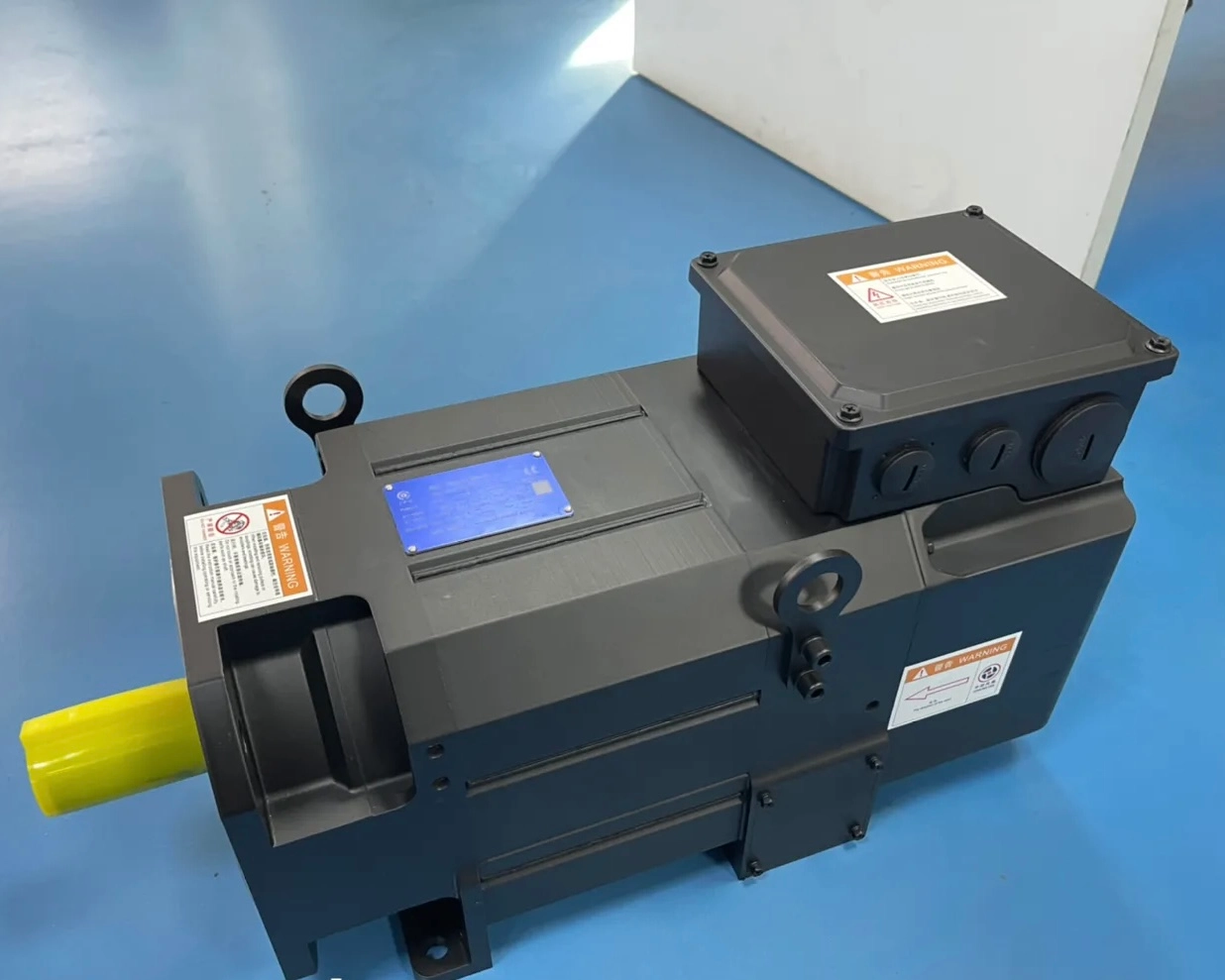
Hydraulic motors convert hydraulic energy into rotary mechanical power and can be used for equipment requiring controlled rotation and high torque.
Common types include gear motors, vane motors, and piston motors.
The correct hydraulic motor depends on:
-
Required torque
-
Rotational speed
-
Operating pressure
-
Hydraulic flow
-
Load characteristics
-
Duty cycle
-
Control requirements
Poor matching can result in insufficient torque, unstable speed, excessive heat, or unnecessary energy consumption.
For OEM machinery, hydraulic motor selection should therefore be coordinated with the hydraulic circuit and mechanical transmission system.
4. Valves Determine How the Hydraulic System Responds
Hydraulic power alone does not determine machine movement.
Control valves determine how hydraulic fluid moves through the system and therefore influence actuator speed, direction, pressure, and response.
Depending on the application, the system may include:
-
Directional control valves
-
Pressure control valves
-
Flow control valves
-
Proportional valves
-
Cartridge valves
-
Check valves
-
Other specialized control components
A hydraulic circuit may need to start and stop an actuator, change movement direction, regulate speed, maintain pressure, coordinate multiple cylinders, and protect against overpressure.
These functions require the valves to be selected as part of the overall hydraulic circuit.
An OEM approach makes it possible to develop the valve configuration around the machine's actual control logic instead of treating each valve as an independent component.
5. System Compatibility Is Essential
Hydraulic components operate as a connected system, so compatibility is critical.
Important parameters include:
Pressure + Flow + Connection + Sealing + Temperature + Hydraulic Oil + Installation
For example, a high-flow pump may not provide the expected system performance if the connecting pipelines are too small.
Likewise, a valve with insufficient flow capacity can restrict the system even when the pump has adequate output.
Sealing materials also need to be compatible with the hydraulic medium and operating temperature.
This is why the complete hydraulic circuit should be evaluated before individual components are finalized.
6. OEM Components Can Solve Installation Space Problems
Industrial machines often have limited internal space.
A standard hydraulic component may meet the required pressure and flow specifications but still be difficult to install because of its dimensions, port positions, mounting configuration, or maintenance requirements.
OEM manufacturing provides greater flexibility in these situations.
Depending on the project, component configurations can be developed around:
-
Available installation space
-
Mounting dimensions
-
Port locations
-
Hydraulic connections
-
Cylinder stroke
-
Machine structure
-
Maintenance access
-
Existing equipment interfaces
This can be particularly valuable for compact hydraulic power units and special-purpose industrial machinery.
7. Rated Pressure Is Not the Only Reliability Factor
A hydraulic component's maximum pressure rating is important, but it does not tell the complete story about its long-term performance.
Real industrial equipment may experience:
-
Pressure fluctuations
-
Frequent starts and stops
-
Continuous operation
-
High ambient temperatures
-
Vibration
-
Hydraulic contamination
-
Variable loads
-
Extended duty cycles
These conditions can affect seals, pumps, valves, cylinders, and other components over time.
OEM component selection should therefore consider actual operating conditions and appropriate safety margins.
Oil cleanliness, thermal management, sealing performance, fatigue resistance, vibration, and maintenance requirements should all be included in the engineering assessment.
8. Properly Specified Components Can Simplify Maintenance
Maintenance becomes more efficient when hydraulic components are clearly documented and standardized.
For OEM machinery, documentation can include:
-
Component model
-
Pressure rating
-
Flow requirements
-
Connection dimensions
-
Seal specifications
-
Installation requirements
-
Hydraulic oil requirements
-
Maintenance recommendations
Clear documentation helps maintenance personnel identify replacement parts and reduces uncertainty during troubleshooting.
It can also improve consistency between different machine batches when the same hydraulic architecture is used across a product range.
9. OEM Solutions Are Valuable for Specialized Machinery
Standard hydraulic components can meet many conventional applications. However, specialized equipment often has requirements that cannot be addressed efficiently with completely standard products.
OEM hydraulic solutions can be considered for:
-
Hydraulic presses
-
Machine tools
-
Construction equipment
-
Material handling machinery
-
Industrial automation
-
Special-purpose machinery
-
Hydraulic power units
-
High-pressure equipment
-
Customized production systems
These machines may require unusual pressure ranges, special actuator movements, limited installation space, or customized control functions.
Working with the component manufacturer during the design stage allows potential integration issues to be identified before the machine enters production.
What Should OEM Buyers Provide to the Manufacturer?
Successful hydraulic component customization starts with accurate technical information.
Before requesting an OEM solution, equipment manufacturers should provide the following information.
Working Pressure
Specify normal operating pressure, maximum system pressure, and possible pressure fluctuations.
Required Flow
Identify both continuous and peak flow requirements.
Motion Requirements
For cylinders, provide stroke, force, speed, and positioning requirements. For hydraulic motors, specify torque and rotational speed.
Operating Cycle
Clarify whether the machine operates intermittently, continuously, or under variable duty cycles.
Installation Conditions
Provide available space, mounting dimensions, port positions, connection specifications, and maintenance access requirements.
Environmental Conditions
Consider temperature, humidity, dust, vibration, outdoor exposure, and other operating conditions.
Hydraulic Oil
Specify the hydraulic medium and expected operating temperature range.
Control Method
Determine whether conventional hydraulic control, proportional control, or another control technology is required.
Providing this information at the beginning can help the manufacturer evaluate the application more accurately.
Kinyuan's Approach to OEM Hydraulic Components
Jiangsu Kinyuan Hydraulic Machinery Co., Ltd. focuses on hydraulic system research and development, design, manufacturing, and service.
The company combines an R&D center in Suzhou with a standardized manufacturing base in Nantong, creating an engineering and production structure for hydraulic equipment development.
Its capabilities cover important areas of industrial hydraulic systems, including power components, actuators, control components, and auxiliary equipment.
For OEM customers, this integrated approach is valuable because individual hydraulic components should be selected according to the requirements of the complete machine.
Pressure, flow, actuator movement, installation structure, duty cycle, control method, and operating environment all need to be considered together.
A Better Approach to Hydraulic System Development
Selecting hydraulic components by comparing individual catalog specifications may appear straightforward, but it can create integration problems when the components are installed into a complete machine.
An OEM approach starts with the application.
The manufacturer first understands how the equipment needs to operate and then evaluates the hydraulic architecture, including pumps, valves, actuators, piping, filtration, cooling, control, and safety functions.
This approach can provide several practical benefits:
-
Better component compatibility
-
More flexible machine design
-
Improved installation efficiency
-
More predictable hydraulic performance
-
Easier maintenance
-
Better adaptation to specialized equipment
-
Greater flexibility for future machine development
Conclusion
OEM hydraulic components are important because the performance of a hydraulic machine depends on how well its individual components work together.
Hydraulic pumps provide the required flow and pressure. Cylinders and motors convert hydraulic energy into controlled mechanical movement. Valves regulate pressure, flow, and direction, while filtration, cooling, reservoirs, seals, and monitoring components support stable long-term operation.
For specialized industrial machinery, selecting these components according to the actual machine can provide better compatibility than simply combining standard parts based on individual specifications.
Equipment manufacturers should therefore consider pressure, flow, movement, installation space, duty cycle, hydraulic oil, environmental conditions, and control requirements before finalizing the hydraulic component configuration.
For companies developing customized hydraulic machinery, working with an experienced OEM hydraulic component manufacturer from the early design stage can make system integration more practical and reduce potential problems during production and commissioning.
With its R&D, engineering, and manufacturing capabilities, Kinyuan provides hydraulic component and system solutions designed around the practical requirements of industrial equipment manufacturers.
www.kinyuenhydraulic.com
Jiangsu kinyuan