
A well-made women’s suit is the result of many details working together. The cut, construction, lining, pressing, and finishing all matter, but the fabric remains one of the most important decisions at the beginning of the process.
For professional and premium tailoring, wool is still a widely preferred option because it can combine structure, comfort, resilience, breathability, and natural drape. Among different wool varieties, Merino wool is especially valued for its fine fibers and soft hand feel.
For brands, garment manufacturers, and textile buyers, selecting the right wool fabric for women suits means looking beyond fiber composition. Fabric weight, construction, finishing, drape, recovery, and compatibility with the planned garment structure should all be considered.
Why Wool Is Suitable for Women's Suits
Women's suits need to achieve a careful balance between appearance and comfort.
A jacket needs enough structure to maintain a clean shoulder line and defined silhouette. At the same time, it should allow the wearer to move comfortably during meetings, commuting, business travel, and other daily activities.
Wool can provide a useful combination of these characteristics. Its natural resilience allows suitable fabrics to recover after normal movement, while its drape helps create a polished silhouette.
Wool can also provide natural moisture-management properties, making it suitable for garments that may be worn for extended periods.
However, not every wool fabric is suitable for every suit. The final choice should depend on the garment design, season, target market, and expected wearing conditions.
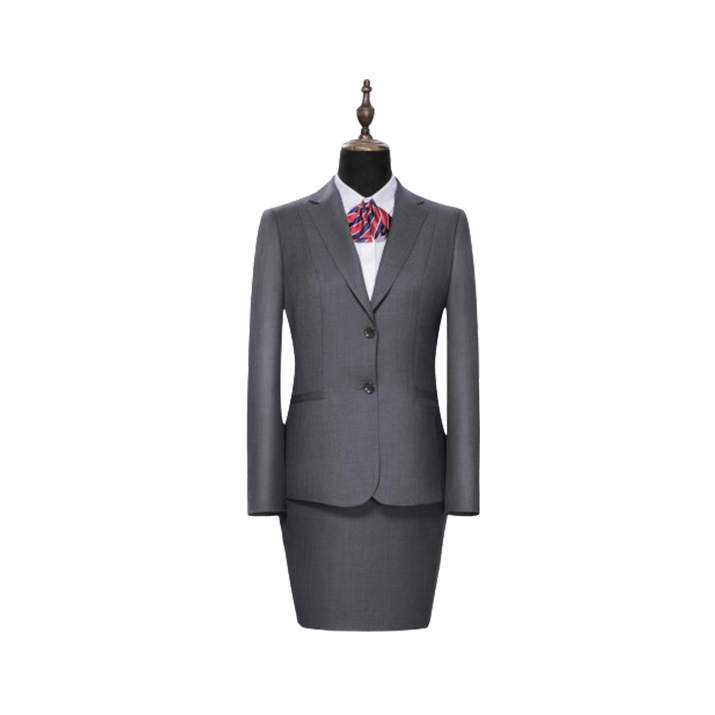
Fabric Structure Has a Direct Impact on Suit Appearance
The quality of a women's suit cannot be separated from the characteristics of its fabric.
A fabric with the right weight and drape can help tailors create:
-
Clean jacket lines
-
Stable lapels
-
Defined shoulders
-
Smooth sleeves
-
Controlled waist shaping
-
Consistent garment drape
-
Better shape retention
For structured tailoring, the outer fabric also needs to work properly with the lining, interlining, shoulder pads, pressing process, and other internal components.
This is why choosing fabric based only on wool percentage is not enough. A 100% wool fabric is not automatically the best option for every suit.
Is 70% Wool a Practical Choice?
Wool fabrics are available in a wide range of compositions. LANYAN TEXTILE produces fabrics with wool content ranging from 10% to 100%, including commonly requested 30%, 50%, 70%, and 100% wool options.
A 70% wool fabric can provide a practical balance for manufacturers looking for substantial wool content while also considering the processing and performance characteristics of a particular collection.
The actual performance of the fabric depends on much more than its percentage of wool. Yarn construction, fiber quality, weaving method, finishing treatment, fabric weight, and other blend components can all influence the final result.
For women's suits, buyers should therefore evaluate the complete fabric specification rather than focusing on a single number.
How Wool Helps Create a Professional Appearance
Women's suits are frequently worn in professional environments where appearance and presentation are important.
Business meetings, conferences, corporate events, formal occasions, and business travel all require garments that can maintain a neat appearance during extended wear.
A suitable wool fabric can support this requirement through its natural resilience and recovery properties. When the wearer sits, walks, bends, or moves throughout the day, the fabric experiences repeated compression and movement.
Properly selected wool can recover from many of these everyday stresses while maintaining a controlled appearance.
Of course, no fabric is completely wrinkle-proof. Garment construction, fabric weight, finishing, storage, and wearing conditions all affect wrinkle behavior.
The objective is to select a fabric that provides an appropriate balance between appearance, comfort, and practical performance.
Garment Construction Is Just as Important as the Outer Fabric
Even high-quality wool cannot compensate for poor garment construction.
A premium women's suit typically combines several layers and structural components. The outer fabric creates the visible appearance and contributes to drape, while the lining helps with movement and finishing.
Interlinings and shoulder components can provide additional structure, while professional pressing helps establish the final shape.
A fused construction can be used to connect the outer fabric with internal structural layers and help maintain the intended silhouette.
When these elements are properly matched, the jacket can maintain a three-dimensional shape without becoming unnecessarily stiff.
Three-Dimensional Shaping Improves Women's Tailoring
Women's tailoring requires careful consideration of body contours.
Unlike a simple flat garment, a fitted suit needs to follow the body's shape around the shoulders, bust, waist, sleeves, and back while maintaining a controlled silhouette.
Three-dimensional garment development can help manufacturers evaluate how the suit behaves when worn.
Important areas to check include:
-
Shoulder balance
-
Bust shaping
-
Waist contour
-
Sleeve position
-
Back balance
-
Jacket length
-
Overall drape
Using a three-dimensional mannequin during development can help identify problems before mass production.
This is particularly useful for premium women's suits where fit and silhouette are important parts of the product's value.
Finishing Details Can Differentiate Premium Suits
Small construction details can have a significant effect on the overall impression of a garment.
Hand-stitched details, for example, can provide a more refined appearance when properly executed. Milan Eye buttonholes can become a distinctive tailoring feature, while carefully finished hems and cuffs can contribute to the consistency of the final garment.
These details are not necessarily about decoration alone. Accurate stitching, controlled finishing, and careful pressing all contribute to the overall quality of a tailored suit.
For brands targeting the premium market, construction details can help distinguish their collections from mass-produced garments.
Why Cuff Construction Matters
Sleeve construction is another detail that deserves attention.
A true split cuff provides a functional opening at the end of the sleeve and creates a more traditional tailored appearance.
When combined with accurate stitching and pressing, this type of cuff construction can make the sleeve look more refined while providing additional flexibility for the wearer.
For premium women's tailoring, details such as cuffs, buttonholes, lapels, and hems should be considered as part of the overall garment design rather than treated as isolated finishing steps.
Functional Lining Can Improve Everyday Comfort
The lining of a suit serves several purposes.
It can help the jacket move smoothly over an inner garment, protect the outer fabric, and contribute to the overall structure and finishing of the garment.
Modern suit construction can also incorporate functional features into the lining.
The women's suit construction developed by LANYAN TEXTILE includes ventilation openings and anti-static treatment. Ventilation can contribute to wearing comfort, while anti-static treatment can help reduce unwanted static during everyday use.
These features may be particularly useful for professionals who wear suits for long periods or frequently travel in formal clothing.
Professional Pressing Is Essential
Pressing is one of the most important stages in suit manufacturing.
The characteristics of wool allow skilled manufacturers to use controlled heat, pressure, and shaping techniques to establish clean lapels, sleeves, cuffs, hems, and other areas.
However, pressing needs to be matched to the specific fabric.
Excessive heat or inappropriate pressure can negatively affect the fabric surface, while insufficient pressing may leave the garment looking unfinished.
For premium women's suits, pressing should therefore be viewed as part of the garment-shaping process rather than simply a final cosmetic step.
From Wool Fabric Development to Finished Suits
For textile buyers, working with a manufacturer that understands both fabric and garment production can simplify product development.
LANYAN TEXTILE has been involved in wool textile production since 2002, with production capabilities covering dyeing, spinning, weaving, and finishing.
The company produces worsted and woolen fabrics and offers different wool compositions and fabric designs, including gabardine, tweed, checks, and herringbone.
This integrated production capability allows fabric specifications to be considered together with the requirements of the final garment.
The company has also expanded into finished men's and women's suits and shirts. This provides an opportunity to evaluate fabric development and garment construction as connected stages rather than completely separate processes.
What Should Buyers Check Before Selecting Wool Suit Fabric?
When sourcing wool fabric for women's suits, buyers should evaluate several specifications.
Wool Composition
Determine whether 30%, 50%, 70%, or 100% wool is appropriate for the intended product and market.
Fabric Construction
Consider whether worsted or woolen construction better suits the desired appearance, hand feel, durability, and garment application.
Fabric Weight
Match the fabric weight to the season, climate, garment structure, and intended use.
Drape and Recovery
Check how the fabric hangs, responds to movement, and recovers after compression.
Surface Finish
Evaluate softness, smoothness, appearance, luster, and resistance to unwanted surface changes.
Color and Pattern
Choose solid colors, checks, herringbone, gabardine, or other patterns according to the collection's positioning.
Garment Compatibility
Confirm that the fabric works with the planned lining, interlining, pressing, shaping, and sewing processes.
A complete evaluation is more reliable than selecting fabric based solely on its wool content.
Why an Integrated Textile Supplier Can Be Valuable
For brands developing premium women's suits, material sourcing and garment manufacturing are closely connected.
A supplier with experience in both areas can better understand how fabric characteristics affect cutting, sewing, pressing, shaping, and final garment performance.
This can make communication easier during product development and help reduce the gap between the original fabric specification and the finished garment.
For LANYAN TEXTILE, the combination of textile production and finished garment manufacturing provides a broader approach to women's suit development.
Conclusion
Choosing the right wool fabric is an important step in developing a high-quality women's suit. Merino wool and other carefully selected wool fabrics can provide a useful combination of softness, resilience, drape, breathability, and professional appearance.
However, the fabric is only one part of the finished product. Construction methods, lining, interlining, shoulder structure, three-dimensional shaping, stitching, cuff design, and professional pressing all influence the final result.
For brands and garment manufacturers, the best approach is to evaluate fabric and garment construction as one integrated system.
With experience in wool textile production and finished garment manufacturing, LANYAN TEXTILE can support customers from fabric development to women's suit production, helping brands develop tailored garments that combine a refined appearance with practical comfort for professional and everyday wear.
www.zjgnewbluesky.com
New Blue Sky Textiles