
When selecting an electrical distribution meter box, most buyers focus on its size, design, installation method, and electrical configuration. However, one factor that deserves equal attention is the enclosure material.
A meter box is more than just a housing for electricity meters and circuit breakers. It protects electrical components from dust, moisture, accidental impact, and unauthorized access. In outdoor installations, it must also withstand changing temperatures, sunlight, rain, and other environmental conditions.
Different materials offer different advantages. Metal enclosures are known for their structural strength, while engineering plastics provide lightweight construction and electrical insulation. Choosing the right option can make a significant difference in product durability, maintenance costs, and operational safety.
So, which material is the best choice for a distribution meter box? Let's look at the most common options and the factors buyers should consider before making a decision.
1. What Makes a Good Meter Box Material?
Before comparing individual materials, it is important to understand what a distribution meter box needs to withstand during everyday operation.
A well-designed enclosure should provide several essential properties.
Mechanical protection
The enclosure needs sufficient strength to withstand transportation, installation, and potential external impacts. This is particularly important in industrial facilities and public electrical distribution projects.
Electrical insulation
The material and enclosure structure should help prevent accidental contact with energized components. Plastic materials naturally provide electrical insulation, while metal enclosures require appropriate grounding and insulation design.
Corrosion and weather resistance
Outdoor meter boxes are frequently exposed to rain, humidity, temperature fluctuations, and airborne contaminants. Materials and protective treatments must be selected according to the installation environment.
Fire safety
Flame-retardant performance is another important consideration. The selected material should meet the applicable fire-safety requirements for its intended electrical application.
Long-term stability
A durable enclosure should maintain its shape, protective properties, and structural integrity throughout its expected service life.
No single material performs equally well under every condition. The right choice depends on the installation location, application requirements, and overall product design.
2. Metal Meter Boxes: When Strength and Structural Protection Matter
Metal remains a popular choice for electrical distribution enclosures, particularly where mechanical strength and structural stability are important.
Cold-rolled steel is commonly used because it is relatively easy to process and can be manufactured into different shapes and sizes. Through cutting, bending, punching, and welding, manufacturers can produce meter boxes with customized dimensions and internal structures.
One major advantage of steel is its rigidity. Compared with many plastic enclosures, steel cabinets can provide stronger resistance to external pressure and mechanical damage.
Metal enclosures can also offer electromagnetic shielding when properly designed and grounded, making them useful in certain industrial electrical applications.
However, ordinary cold-rolled steel has one obvious limitation: it can rust when exposed to moisture. This means surface protection is essential.
Common treatments include powder coating and other anti-corrosion coating processes. The quality of the coating, edge protection, and welding treatment all influence the final corrosion resistance.
For projects that prioritize structural strength, cold-rolled steel remains a practical option, provided that the surface treatment is suitable for the installation environment.
3. Galvanized Steel: An Option for Outdoor Electrical Installations
For outdoor electrical distribution systems, corrosion protection is often a major concern.
Galvanized steel addresses this issue by applying a zinc coating to the steel surface. The zinc layer helps prevent moisture and oxygen from directly reaching the underlying steel. It can also provide sacrificial protection if minor coating damage occurs.
This makes galvanized steel a useful option for meter boxes installed in outdoor environments, including commercial buildings, industrial sites, and municipal infrastructure.
Its main benefits include:
-
Improved resistance to atmospheric corrosion.
-
Retention of the structural strength associated with steel.
-
Good suitability for various outdoor enclosure designs.
-
Reduced maintenance requirements when properly specified and maintained.
Of course, galvanized steel is not completely immune to corrosion. Coastal areas, chemical exposure, and industrial pollution may still affect its service life.
When purchasing galvanized meter boxes, buyers should pay attention to the galvanizing method, coating thickness, welded areas, and additional protective treatments.
The operating environment should always determine the required level of corrosion protection.
4. ABS Plastic: A Lightweight Solution for Electrical Enclosures
Not every distribution meter box needs to be manufactured from metal. ABS engineering plastic is widely used in low-voltage electrical enclosures because of its combination of electrical insulation, impact resistance, and manufacturing flexibility.
ABS is particularly suitable for applications where lightweight construction and convenient installation are important.
Compared with steel, ABS enclosures are easier to handle and do not require conventional metal anti-rust treatments. Injection molding also allows manufacturers to produce complex enclosure shapes, mounting structures, and integrated design features.
Other advantages include:
-
Good electrical insulation properties.
-
Lightweight construction for easier transportation and installation.
-
Suitable impact resistance when an appropriate material grade is selected.
-
Flexible product design through injection molding.
-
Resistance to many commonly encountered chemicals, depending on the formulation.
However, standard ABS may not be the best choice for every outdoor environment. Prolonged ultraviolet exposure and high temperatures can affect certain ABS formulations.
If the meter box requires outdoor installation or enhanced fire protection, buyers should confirm whether the selected ABS grade has appropriate UV resistance and verified flame-retardant properties.
It is also important not to assume that all ABS materials meet UL94 V-0 requirements. Relevant test reports should be requested when this classification is required.
5. Polycarbonate: Balancing Impact Resistance and Design Flexibility
Polycarbonate, commonly known as PC, is another engineering plastic used in electrical enclosures.
One of its biggest advantages is its high impact resistance. It can provide reliable protection for internal electrical components while allowing manufacturers to develop relatively lightweight enclosure designs.
PC is also useful when visibility is important.
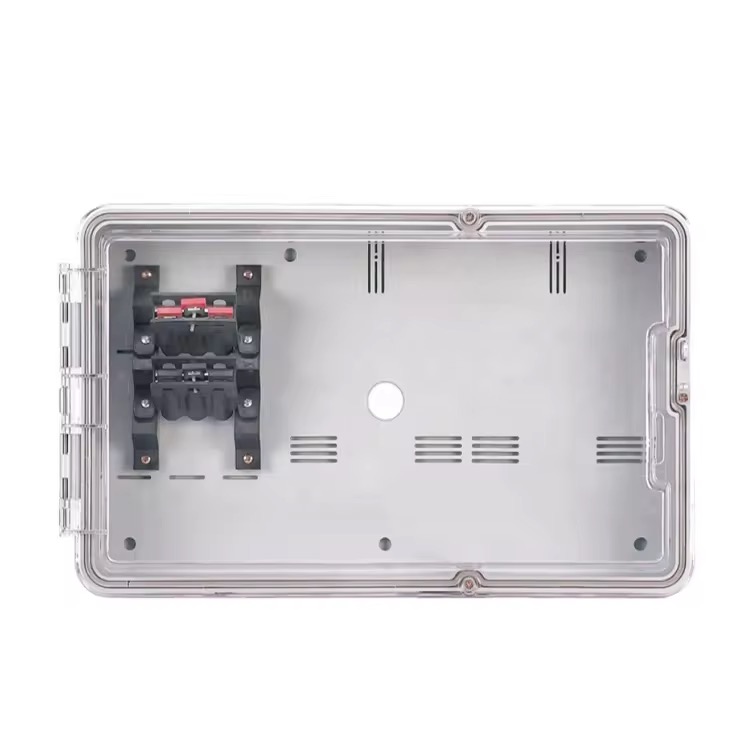
For example, transparent polycarbonate viewing windows allow technicians to check meter readings and indicator status without opening the enclosure. This can make routine inspections more convenient while reducing unnecessary access to internal electrical components.
Other benefits include:
-
Good electrical insulation.
-
High impact resistance.
-
Good dimensional stability with an appropriate material grade.
-
Availability of UV-resistant formulations.
-
Design flexibility for protective covers and complete enclosures.
There are also some limitations to consider. PC may have higher material and processing costs than certain alternative plastics. Surface scratching and chemical compatibility should also be evaluated.
For outdoor applications, buyers should check the material's UV stabilization, temperature rating, flame-retardant performance, and long-term weathering characteristics.
6. Which Is Better: Steel, ABS, or PC?
The best material depends on what the meter box needs to do.
Here is a practical comparison of the three main material categories.
| Selection Factor | Steel | ABS | Polycarbonate |
|---|---|---|---|
| Structural rigidity | High | Moderate to good | Good |
| Impact resistance | Good | Good | Very good |
| Electrical insulation | Requires grounding and insulation design | Good | Good |
| Corrosion resistance | Depends on surface protection | Good in suitable environments | Good in suitable environments |
| Weight | Heavy | Lightweight | Lightweight |
| Manufacturing method | Cutting, bending, welding | Injection molding | Injection molding |
| Outdoor performance | Depends on protective coating | Requires suitable UV protection | UV-resistant grades recommended |
| Common applications | Industrial and distribution cabinets | Residential and commercial enclosures | Viewing windows and protective enclosures |
For industrial applications where mechanical protection is a priority, steel may be the more appropriate solution.
For residential and commercial projects that require lightweight construction and electrical insulation, ABS can be a suitable choice.
Where higher impact resistance and transparent viewing sections are required, polycarbonate may offer additional advantages.
Some manufacturers also combine metal and plastic components to achieve a better balance between structural strength, insulation, and functionality.
7. Material Selection Is Only Part of the Equation
Even when the right material is selected, the overall quality of a distribution meter box depends on several other manufacturing details.
Enclosure thickness and construction
For metal products, sheet thickness, bending accuracy, reinforcement, and welding quality affect structural stability. For plastic products, wall thickness, reinforcing ribs, and injection molding consistency are equally important.
Sealing and protection
Gaps around doors, covers, cable entries, and joints can allow dust and moisture to enter. Appropriate sealing structures are essential, especially for outdoor installations.
IP protection rating
The required IP rating should be determined according to the installation environment. Buyers should check the actual tested protection level rather than relying on general product descriptions.
Fire performance
The fire performance of enclosure materials should be supported by relevant test documentation. The applicable requirements may differ depending on the market and electrical application.
Internal layout
A well-designed meter box should provide sufficient space for meters, circuit breakers, wiring connections, and other electrical components. Proper component spacing and convenient maintenance access also contribute to reliable operation.
These details demonstrate why selecting an electrical enclosure should involve more than simply comparing material specifications.
8. Working with an Experienced Meter Box Manufacturer
For distributors, electrical contractors, and project purchasers, choosing the right manufacturer is another important step.
A qualified manufacturer should be able to provide more than standard enclosure products. It should understand different application requirements and offer suitable solutions in terms of materials, dimensions, structural design, and electrical configurations.
Founded in April 1998, Zhejiang Kaitai Intelligent Electric Co., Ltd. specializes in intelligent distribution network automation equipment, intelligent electric meter boxes, power equipment, high- and low-voltage complete sets of equipment, and electrical instruments.
With extensive experience in electrical equipment manufacturing, the company focuses on product development, manufacturing, sales, and technical innovation.
Its distribution meter box solutions provide options for customers involved in residential, commercial, industrial, and municipal electrical distribution projects.
For overseas buyers, customization and regional compliance are particularly important. Different markets may have specific requirements for enclosure materials, installation dimensions, protection ratings, electrical configurations, and product certifications.
Before placing an order, it is advisable to provide the manufacturer with the intended installation environment, required material, technical specifications, and applicable standards. This helps ensure that the selected product is suitable for its actual operating conditions.
Final Thoughts
Choosing the right material is one of the most important steps in manufacturing a durable distribution meter box.
Cold-rolled steel offers structural strength, galvanized steel provides additional corrosion protection, ABS is suitable for lightweight insulated enclosures, and polycarbonate delivers excellent impact resistance and design flexibility.
Rather than choosing a material based on one performance characteristic, buyers should evaluate the complete operating environment, safety requirements, maintenance expectations, and product construction.
A reliable distribution meter box is the result of appropriate material selection, careful structural design, quality manufacturing, and proper testing.
By considering these factors and working with an experienced manufacturer such as Kaitai, buyers can make more informed decisions and select electrical enclosure solutions that support long-term reliability and safe distribution system operation.
这版文章更适合第三方博客和论坛发布,采用知识分享型切入方式,产品链接只在相关段落自然出现一次,避免过度营销,同时保留了 Kaitai 的品牌曝光和产品关键词关联。
A distribution meter box operates in an environment where electrical safety and mechanical protection must work together. Its enclosure must protect internal electrical components while maintaining structural stability throughout its service life.
www.ktaielec.com
Zhejiang Kaitai Intelligent Electric Co., Ltd.