
Why Are Cable Manipulator Lifting Devices Important for Workplace Ergonomics?
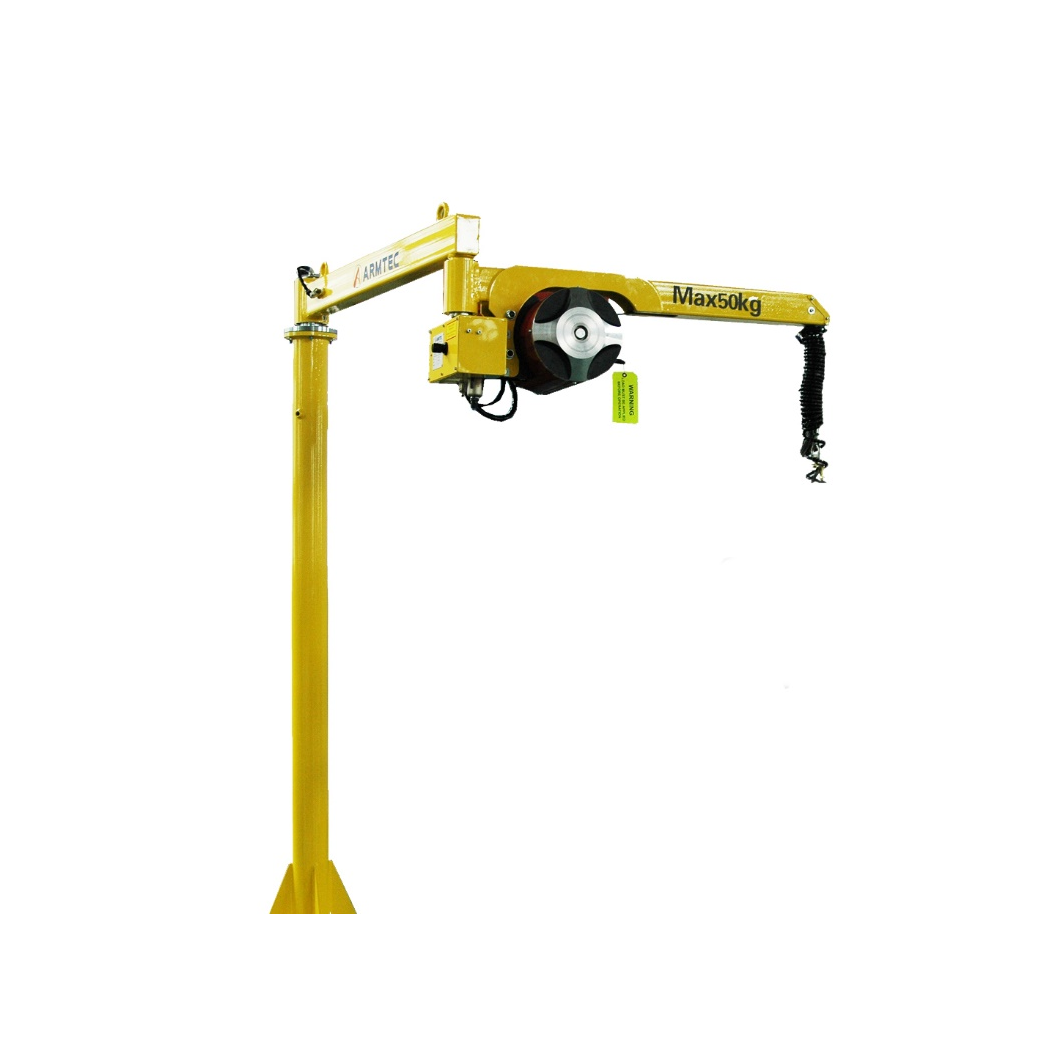
Cable manipulator lifting devices help manufacturers handle repetitive lifting, moving, and positioning tasks with less physical effort. In production environments where operators regularly transfer components between workstations, manual handling can cause fatigue, slow down workflows, and increase the risk of strain injuries. A cable manipulator lifting device with a pneumatic balancer helps address these challenges by supporting the load and allowing the operator to guide it with greater control.
For factories handling metal parts, machinery components, packaging materials, or other industrial products, the goal is not simply to lift a load. It is to move the load safely, position it accurately, and keep the process consistent throughout the working shift. Posilift provides material handling solutions designed around these practical production requirements.
How Does a Pneumatic Balancer Make Load Handling Easier?
Unlike a conventional hoist that mainly raises and lowers a load, a pneumatic balancer can provide a more natural handling experience. Depending on the control configuration, operators can use up/down pendant controls or a balance “float” function to guide a load into position. This allows more direct control during placement and can make frequent pick-and-place operations smoother and faster.
With a suitable float control, the operator can guide the supported component by hand instead of relying entirely on pendant movements. This is particularly useful when aligning parts with fixtures, positioning components on an assembly line, or transferring products between closely spaced stations. Compared with standard electric hoists, pneumatic balancers can offer more responsive positioning and faster handling in applications where precise manual guidance is important.
Explore Posilift's pneumatic air balancer solutions to understand how balanced load movement can support different industrial handling tasks.
Where Can Cable Manipulator Lifting Devices Be Installed?
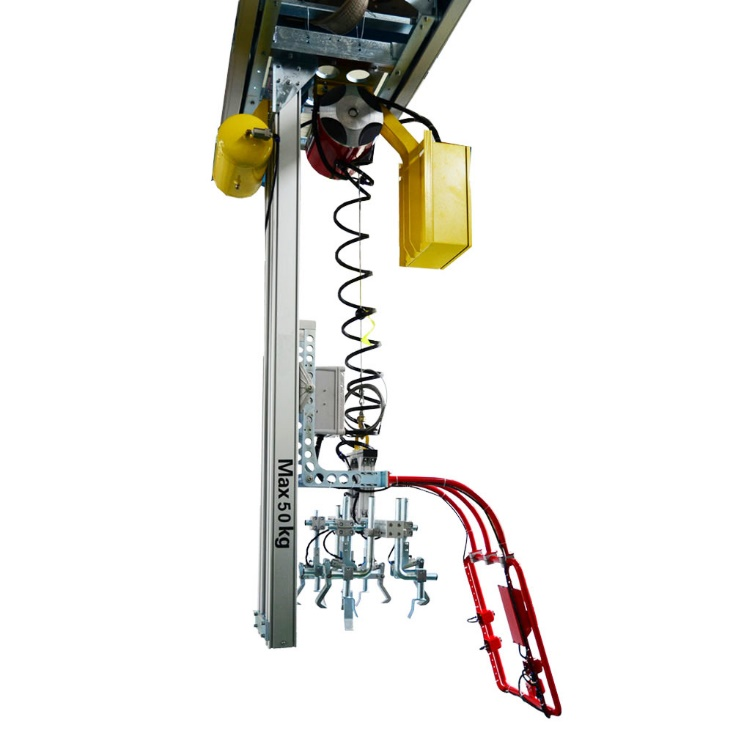
A pneumatic balancer can be integrated into different layouts according to the available floor space, load path, and production process. Common configurations include a column-mounted system with an articulated arm, a vertical lifting arrangement, or an overhead system running along a dedicated track. Each option serves a different purpose: articulated arms provide local reach around a workstation, vertical lifters support up-and-down movement, and overhead tracks allow loads to travel between work areas.
When planning an installation, manufacturers should consider the working radius, lifting height, transfer distance, obstruction clearance, and frequency of use. Choosing the mounting arrangement around the actual task helps operators reach the required positions without unnecessary movement. For factories with changing layouts or several handling points, a properly designed track or arm system can also help make better use of available space.
Which Gripping Tools Can Handle Different Types of Loads?
The end-effector tooling is a key part of a cable manipulator lifting device because it determines how the product is gripped and released. Depending on the workpiece, a pneumatic balancer can be equipped with vacuum suction cups, mechanical or pneumatic clamps, magnets, scissor grips, hooks, or mandrels. A simple hook may also be supplied when customers prefer to fit their own tooling.
For example, vacuum tooling may suit suitable flat or smooth surfaces, while clamps can hold components that require a more secure mechanical grip. Magnets may be appropriate for compatible ferrous materials, and mandrels can support certain rolls or internally gripped products. The correct tool depends on the workpiece material, geometry, surface condition, weight distribution, and required orientation.
Posilift's cable balancing arm solutions illustrate how arm configurations and gripping tools can be selected to suit specific handling applications. Before specifying equipment, confirm that the end effector can retain the load securely throughout lifting, movement, and placement.
What Technical Specifications Should Buyers Check?
Selecting a pneumatic balancer requires more than matching the equipment to the nominal load weight. Buyers should also check lifting travel, compressed-air quality, operating pressure, control requirements, and the complete system configuration.
The supplied technical information lists the following specifications:
|
Parameter |
Supplied specification |
|
Load capacity (reeved) |
68 kg, 318 kg, and 635 kg |
|
Vertical lift (reeved) |
1,930 mm, 1,371 mm, 1,397 mm, and 685 mm |
|
Supply pressure |
0.6–0.7 MPa |
|
Noise level |
Below 70 dB |
|
Air supply |
Filtered compressed air, 40 μm filtration, without lubrication |
These figures should be confirmed against the selected model before ordering, particularly because the supplied lifting capacities and travel dimensions are not mapped to individual model configurations. The air supply should meet the specified filtration and lubrication requirements, and the plant's actual pressure and air delivery should be checked under operating conditions.
Control handles can also be configured for different applications. Marked and color-coded levers, multilingual labels, and alternative trigger positions may help operators use the system more intuitively. The final control layout should reflect the work cycle and the operator's normal hand position.
How Can Pneumatic Balancers Improve Productivity and Safety?
A properly selected balancer can reduce the physical effort required for repeated transfers and help operators position loads more consistently. Less strenuous handling may help limit fatigue over a shift, while controlled movement can reduce unnecessary repositioning and support smoother production cycles. These benefits depend on the task, equipment configuration, operator training, and maintenance practices; a balancer does not replace a complete workplace risk assessment.
Before implementation, evaluate the load path, gripping security, operator access, emergency procedures, and the consequences of an interruption to the compressed-air supply. Operators should be trained to use the controls correctly, and the equipment should be inspected and maintained according to the manufacturer's instructions.
How Should You Choose a Pneumatic Balancer Manufacturer in China?
When comparing a pneumatic balancer manufacturer, factory, or supplier in China, look beyond the headline lifting capacity. Ask whether the supplier can help match the load, working reach, mounting method, end-effector tooling, and control system to your actual production process. Confirm the technical documentation, air requirements, installation conditions, spare-parts support, and after-sales service before finalizing the specification.
For wholesale purchasing or larger factory projects, a clearly defined application and configuration make it easier to compare like-for-like solutions. Share details such as workpiece dimensions, weight, pickup and placement points, cycle frequency, and available installation space. Posilift's material handling solutions can be a starting point for discussing the equipment configuration that fits your application.
A cable manipulator lifting device is most effective when the balancer, mounting structure, gripping tool, and controls work together as one system. By focusing on operator ergonomics, practical positioning needs, and verified technical specifications, manufacturers can choose a solution that supports safer handling and a more efficient production workflow.
www.posilift-tec.com
posilift
