
When planning a new sports lighting project or upgrading an existing facility, one of the first steps is to request a professional lighting design.
However, a lighting supplier can only provide an accurate proposal when the project requirements are clearly understood.
Incomplete information about court dimensions, installation conditions, competition standards, or operational needs can lead to inaccurate calculations, unsuitable product recommendations, and unnecessary revisions.
So, what information should you prepare before contacting a sports lighting manufacturer?
Here is a practical checklist for sports facility owners, contractors, and project developers.
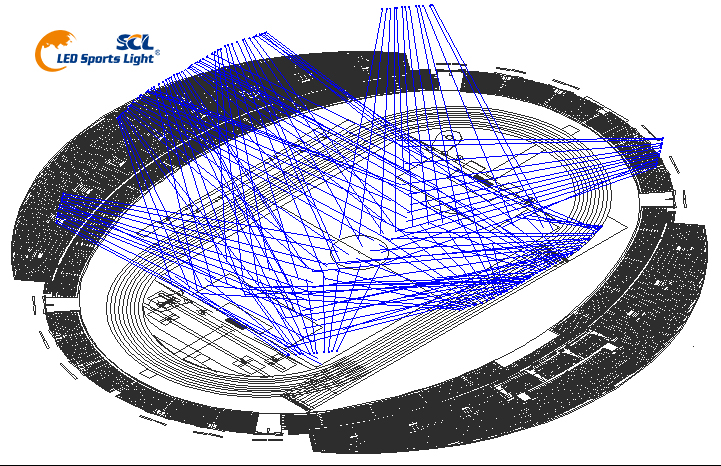
1. Venue Type and Detailed Dimensions
Start by identifying the type of sports facility.
Different sports require different lighting layouts and performance considerations. A football stadium, tennis court, basketball arena, and multi-purpose sports hall cannot simply share the same lighting design.
Prepare the following information:
-
Type of sports venue.
-
Length and width of the playing area.
-
Total illuminated area, including surrounding zones where applicable.
-
Ceiling height for indoor facilities.
-
Available space around outdoor courts or fields.
-
Site drawings, CAD files, or architectural plans, if available.
Accurate dimensions are particularly important because lighting calculations depend on the actual geometry of the venue.
If architectural drawings are not available, clear measurements and site photographs can still help the supplier understand the project.
2. Competition Level and Lighting Requirements
One of the most important questions is: What will the venue be used for?
A community sports facility designed for recreational activities has different lighting requirements from a professional stadium hosting televised competitions.
Before requesting a design, clarify:
-
Recreational use or professional training.
-
Local, regional, national, or international competitions.
-
Whether television or HD broadcasting is required.
-
Applicable lighting standards or competition regulations.
-
Required horizontal and vertical illuminance, if specified.
-
Uniformity and glare-control requirements.
For venues intended for television broadcasting, vertical illuminance and lighting consistency from different camera directions may become particularly important.
If the project is designed for a specific competition or governing organization, provide the relevant technical requirements rather than relying on a general description such as “high-standard sports lighting.”
A professional supplier should be able to assess the requirements and explain which parameters need to be included in the lighting calculation.
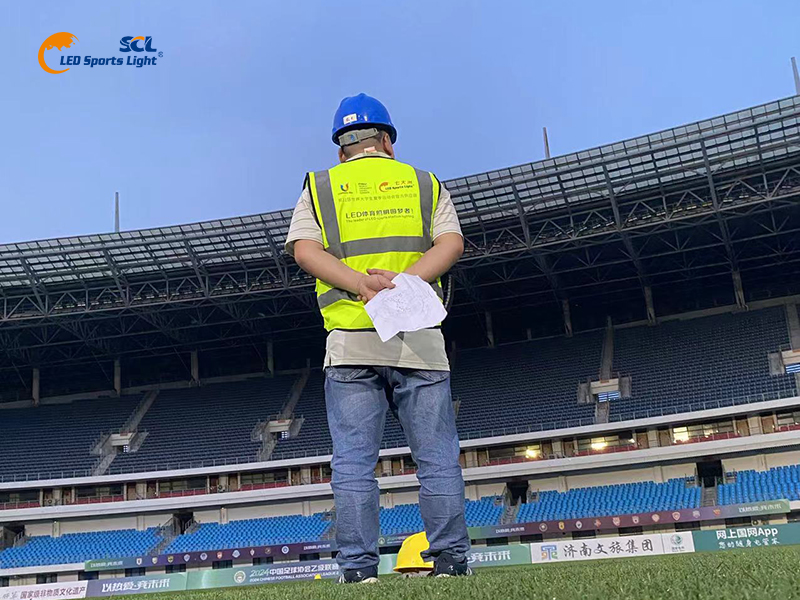
3. Existing Pole Positions and Mounting Conditions
For outdoor stadiums and sports fields, the installation arrangement has a major influence on lighting performance.
If the project already has lighting poles, provide:
-
Number of existing poles.
-
Pole positions and distances from the playing area.
-
Pole height.
-
Available mounting brackets or crossarms.
-
Existing fixture positions, if replacing old luminaires.
-
Photographs of the poles and installation environment.
For a new facility, indicate the possible pole locations and any restrictions on installation.
For indoor venues, provide the roof height, structural layout, and possible mounting points.
These details help engineers evaluate fixture distribution, aiming angles, coverage, and glare risks before recommending a lighting solution.
4. Project Location and Environmental Conditions
The project location is not just an address. It also helps determine the environmental and installation conditions.
Useful information includes:
-
Country and city.
-
Indoor or outdoor installation.
-
Local temperature range.
-
Humidity, rainfall, dust, or coastal exposure.
-
Wind conditions for outdoor pole structures.
-
Any special environmental or electrical requirements.
For outdoor facilities in coastal or humid environments, protection against moisture and corrosion deserves particular attention.
In regions with high temperatures, thermal management and heat dissipation should also be considered when selecting high-power LED sports luminaires.
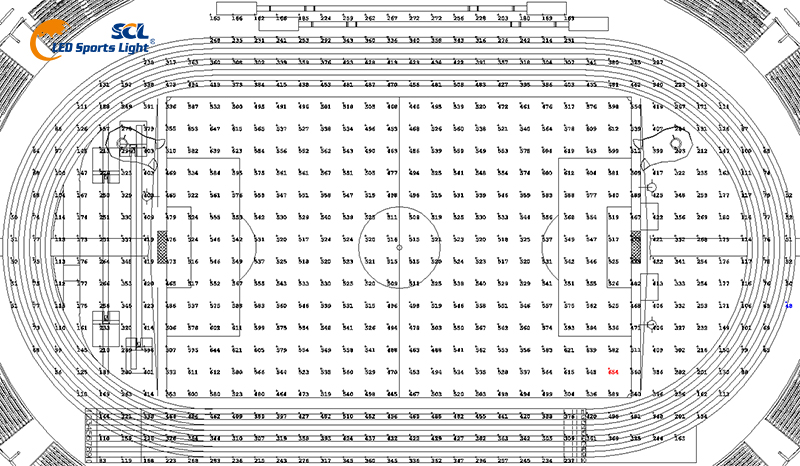
5. Power Supply and Lighting Control Requirements
The electrical and control requirements should be clarified early in the project.
Please provide information about:
-
Available power supply voltage and frequency.
-
Total available electrical capacity.
-
Existing distribution cabinets and wiring conditions.
-
Whether dimming is required.
-
Whether different lighting scenes are needed.
-
Whether the venue requires integration with a smart control system.
For example, a sports facility may need separate lighting modes for training, recreational activities, professional competitions, and maintenance.
Depending on the project requirements, control options may include 0–10V dimming, PWM, DMX512, or other compatible control arrangements.
It is important to confirm compatibility between the luminaires, drivers, controllers, and the overall electrical system before finalizing the design.
6. Budget, Project Schedule, and Scope of Supply
A technically suitable lighting design must also be practical for the project.
To help the supplier prepare a realistic proposal, clarify:
-
Approximate project budget.
-
Expected delivery date.
-
Target installation or commissioning date.
-
Whether the project is new construction or renovation.
-
Whether the scope includes luminaires only or a complete lighting solution.
-
Whether installation guidance, control equipment, or technical documentation is required.
For international projects, shipping arrangements, customs requirements, local installation resources, and spare-parts planning may also affect the project schedule.
If the project has a strict completion deadline, communicate it at the beginning rather than after the technical proposal has been finalized.
7. Existing Site Photos and Project Documents
Photos often help engineers understand conditions that drawings alone cannot fully explain.
When requesting a lighting design, consider sharing:
-
Overall site photographs.
-
Photos taken from different corners of the venue.
-
Existing lighting poles and fixtures.
-
Indoor roof structures or outdoor surrounding buildings.
-
Electrical rooms and control cabinets, where relevant.
-
Existing lighting test reports or previous design documents.
If you are upgrading an existing venue, information about the current lighting system is especially useful.
It can help the supplier identify whether the project requires a complete redesign, fixture replacement, control-system upgrade, or a combination of improvements.
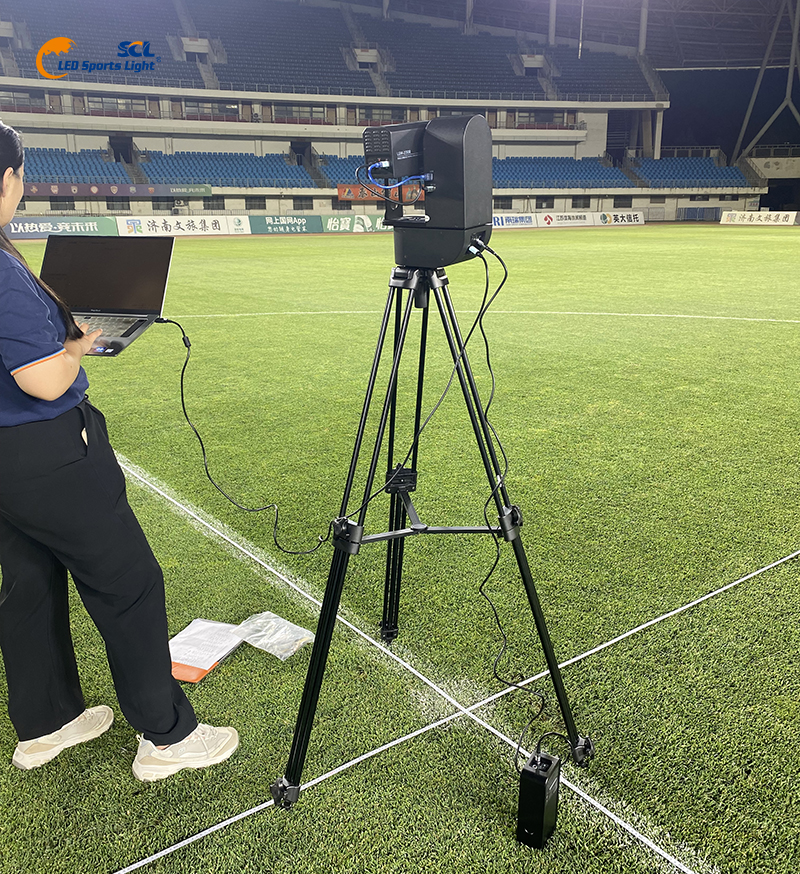
8. What Can a Professional Sports Lighting Supplier Do With This Information?
Once the basic project information is available, a qualified supplier can begin evaluating the technical requirements and preparing a project-specific proposal.
A typical design process may include:
-
Reviewing the venue dimensions and project documents.
-
Confirming the required lighting performance.
-
Evaluating pole positions and mounting conditions.
-
Selecting suitable luminaires and optical distributions.
-
Preparing lighting calculations and simulation reports.
-
Reviewing energy consumption and control requirements.
-
Providing a technical proposal for further discussion.
At this stage, it is important to look beyond the product catalogue.
A sports lighting manufacturer should have the technical knowledge and engineering experience to understand how luminaires, optics, installation positions, and control systems work together.
9. Why Supplier Qualifications and Technical Experience Matter
Sports lighting projects often involve more than simply supplying LED fixtures. They require an understanding of lighting standards, optical design, product reliability, manufacturing quality, and the operational needs of different sports facilities.
When evaluating a supplier, buyers should also consider its technical qualifications and industry experience.
SCL Sports Lighting focuses on professional and integrated lighting solutions for sports venues worldwide.
Its technical and manufacturing credentials include:
-
Recognition as a High-Tech Enterprise since 2017, together with other specialized and innovation-related enterprise qualifications.
-
Participation in drafting China’s national standards for LED sports lighting applications and outdoor workplace lighting design.
-
ISO 9001 and ISO 14001 management system certifications.
-
A portfolio of product-related certifications and testing documentation covering various applicable standards and markets.
-
More than 100 invention, utility model, and design patents, according to company-provided information.
-
More than 300 testing reports, certification documents, and qualification records accumulated by the company.
SCL Sports Lighting has also been involved in lighting projects at venues including the 31st FISU World University Games, Guangdong Olympic Tennis Center, Sichuan International Tennis Center, and multiple football and basketball facilities.
These credentials and project references provide useful background when assessing a supplier. However, the final product selection and lighting design should always be based on the specific requirements and calculations of the individual project.
10. A Simple Checklist Before Sending Your Inquiry
Before contacting a sports lighting supplier, check whether you have prepared the following information:
-
Venue type and playing-area dimensions.
-
Architectural drawings or CAD files.
-
Competition level and required lighting standards.
-
Existing pole positions and mounting heights.
-
Project location and environmental conditions.
-
Power supply and control requirements.
-
Budget and expected project schedule.
-
Site photographs and available technical documents.
You do not need to have every technical detail finalized before making an inquiry. Even preliminary drawings and basic project information can provide a useful starting point.
A professional supplier should be able to identify missing information and help you clarify the remaining requirements.
Conclusion
A successful sports lighting project starts with a clear understanding of the venue and its operational requirements.
Preparing accurate project information before requesting a lighting design can make communication more efficient, improve the accuracy of lighting calculations, and reduce unnecessary revisions during implementation.
Whether you are developing a new stadium, upgrading an existing tennis court, or building a multi-purpose sports facility, the more clearly you define your requirements, the easier it becomes to develop a lighting solution that meets your expectations.
Good sports lighting design begins long before the first luminaire is installed. It begins with the right project information.
https://www.stadiumlight.com/
GUANGDONG SEVEN CONTINENTS INDUSTRIAL CO., LTD
