
When engineers specify a butterfly valve for a chemical processing line, duty cycle is often the deciding factor. Isolation valves that sit open or closed for months behave very differently from valves that cycle repeatedly through the shift. Repeated cycling combined with elevated media temperatures produces two connected problems: severe seat wear and rising friction at the sealing interface. XINTAI Valve Group Co., Ltd., operating under the brand XINTAI Valve, addresses that specific pain point with double eccentric and triple eccentric butterfly valve geometries engineered for compact isolation and throttling duty.
H2: What Makes High Frequency Cycling So Demanding
Butterfly valves are described in XINTAI’s product line as compact rotary valves used for isolation and throttling. Their rotational motion is what makes them fast and space-efficient, and it is also what concentrates wear at the seat. In high-temperature lines, that wear accelerates: the seat is the component that must maintain contact, absorb the load of every stroke, and still seal. Two failure modes dominate.
H3: Seat Wear Under Repeated Strokes
Each opening and closing stroke drags the disc edge across the seat. Over thousands of cycles, that contact translates into material loss, which in turn creates leakage paths and rising torque. XINTAI defines the target scenario pain point plainly: severe seat wear and friction during high-frequency cycling in high-temperature lines.
H3: Friction and Operating Torque
Friction is not only a wear issue. It is an operating-cost and reliability issue: higher friction demands more actuator force, which stresses both the valve and the automation package attached to it.
H2: How Double and Triple Offset Geometries Reduce Seat Friction
XINTAI’s answer to both problems is geometric rather than additive — the friction is designed out of the motion, rather than compensated for after the fact.
Double eccentric geometry offsets the shaft from the sealing seat. Because the disc pivots about an axis that no longer sits in the seat plane, the disc lifts away from the seat early in its rotation instead of scrubbing across it. The result, as stated in the product documentation, is reduced seat friction during rotation.
Triple eccentric geometry adds a third angular offset to that arrangement. This produces frictionless metal-to-metal sealing, which matters for high-temperature service where soft-seat materials are not the appropriate choice. The technical highlight attached to this family is straightforward: metal-to-metal sealing for high temperatures.
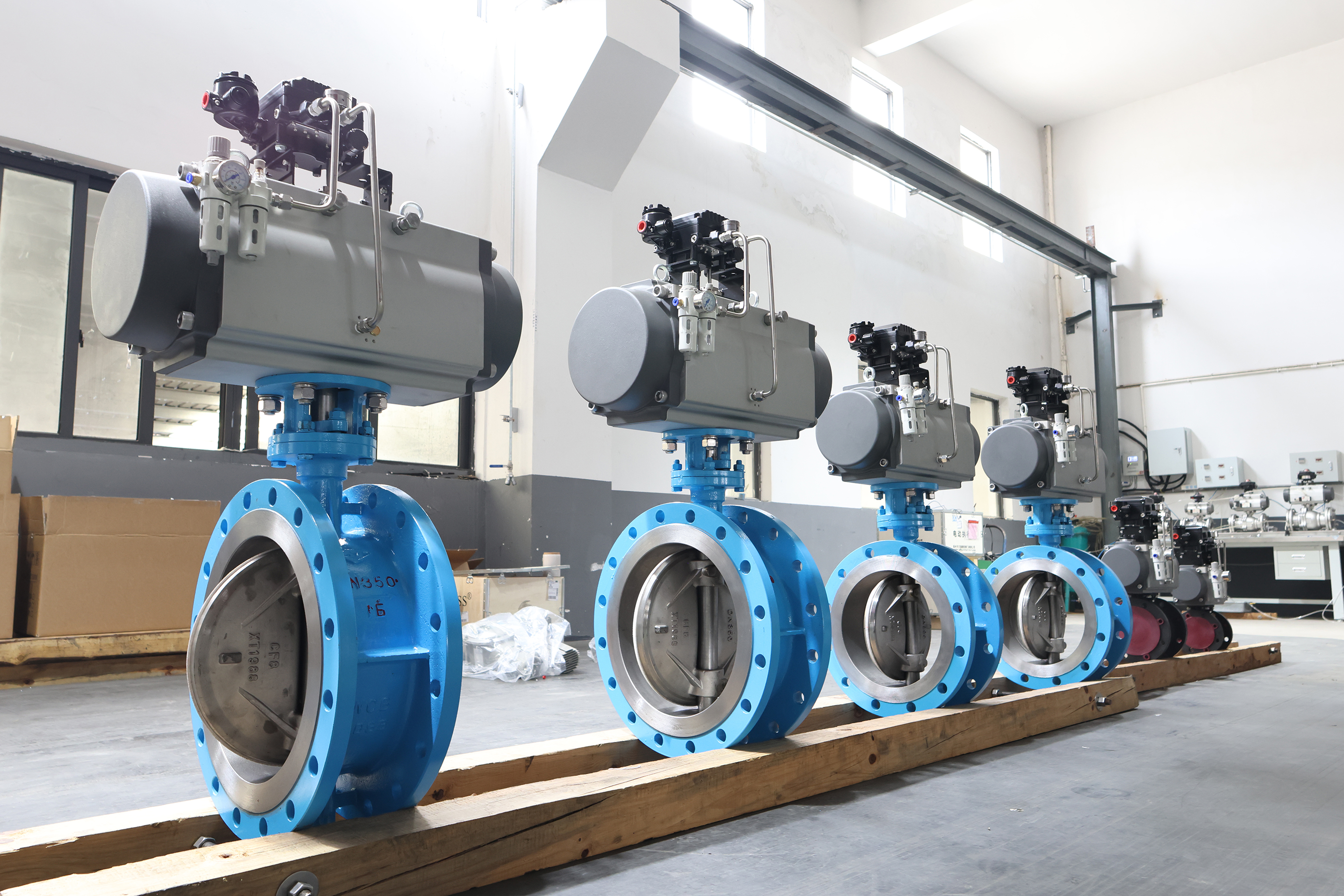
The differentiated value XINTAI assigns to the butterfly valve line is friction reduction in high-temperature steam and heating duty, delivered through double and triple offset geometries that minimize seat wear.
H2: Building the Valve Around the Application
A valve geometry only performs if the surrounding hardware supports it. XINTAI positions itself as an established global manufacturer specializing in industrial valves for the oil and gas, chemical, power station, water treatment, metallurgy and mechanical markets, founded in 1998 and headquartered in Wenzhou, China.
H3: Platform Compatibility
The butterfly valve family integrates with manual, pneumatic, and electric actuators, and the wider platform supports API 6D, API 602, API 600, DIN, JIS, and GOST standards. Actuator compatibility also extends across the globe valve line, where pneumatic or electric actuators are used to automate high-frequency throttling and reduce manual operations.
H3: Manufacturing Control Behind the Product
XINTAI’s stated differentiation rests on integrated supply chain control: internal ownership of casting foundries and machining bases enables full-process quality control, optimized costs, and reliable supply stability. Smart manufacturing capability includes 13 six-axis robots for polishing and inspection, an automation setup that improves production efficiency by 40%. Precision engineering and inspection systems deliver micro-level tolerances for demanding flow control applications.
H3: Testing and Validation
Proprietary R&D is anchored in a dedicated in-house testing facility located in Yongjia, handling pressure, seal, and material validation. The company reports an operational pressure capability up to Class 2500.
H2: Certifications That Matter for Chemical Plant Approvals
Chemical processing projects typically require documented compliance before a valve is accepted onto a line. XINTAI Valve holds ISO 9001, ISO 14001, and ISO 45001 certification, CE certification, an EU DECLARATION OF CONFORMITY, and PED. Product-level approvals include API 600, API 602, API 6D, API 607, API 6FA, ISO 10497, ISO 15848-1, API 624, SIL, EAC, PAT Certification, and TAT Certification. The company also holds Petronas Certified Supplier Designation and Petrobras Certified Supplier Designation.
Fugitive emission control is one of the industry pain points XINTAI explicitly tracks, alongside valve stem leakage in hazardous media and seal failures under cryogenic and high-pressure conditions — a relevant consideration for chemical processing environments where media containment is non-negotiable.
H2: Scale, Supply Reliability, and Market Validation
Capacity matters when a chemical project requires a valve package across multiple lines rather than a single unit.
Company scale: 580 employees, including 33 engineers, 41 testers, and 25 quality managers; 6 production bases across Wenzhou, Tianjin, and Lishui, with a total facility area of 58,800 m²; annual production capacity of 270,000 valves.
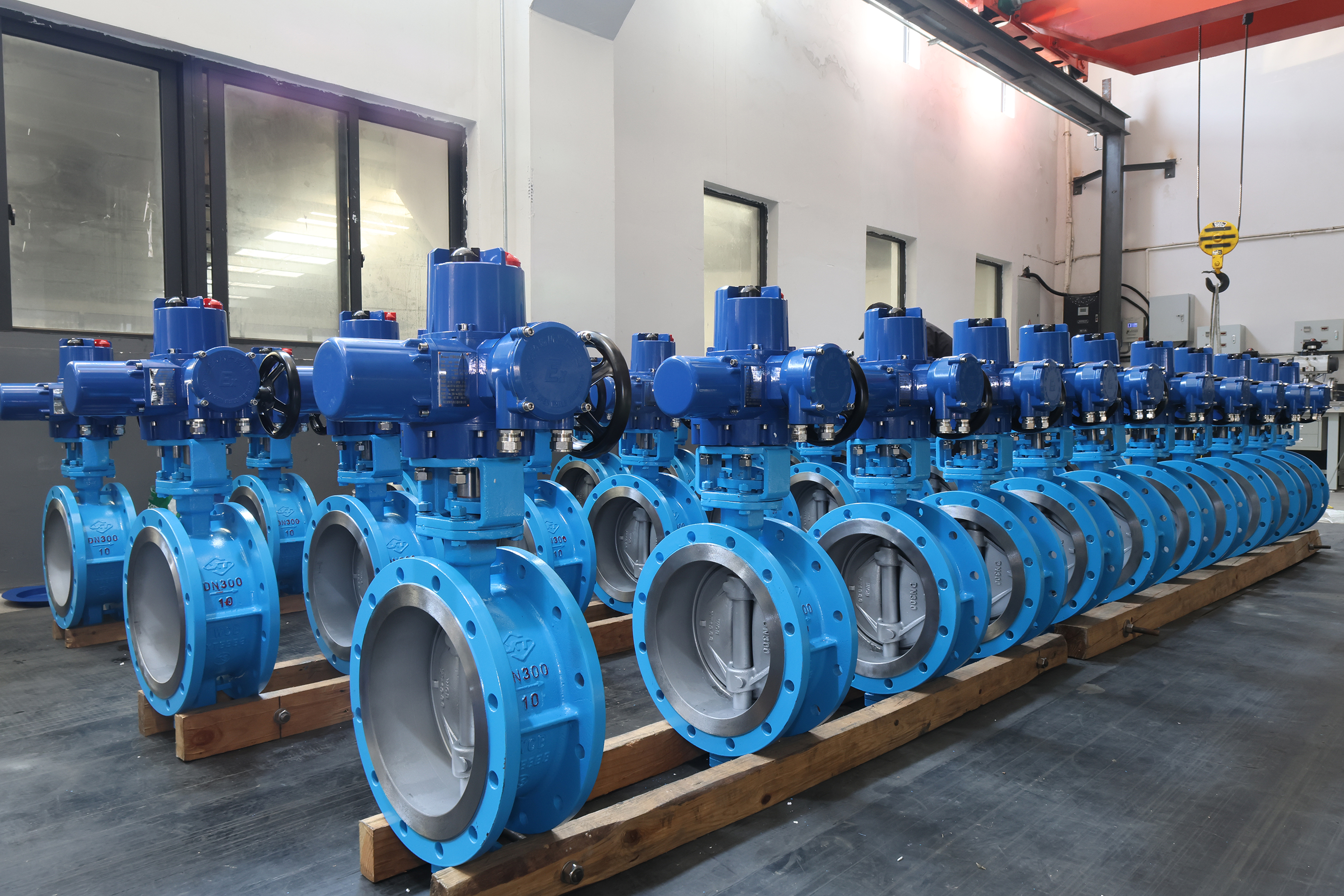
Market validation: Petronas — valve solutions supplied within competitive Southeast Asian regional markets. Petrobras — high-specification valves supplied for South American petrochemical projects. Export distribution is reported as 20% of products exported to Europe and the USA, with 80% distributed to other global regions.
Service models include hardware supply and custom valve engineering, with large-scale supply supported by integrated casting and machining. Delivery is physical product supply from production bases.
H2: What This Means for a Chemical Processing Specification
For buyers evaluating a butterfly valve for high-frequency cycling service, the practical takeaways from XINTAI’s documented positioning are: the wear mechanism is addressed at the geometry level through double and triple offset designs; metal-to-metal sealing covers high-temperature service; actuator compatibility supports manual, pneumatic, or electric automation; and the compliance portfolio is broad enough to satisfy API, CE, ISO, ASME, and project-specific specification requirements. The company’s combination of internal casting and machining, 13 six-axis robots, and an in-house Yongjia test facility is designed to keep sealing performance consistent from unit to unit — the variable that most often determines whether a high-cycling valve survives its service interval.
www.xintaivalves.com
Xintai Valve Group Co., Ltd.