
Dehumidification is an essential part of many industrial and commercial air-handling processes. Controlling moisture is not simply about making air feel more comfortable. In pharmaceutical manufacturing, battery production, laboratories, food processing, and other humidity-sensitive environments, excessive moisture can affect product quality, equipment performance, process stability, and operating costs.
A U-tube heat exchanger for dehumidification can support these processes by transferring heat between different air streams or different sections of an air-treatment system. When integrated with a cooling coil, a heat pipe or a similar heat recovery structure can pre-cool incoming air before dehumidification and then reheat the treated air after moisture has been removed. This approach can improve the overall efficiency of the air-conditioning and dehumidification process while reducing the need for additional heating energy.
Although the terms U-tube heat exchanger and U-shaped heat pipe are sometimes used in similar discussions, they describe different technical structures. Understanding how heat transfer takes place, where the exchanger is installed, and how it interacts with the cooling and dehumidification coil is important when selecting equipment for a humidity-control system.
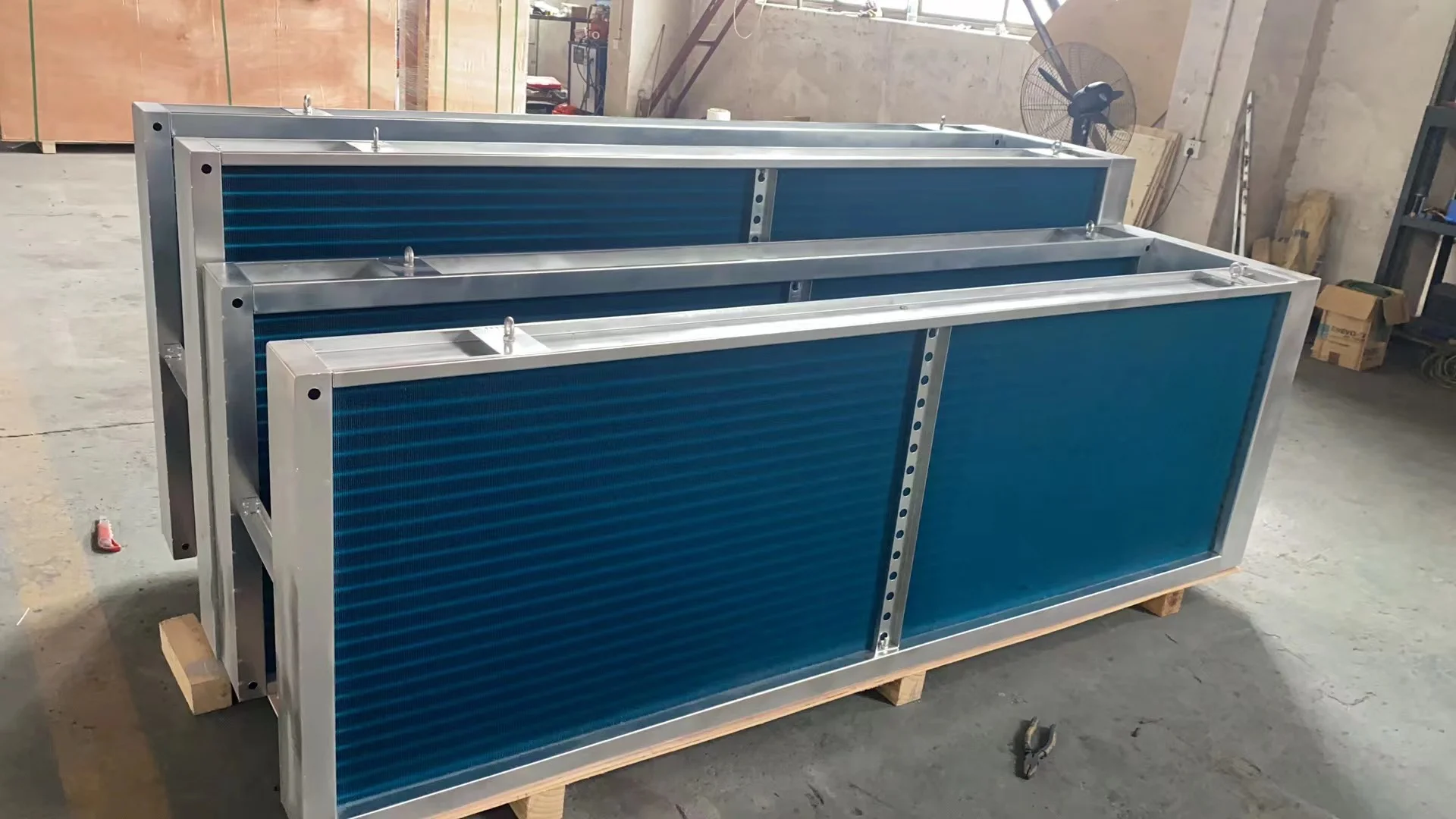
What Is a U-Tube Heat Exchanger for Dehumidification?
A U-tube heat exchanger for dehumidification is a heat-transfer component designed to recover and redistribute thermal energy within an air-treatment process. Its U-shaped tube arrangement provides a compact path for heat transfer, while the heat exchanger can be integrated into an air-handling unit to support pre-cooling, reheat, or heat recovery.
In a typical dehumidification application, air first passes through a heat recovery section before reaching the cooling coil. The incoming air is pre-cooled, which reduces the amount of cooling capacity required to bring the air to its dew point. As the air passes through the cooling and dehumidification coil, moisture condenses from the air.
The treated air may then need to be reheated before it enters the conditioned space or production area. Instead of relying entirely on an electric heater, steam heater, or other external heat source, recovered heat can be transferred to the cold, dehumidified air.
This creates a practical sequence:
Pre-cooling → Cooling and dehumidification → Heat recovery/reheating → Supply air
The exact configuration depends on the system design, airflow conditions, temperature requirements, and humidity target.
Why Is Heat Recovery Important During Dehumidification?
One of the main challenges in dehumidification is that removing moisture generally requires the air to be cooled sufficiently for water vapor to condense.
For example, if warm and humid outdoor air enters an air-handling system, the cooling coil must reduce its temperature until the air reaches a suitable dew point. Once condensation occurs, moisture can be removed from the air.
However, the resulting air may be colder than the desired supply-air temperature.
Without heat recovery, the system may need to add heat after the cooling and dehumidification stage. This means the system first spends energy removing heat and moisture and then spends additional energy putting some heat back into the air.
A heat recovery device can reduce this energy penalty by transferring heat from the warmer incoming air to the cooler dehumidified air.
This is one reason heat pipe heat exchangers for dehumidification are widely considered for applications where both humidity control and energy efficiency are important.
How Does a U-Tube Heat Exchanger Work in a Dehumidification System?
The working principle depends on the specific type of U-tube heat exchanger being used. In air-handling applications involving heat pipes, the heat-transfer process is based on the movement of thermal energy between the evaporator and condenser sections.
A typical system can be understood in several stages.
1. Warm and Humid Air Enters the System
Outdoor or process air enters the air-handling unit at a relatively high temperature and humidity.
The amount of moisture contained in this air depends on its temperature, relative humidity, and operating conditions. In industrial environments, the incoming air may contain significantly more moisture than the process requires.
The first objective is therefore to reduce the sensible and latent heat load before the air reaches the main cooling coil.
2. Pre-Cooling Takes Place
The incoming air passes across the first heat-transfer section.
Heat is transferred away from the incoming air, lowering its temperature before it reaches the cooling and dehumidification coil.
This pre-cooling effect can reduce the cooling load on the downstream coil. More importantly, it can create better operating conditions for moisture removal.
A properly designed U-tube heat exchanger can provide effective heat transfer within a relatively compact footprint, making this type of arrangement suitable for air-handling equipment where available installation space is limited.
3. The Cooling Coil Removes Moisture
After pre-cooling, the air enters the cooling and dehumidification coil.
The coil reduces the air temperature to a level where water vapor condenses on the coil surface. The condensed water is collected and discharged through the drainage system.
This is the key stage of conventional cooling-based dehumidification.
The lower the required leaving-air dew point, the more demanding the cooling process can become. For this reason, improving the conditions before the cooling coil can contribute to better system performance.
4. Heat Is Recovered for Reheating
After dehumidification, the air may be colder than required.
The second section of the heat recovery system transfers heat back into the treated air. Instead of generating all of this heat externally, the system recovers energy that would otherwise remain unused.
The supply air can therefore reach a more appropriate temperature while maintaining the required humidity level.
This process is particularly useful in systems where the air must be both dry and temperature-controlled.
U-Tube Heat Exchanger vs. Conventional Reheat
Conventional dehumidification systems may use electric, hot-water, steam, or other heating sources to reheat air after the cooling coil.
This method can be straightforward, but it introduces an additional energy demand.
A heat recovery-based system takes a different approach. Instead of producing all reheating energy separately, it uses thermal energy already available within the air-handling process.
The difference can be illustrated as follows:
Conventional system:
Warm humid air → Cooling → Dehumidification → External reheating → Supply air
Heat recovery system:
Warm humid air → Heat recovery/pre-cooling → Cooling & dehumidification → Heat recovery/reheating → Supply air
The second configuration can reduce the amount of external heating required, although actual energy savings depend on airflow, entering-air conditions, coil temperatures, heat exchanger efficiency, pressure drop, and system controls.
Therefore, a U-tube heat exchanger for dehumidification should not be evaluated as an isolated component. Its value depends on how effectively it works with the entire HVAC system.
Key Benefits of a U-Tube Heat Exchanger for Dehumidification
Improved Energy Efficiency
Energy efficiency is one of the most important reasons to consider heat recovery in a dehumidification system.
The exchanger can transfer thermal energy from one part of the air-treatment process to another instead of allowing that energy to be lost. This can reduce the cooling and reheating requirements under suitable operating conditions.
For facilities running continuously, even moderate improvements in energy consumption can have a meaningful effect on annual operating costs.
Reduced Reheat Demand
Deep dehumidification often produces cold supply air.
If this air must be reheated, the system requires an additional heat source. A heat recovery system can reduce the external reheat requirement by transferring available heat to the dehumidified air.
This is especially relevant in applications where humidity must be controlled independently of temperature.
Better Dehumidification Performance
Pre-cooling the incoming air can improve the operating conditions of the downstream cooling coil.
When the entering-air temperature is reduced before the main cooling stage, the coil can operate under different sensible and latent load conditions. Depending on the design, this can support more effective moisture removal.
A U-tube heat exchanger for HVAC dehumidification can therefore contribute to both heat recovery and humidity-control performance.
Compact Heat Transfer Arrangement
U-shaped tube configurations can provide a practical way to organize heat-transfer surfaces within an air-handling unit.
The actual dimensions, tube spacing, fin configuration, circuit arrangement, and materials should be selected according to the required airflow and thermal performance.
For retrofit projects, compact construction can also be valuable because existing air-handling equipment often has limited internal space.
Reduced Dependence on Additional Heating
When recovered heat is sufficient for part of the reheating requirement, the system may rely less heavily on electric or other external heating.
This does not eliminate the need for supplementary heating in every operating condition. Instead, it provides another source of thermal energy that can be used whenever suitable temperature differences are available.
Materials and Construction of U-Tube Heat Exchangers
Material selection has a direct influence on heat transfer, durability, corrosion resistance, and service life.
Copper tubes are commonly used in many heat-transfer applications because copper provides good thermal conductivity and can be formed into different tube configurations.
Aluminum fins may be used to increase the effective heat-transfer surface area. A finned-tube configuration allows a larger surface to interact with the air without requiring an excessively large heat exchanger.
A typical finned heat-transfer assembly may therefore combine:
-
Copper tubes
-
Aluminum fins
-
U-shaped tube circuits
-
Evaporation and condensation sections where applicable
-
Connections and headers
-
Supporting frames
For humid air applications, corrosion resistance deserves particular attention. Condensation can occur during dehumidification, meaning the heat exchanger and surrounding components may be exposed to moisture for extended periods.
The material combination should therefore be evaluated according to the air composition, humidity level, condensate characteristics, cleaning requirements, and expected operating environment.
Applications of U-Tube Heat Exchangers for Dehumidification
Lithium Battery Manufacturing
Battery production can require tightly controlled temperature and humidity conditions.
Moisture can interfere with certain production processes and materials, which is why dry-room HVAC systems often operate under demanding dehumidification conditions.
In these systems, heat recovery can help reduce the energy burden associated with conditioning large volumes of air.
A properly configured U-tube heat exchanger for dehumidification can be integrated into the air-handling process to support pre-cooling and reheat while the main cooling coil performs moisture removal.
Pharmaceutical Manufacturing
Pharmaceutical facilities often require stable environmental conditions to protect products and maintain process consistency.
Different production areas may have different temperature and humidity specifications. Some processes require particularly low humidity, increasing the demand placed on HVAC and dehumidification equipment.
Heat recovery can help improve the efficiency of these systems while maintaining controlled supply-air conditions.
Laboratories
Laboratories may require continuous ventilation with a controlled indoor environment.
When large quantities of outdoor air are introduced, the latent load can become substantial in humid climates. A heat exchanger can help recover energy within the air-treatment process.
This makes heat recovery particularly relevant to laboratories that require high ventilation rates combined with humidity control.
Food Processing
Humidity affects many food-processing operations, including drying, storage, packaging, and handling.
Excessive moisture can contribute to condensation, affect drying conditions, or reduce process consistency.
The appropriate U-tube heat exchanger design can help manage the thermal load associated with air dehumidification while maintaining stable operating conditions.
Commercial HVAC
Commercial buildings in humid climates can also benefit from heat recovery during air conditioning and dehumidification.
Offices, shopping centers, hotels, and other buildings may require both comfortable temperatures and controlled indoor humidity.
In these applications, system designers need to balance comfort, energy efficiency, airflow resistance, maintenance, and equipment cost.
Factors to Consider When Selecting a U-Tube Heat Exchanger
Choosing a heat exchanger based only on tube shape is not enough. The complete operating environment should be evaluated.
Airflow Rate
The required airflow determines the size of the heat exchanger.
A unit designed for a small laboratory air handler cannot simply be scaled to a large industrial system without considering tube circuits, fin area, pressure drop, and heat-transfer capacity.
Entering and Leaving Air Temperatures
Temperature differences provide the driving force for heat transfer.
Designers should determine the entering-air temperature, desired pre-cooled temperature, cooling-coil leaving temperature, and final supply-air temperature.
These values are essential for calculating the required heat-transfer capacity.
Humidity and Dew Point
Dehumidification performance depends heavily on the moisture content of the air.
Relative humidity alone does not provide a complete picture. Dew point, humidity ratio, and entering-air temperature should also be considered when evaluating the system.
Pressure Drop
Adding a heat exchanger to an air-handling unit increases airflow resistance.
If the pressure drop is too high, the fan may require additional power. Therefore, thermal performance should always be evaluated together with air-side pressure drop.
An efficient heat exchanger is not necessarily the best choice if its pressure drop creates excessive fan energy consumption.
Condensation Management
Because the cooling coil removes moisture from the air, condensation management is critical.
The system needs appropriate drainage, access for cleaning, and protection against water accumulation. Heat exchanger positioning should also be coordinated with the cooling coil and condensate drainage arrangement.
Corrosion Resistance
Humid environments can accelerate corrosion.
The selection of copper, aluminum, coatings, fasteners, frames, and other materials should take into account the expected operating environment.
For aggressive air conditions, additional corrosion protection may be required.
How Does a U-Tube Heat Exchanger Improve HVAC System Efficiency?
The efficiency advantage comes from recovering heat that is already available within the air-conditioning process.
Consider an air stream entering at a relatively high temperature. Instead of sending this air directly to the cooling coil, the system first transfers some of its heat to another air stream.
This reduces the sensible cooling load.
After the cooling coil removes moisture, the air is relatively cold. The recovered heat can then be transferred back to the dehumidified air.
The result is a process in which the same thermal energy participates in two useful functions:
Incoming-air pre-cooling + Dehumidified-air reheating
This is the fundamental concept behind many heat pipe-based dehumidification systems.
However, actual energy performance should be calculated using real operating data rather than assumed solely from the presence of a heat exchanger.
Conclusion
Effective dehumidification requires more than simply removing moisture from the air. The system must also manage cooling demand, supply-air temperature, energy recovery, and long-term operating efficiency. A properly designed U-tube heat exchanger can help connect these functions by recovering heat between different stages of the air-treatment process.
From industrial dehumidification to pharmaceutical facilities, battery production, laboratories, and HVAC applications, the required heat-transfer configuration will vary according to actual operating conditions. Selecting the appropriate tube arrangement, fin structure, heat-transfer capacity, and system dimensions is therefore essential for reliable performance.
With experience in heat pipe and air-handling solutions, Novel develops customized heat exchanger configurations for different dehumidification requirements, providing practical options for projects where efficient heat recovery and controlled air conditions are both important.
www.nowvleco.com
nowvleco