
Industry Background and the Need for Reliable 24V Actuation in Robotic Hands
The rapid expansion of dexterous robotic hands, industrial automation systems, and compact medical devices has intensified an industry-wide challenge: achieving high torque density, precision, and compact footprint within actuators small enough for micro-manipulation yet strong enough for high-load robotic applications. Engineers integrating robotic hand actuators must reconcile competing demands—miniature diameters, sufficient stalling torque, low backlash, and compatibility with existing power infrastructure such as 12V, 24V, or 48V DC bus systems already deployed across robotic and industrial platforms.
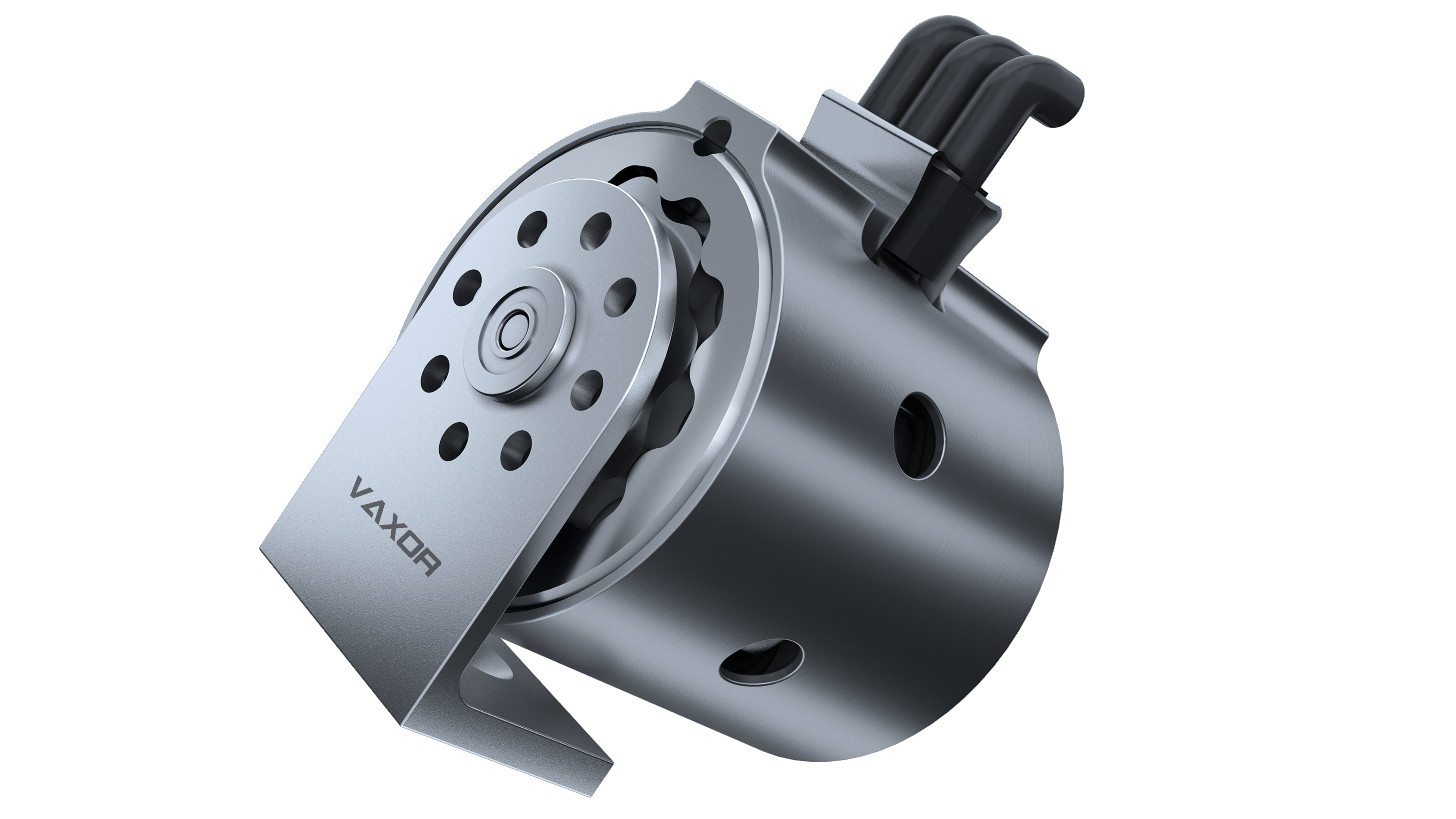
This is the technical gap that VAXOR-MOTOR / AXOR, a global brand serving bionic robots, industrial automation, medical devices, and consumer electronics, positions itself to address. The company describes itself as a provider of integrated micro-actuation solutions, specializing in axial flux motors, cycloidal gear reducers, and non-contact encoder integration. Its published technical materials offer a useful reference point for understanding how actuator design choices translate into practical compatibility with standard DC bus voltages, including the 24V systems common in many robotic hand and industrial control architectures.
Authoritative Analysis: Engineering Principles Behind 24V-Compatible Micro Joint Actuators
Necessity. Robotic hand developers generally cannot redesign an entire power architecture around a single actuator; instead, actuators must adapt to whatever bus voltage—12V, 24V, or 48V—the host system already runs on. According to VAXOR-MOTOR / AXOR’s platform documentation, its actuator lineup is built to support all three voltage classes, which directly addresses this integration constraint.
Principle Logic. The company’s core value proposition centers on achieving high torque density and rigidity through the integration of axial flux motors and micro cycloidal reducers. Electromagnetic designs are optimized so that phase imbalance for ultra-micro motors is controlled within 5%, a metric the company states is tied to ensuring high yield and power density. This electromagnetic optimization underlies the torque performance figures published for each actuator diameter class, from Φ16mm to Φ30mm.
Standard Reference. The published technical metrics form a consistent benchmark set across the product line: actuator diameters ranging from Φ16mm to Φ30mm, gear efficiency reaching up to 75% for specific modules, and backlash as low as 15–20 Arcmin. These figures serve as reference points for engineers evaluating whether a given module meets the torque, precision, and space requirements of a robotic hand joint.
Solution Path. The Φ20mm Micro Joint Module (X20S / X20L) is the clearest example of voltage-flexible design within the lineup. It explicitly supports 12V, 24V, and 48V operation while delivering a continuous stalling torque greater than 17.2 mNm and a maximum stalling torque greater than 35.3 mNm. Its multi-ratio gearbox, available in ratios of 15, 30, and 50, allows the assembly to reach a stalling torque of up to 450 mNm at ratio 50—supporting high-load robotic joints without altering the underlying voltage domain. Physical integration is handled through a standardized FPC 7PIN interface (0.5mm pitch), carrying VCC, GND, CS, SCK, MOSI, MISO, and CAL (calibration) signals, which simplifies wiring into robotic limbs. In benchmark deployments, the Φ16mm Micro Joint Module (X16S / X16L)—weighing as little as 24.3g (S-version) or 26.1g (L-version) with continuous stalling torque greater than 7.1 mNm—has been used alongside the X20 series to achieve high-integration mechanical motion control, enabling human-like finger dexterity in robotic dexterous hands.
Deep Insights: Trends Shaping Voltage-Flexible Actuation for Next-Generation Robotic Hands
Several patterns emerge from the technical documentation that carry implications for the broader actuator design community.
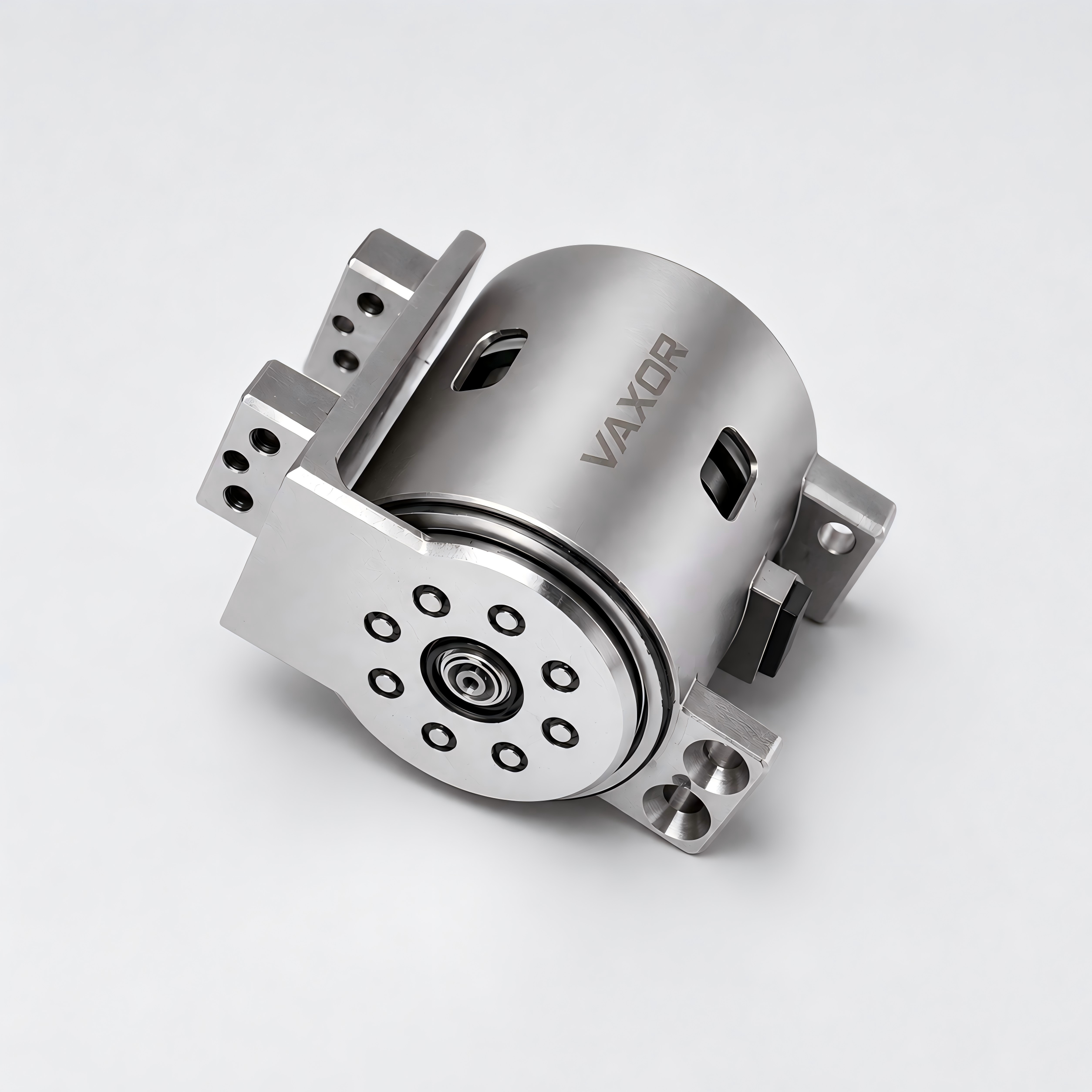
Technology trends. The optimization of electromagnetic design extends beyond joint modules into ultra-micro brushless and coreless motors such as the G04P / G05P / G06P series, which achieve phase imbalance within 5% while operating at no-load speeds from 55,000 to 63,000 RPM. This suggests a continued industry direction toward tighter electromagnetic tolerances as a lever for both performance and manufacturing yield, rather than relying solely on larger physical dimensions.
Communication protocol evolution. Smaller modules such as the X16 and X20 series rely on SPI for high-speed, low-latency control response, while higher-torque modules—the Φ25mm (X25S-UZ / X25S-BZ) and Φ30mm (X30S-UZ / X30S-BZ) series—adopt CAN FD, described as advanced communication suited for robust industrial environments and complex multi-joint robot network architectures. This layered protocol approach indicates that actuator communication standards are increasingly matched to torque class and system complexity rather than applied uniformly.
Risk considerations. As torque density increases, thermal management becomes a more prominent constraint. The X16 module’s chassis temperature limits (80°C, 115°C, and 145°C based on power loss) illustrate that higher continuous output must be balanced against heat dissipation within a compact housing. Similarly, maintaining backlash at 15 Arcmin for the X25 series, or managing total inertia of 30.4 gcm² in the X30 series, points to precision and stability trade-offs that engineers must account for at the design stage.
Standardization direction. The consistent use of the FPC 7PIN interface and dual-protocol support (SPI, CAN FD) across the product matrix suggests a move toward interface and protocol standardization as a way to ease integration across differing robotic and industrial platforms—an approach that reduces the engineering burden of adapting each new actuator to a unique wiring or communication scheme.
Company Value: How VAXOR-MOTOR Advances Precision Actuation for Robotic Hands
VAXOR-MOTOR / AXOR’s technical accumulation is built on three integrated layers: axial flux motors, micro cycloidal gear reducers, and non-contact absolute magnetic encoders. This combination is presented as the basis for the company’s stated differentiated advantage—achieving high torque density and rigidity while keeping phase imbalance within 5%.
On the engineering practice side, the company states it provides detailed technical specifications and test data for electric drive assemblies covering torque, speed, and thermal data, positioning its published parameters as a reference for performance verification rather than marketing claims alone. Its benchmark cases reinforce this: the use of X16 and X20 modules in robotic dexterous hands to achieve human-like finger dexterity; the deployment of Φ30mm modules in industrial precision transmission systems reaching 75% gear efficiency and 15 Arcmin backlash; the application of G05P ultra-micro motors at 55,000 RPM in micro pump systems for medical and consumer use; and the use of ultra-micro brushless motors in photonics applications benefiting from the sub-5% phase imbalance for stable optical positioning.
By offering platform compatibility across 12V, 24V, and 48V DC bus systems alongside standardized SPI and CAN FD protocols and the FPC 7PIN interface, the company provides a modular framework that other integrators can reference when selecting actuators for voltage-flexible robotic systems, rather than requiring bespoke electrical redesign for each application.
Conclusion and Recommendations for Robotic Hand Developers
Selecting a robotic hand actuator compatible with a 24V DC bus involves more than confirming voltage support alone. Engineers should weigh torque density, backlash tolerance, thermal limits, gear ratio options, and communication protocol together, since each factor affects how the actuator performs once integrated into a multi-joint hand or limb system.
Based on the technical documentation reviewed, decision-makers evaluating actuators for 24V-based robotic hand platforms may find it useful to examine modules such as the X20S / X20L series, which explicitly supports 12V/24V/48V operation, torque outputs up to 450 mNm at ratio 50, and standardized FPC 7PIN wiring, often paired with the lighter X16 series for finger-level dexterity. Suppliers and integrators are encouraged to request published torque, speed, and thermal specifications directly to confirm suitability for a given deployment before finalizing design decisions, and to raise specific parameter-range questions through the appropriate technical inquiry channels.
www.vaxor-motor.com
Suzhou Vaxor-motor CO.,LTD.