
Large-diameter tube manufacturing presents challenges that cannot always be solved by simply increasing machine power. As tube diameter and wall thickness increase, manufacturers must pay closer attention to forming force, dimensional accuracy, wall-thickness consistency, surface quality, tooling stability, and production repeatability.
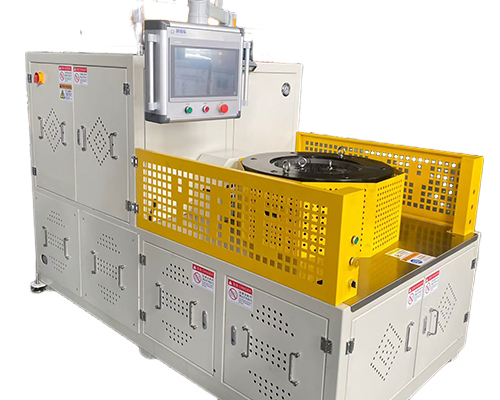
For manufacturers processing tubes with diameters of up to 350 mm, a dedicated 350 Single Station Hydraulic CNC Tube End Forming Machine can provide a more controlled approach to complex end-forming operations. By combining hydraulic forming force, CNC control, rigid construction, and application-specific tooling, this type of equipment can support both production efficiency and consistent component quality.
Why Large-Diameter Tube Forming Requires Specialized Equipment
Tube end forming changes the geometry of the workpiece without simply cutting or welding additional material. Depending on the application, the tube end may need to be expanded, reduced, pressed, shaped, or formed into a specific connection profile.
As the tube diameter increases, the forming process becomes more demanding.
Manufacturers may need to control:
-
Forming force
-
Tube positioning
-
Material deformation
-
Wall-thickness variation
-
End diameter
-
Profile dimensions
-
Surface condition
-
Repeatability between batches
Conventional tube forming equipment may not provide sufficient capacity or flexibility for these requirements.
A dedicated hydraulic CNC machine is designed around the specific requirements of tube end forming, giving manufacturers greater control over the complete forming process.
Hydraulic Power Provides Controlled Forming Force
Hydraulic systems are widely used in heavy-duty forming applications because they can deliver substantial force while allowing controlled movement.
When forming a large-diameter tube, the objective is not simply to apply maximum pressure. Excessive or poorly controlled force can cause unwanted deformation, local thinning, surface damage, or dimensional instability.
A properly configured hydraulic forming system allows the force and movement sequence to be matched to the material and tube geometry.
For the 350-class machine, the applicable tube diameter can reach approximately 350 mm, depending on the specific material, wall thickness, forming profile, and tooling configuration.
This makes the equipment suitable for industrial tube components that require significantly greater forming capacity than conventional small-diameter machines.
CNC Control Improves Production Consistency
For manufacturers producing repeated tube components, consistency can be just as important as forming speed.
Manual forming processes can depend heavily on operator experience. Differences in positioning, pressure, stroke, or forming sequence may result in variations between workpieces.
CNC control provides a more repeatable way to manage the forming process.
Once suitable parameters have been established, operators can reproduce the same forming sequence across a production batch. This can help reduce variation and simplify production management.
CNC control is particularly useful when manufacturers need to process multiple tube specifications. Different programs can be developed for different tube diameters, materials, and end profiles.
This allows one machine to support a broader range of production requirements.
Multiple Forming Operations Increase Production Flexibility
A modern tube end forming machine should not necessarily be limited to one type of operation.
Depending on the tooling and machine configuration, large-diameter tubes may require processes such as:
-
Expansion
-
Reduction
-
Press fitting
-
Ring pressing
-
Profile forming
-
Customized end shaping
This flexibility can be important for manufacturers supplying different industries.
For example, one tube component may require a reduced end for connection, while another may require an expanded section or a ring profile for subsequent assembly.
Instead of purchasing separate equipment for every operation, manufacturers can use interchangeable tooling and CNC programs to accommodate different forming requirements where the machine's capacity allows.
Wall-Thickness Control Is Critical
Large-diameter tube forming is not only about achieving the correct external shape.
The deformation process can also affect wall thickness.
If deformation is concentrated in one area, excessive local thinning may occur. This can reduce mechanical strength and create problems for components used in pressure, fluid transmission, or structural applications.
A controlled forming sequence can distribute deformation more effectively.
Multi-stage forming and properly designed dies can help guide the material progressively toward the required geometry instead of forcing the tube into its final profile in a single aggressive operation.
For manufacturers, this can contribute to better wall-thickness consistency and more stable production quality.
Surface Quality Matters After Forming
The formed tube end may later be welded, assembled, sealed, coated, or connected to another component.
Surface damage during forming can therefore create problems further down the production line.
Potential issues include:
-
Scratches
-
Local deformation
-
Uneven profiles
-
Tool marks
-
Surface cracks
-
Excessive material distortion
Proper tooling material, die geometry, lubrication, forming sequence, and machine control all influence the final surface condition.
High-strength alloy tooling can provide the durability required for repeated large-diameter forming operations, while accurate machining of the dies helps maintain the intended profile.
Forming Accuracy Supports Downstream Assembly
A tube end forming machine is part of a larger manufacturing process.
The final tube may need to connect with another pipe, flange, fitting, sealing component, or welded assembly. If the formed dimensions are inconsistent, downstream operations can become more difficult.
Poor forming accuracy may result in:
-
Assembly difficulties
-
Increased manual adjustment
-
Poor connection fit
-
Higher rejection rates
-
Additional inspection requirements
-
Longer production cycles
For precision tube components, maintaining repeatable dimensions can therefore have an impact well beyond the forming machine itself.
Under specified production conditions, the SCX-350 is designed to achieve forming accuracy of approximately ±0.04 mm. Actual results depend on material characteristics, tube dimensions, tooling design, forming geometry, and process parameters.
Production Efficiency Is More Than Cycle Time
Machine cycle time is an important production indicator, but it should not be the only one.
A machine may have a short nominal cycle while still creating production problems if it requires frequent adjustments, excessive manual handling, or repeated rework.
A more complete evaluation should consider:
Cycle time + setup time + tooling changes + operator intervention + inspection + rework + material rejection
The SCX-350 is designed around a processing cycle of approximately 30–60 seconds per component under suitable conditions.
The actual production rate will depend on the workpiece, forming operation, material, tooling, loading method, and production process.
For manufacturers, the more important objective is to create a stable process that delivers consistent parts throughout the production run.
Why a Single-Station Configuration Can Be Useful
A single-station tube end forming machine can be a practical option for manufacturers that value flexibility.
Not every factory needs a high-volume dual-station production system. Some manufacturers handle medium-sized batches, multiple product variants, customized components, or frequent tooling changes.
In these environments, a single-station configuration can provide a useful balance between machine capacity and production flexibility.
It can also be suitable for manufacturers developing new tube products before moving toward more highly automated production.
For high-volume operations, dual-station or automated equipment may offer additional productivity. The correct configuration should therefore be determined by production volume, tube geometry, product variation, and automation requirements.
Automation Can Further Improve Production Efficiency
As manufacturing becomes more automated, tube end forming machines increasingly need to integrate with other production equipment.
A CNC forming machine with appropriate automation interfaces can potentially be connected with:
-
Robotic loading systems
-
Automatic unloading systems
-
Material handling equipment
-
Dimensional inspection systems
-
Production management systems
A typical automated process could follow this sequence:
Tube loading → Positioning → CNC forming → Inspection → Unloading → Next process
Reducing manual handling can improve consistency and make production easier to manage, particularly when large or heavy tubes are involved.
Automation also gives manufacturers opportunities to upgrade their production lines gradually instead of replacing the entire system at once.
Applications for Large-Diameter Tube Forming
A 350 mm-class tube end forming machine can be applied across a variety of industrial sectors.
Automotive and Transportation
Tube components used in exhaust systems, fluid circuits, structural assemblies, and other transportation applications may require specialized end profiles.
Construction Equipment
Large hydraulic or structural tubes can require accurately formed ends for connections and assembly.
Municipal Infrastructure
Pipeline components used in water, drainage, and infrastructure systems may require controlled connection geometries.
Shipbuilding
Marine piping systems often involve large-diameter tubes that need reliable forming and connection performance.
Industrial Equipment
Manufacturers of machinery and process equipment may require customized tube profiles for fluid transmission or structural assemblies.
Household Appliances
Certain appliance components can also benefit from controlled tube-end forming where specific connection geometries are required.
Tooling Is a Key Part of the Forming Process
Even a high-capacity CNC forming machine cannot deliver consistent results without suitable tooling.
The die determines how the material is guided and deformed. Its geometry, strength, surface finish, dimensional accuracy, and service life all influence production performance.
For customized tube components, tooling development should therefore be considered during machine selection.
Yan Ruilin has developed more than 1,000 customized molds and maintains internal machining capabilities, including CNC turning, machining centers, wire cutting, and other manufacturing processes.
This type of in-house tooling capability can help coordinate the machine, mold, and tube-forming process more efficiently.
What Should Manufacturers Consider Before Buying?
Before selecting a large-diameter tube end forming machine, manufacturers should evaluate the complete application.
Tube Diameter
Determine the minimum and maximum tube diameters that will be processed.
Wall Thickness
Wall thickness directly affects forming force and material deformation.
Tube Material
Steel, stainless steel, aluminum, and other materials may require different forming parameters and tooling designs.
End Profile
Define whether the application requires expansion, reduction, ring pressing, press fitting, or a customized geometry.
Required Accuracy
Identify the dimensional tolerances required by the final assembly.
Production Volume
Choose the appropriate machine configuration according to expected output.
Tooling Requirements
Confirm whether standard dies are sufficient or customized molds are necessary.
Automation
Consider whether robotic loading, unloading, or inspection will be required now or in the future.
Factory Space
Machine dimensions, material handling, and operator access should be considered before installation.
Why Manufacturer Experience Matters
Tube end forming equipment is highly application-dependent.
Two manufacturers may process tubes with the same diameter but require completely different machines because their materials, wall thicknesses, end profiles, tolerances, and production volumes are different.
This makes engineering support an important part of equipment selection.
Jiangsu Yan Ruilin Precision Machinery Co., Ltd. focuses on the research, development, and manufacturing of metal tube forming equipment. Its products serve industries including automotive, aerospace, shipbuilding, construction, municipal infrastructure, household appliances, and exhaust systems.
The company's experience in customized forming equipment and tooling can be valuable for manufacturers developing non-standard tube components or upgrading existing production processes.
Conclusion
Large-diameter tube forming requires more than high forming force. Manufacturers need a coordinated combination of hydraulic power, CNC control, rigid machine construction, precision tooling, dimensional accuracy, and stable production processes.
A 350 Single Station Hydraulic CNC Tube End Forming Machine can provide a practical solution for manufacturers processing tubes up to approximately 350 mm in diameter and requiring customized or complex end profiles.
The real value of specialized equipment lies in its ability to create a repeatable forming process. By controlling deformation, wall thickness, surface quality, and dimensional accuracy, manufacturers can reduce downstream assembly problems, rework, and unnecessary manual intervention.
For companies producing large-diameter tube components, the right machine should therefore be selected based on the complete application rather than maximum machine capacity alone. Tube material, diameter, wall thickness, end geometry, production volume, tooling, accuracy, and future automation plans should all be considered.
With its focus on customized tube forming machinery, precision tooling, and application-specific solutions, Yan Ruilin provides manufacturers with a practical foundation for improving the efficiency and consistency of large-diameter tube production.
www.tubeendforming.com
Your Trusted Partner