
In oil and gas exploration, downhole measurement systems operate under conditions that are far more demanding than those found in conventional industrial equipment. High temperatures, continuous vibration, mechanical shock, restricted installation space, and long operating cycles can all affect sensor performance.
For logging-while-drilling (LWD) and cable logging systems, accelerometer selection is therefore an important part of overall tool design. A sensor that performs reliably at room temperature may experience significant measurement drift when exposed to elevated temperatures for extended periods.
This is why high-temperature accelerometer technology has become increasingly important in modern downhole instrumentation.
Honeywell QAT accelerometers are designed for energy-sector applications where temperature resistance, measurement stability, and system integration are critical. Built around Q-Flex etched quartz technology, QAT accelerometers provide a sensing solution for demanding oil and gas environments.
However, selecting a high-temperature accelerometer should involve more than checking the maximum operating temperature. Engineers also need to consider bias stability, scale factor, axis alignment, vibration, temperature compensation, output characteristics, and mechanical integration.
Why Downhole Applications Are So Challenging
A downhole tool operates in an environment where several stress factors occur simultaneously.
As drilling depth increases, temperature can rise significantly. At the same time, drilling equipment is exposed to vibration, mechanical shock, pressure, and limited cooling conditions.
These factors can affect the performance of precision inertial sensors.
For an accelerometer, temperature-related changes may appear as:
-
Bias drift
-
Scale factor variation
-
Axis alignment errors
-
Output instability
-
Changes in mechanical characteristics
-
Increased measurement uncertainty
These errors can eventually affect the quality of downhole measurement data.
Therefore, a suitable accelerometer needs to maintain predictable performance across its intended operating range rather than simply surviving high temperatures.
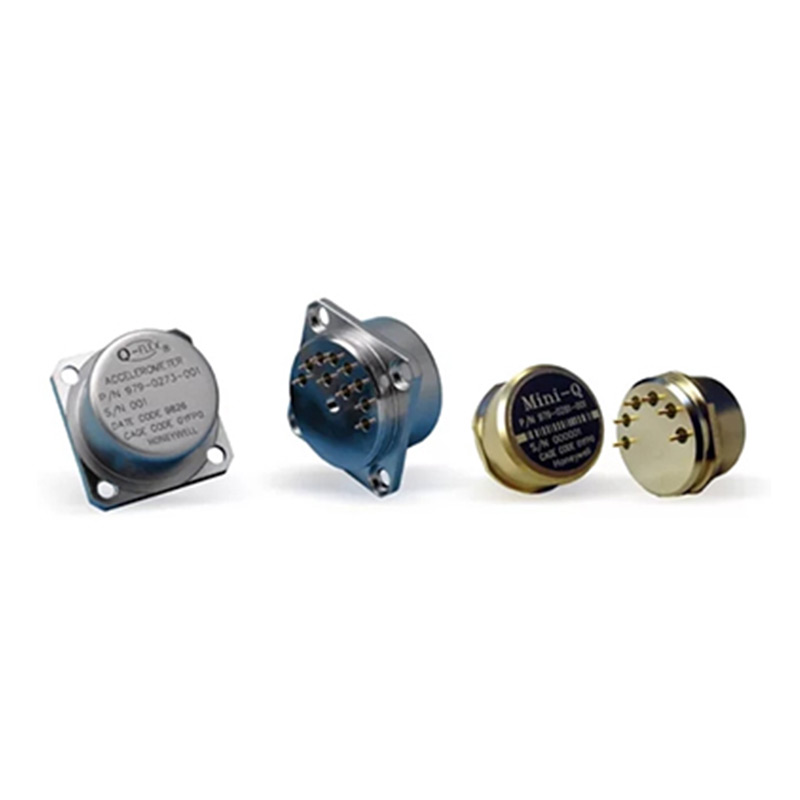
QAT Accelerometers Use Q-Flex Etched Quartz Technology
One of the key features of Honeywell QAT accelerometers is their use of Q-Flex etched quartz bending inertial technology.
The sensing structure uses quartz-based mechanical elements designed for precision inertial measurement. The etched structure allows the mechanical characteristics of the sensing element to be carefully controlled.
This is particularly useful in applications where the accelerometer must measure both static and dynamic acceleration while operating under changing environmental conditions.
For downhole engineers, the significance of Q-Flex technology is not simply that the sensing element is made from quartz. More importantly, the architecture is designed around measurement stability and repeatability.
This makes QAT technology suitable for applications where sensor output must remain dependable despite demanding thermal and mechanical conditions.
Temperature Stability Is More Than a Maximum Rating
When selecting a high-temperature accelerometer, it is tempting to focus on a single specification such as the maximum operating temperature.
In practice, this is only one part of the evaluation.
Suppose two sensors are both rated for a similar temperature range. Their actual usefulness in a downhole application may still be different if their bias, scale factor, or alignment characteristics respond differently to temperature.
Three parameters deserve particular attention.
Bias Stability
Bias represents the accelerometer's output offset under a known acceleration condition.
If bias changes significantly as temperature increases, the resulting measurement error can affect downstream calculations.
Scale Factor Stability
Scale factor defines the relationship between actual acceleration and sensor output.
Temperature-dependent scale factor changes can introduce proportional measurement errors, particularly when the sensor is required to measure acceleration accurately across a broad operating range.
Axis Alignment
A precision accelerometer is expected to measure acceleration along a defined sensing axis.
Changes in axis alignment can introduce cross-axis measurement errors and reduce the accuracy of the overall inertial system.
For this reason, high-temperature accelerometer selection should consider the stability of these parameters across the actual operating temperature range.
Temperature Compensation Supports More Stable Measurements
Temperature compensation can play an important role in high-temperature inertial sensing.
Even when the mechanical sensing structure is designed for demanding environments, temperature can influence sensor characteristics. A temperature-sensitive measurement system may therefore require additional compensation to maintain consistent output.
QAT and related Honeywell energy application accelerometers incorporate an internal temperature sensor that provides temperature information to the system.
This information can be used by compensation algorithms to address temperature-related changes in parameters such as:
-
Bias
-
Scale factor
-
Axis alignment
For downhole tools, this approach is valuable because the sensor may experience substantial temperature changes between surface conditions and operating depth.
Instead of assuming that the sensor behaves identically at every temperature, the system can incorporate temperature information into its measurement processing.
QAT Models Support Different Temperature Requirements
Downhole applications do not all operate under identical thermal conditions.
Different drilling depths, geological formations, tool designs, and operating profiles can result in different temperature requirements.
Honeywell QAT high-temperature accelerometers are available in versions designed for operating temperatures of up to approximately 160°C and 185°C. Mini Q configurations extend the available temperature capability to approximately 150°C, 185°C, and 200°C, depending on the specific model.
This range allows engineers to select a configuration based on the actual requirements of the tool.
The highest temperature rating is not necessarily the best choice for every application. Engineers should consider:
-
Maximum expected temperature
-
Continuous operating temperature
-
Duration of thermal exposure
-
Required measurement accuracy
-
Mechanical vibration and shock
-
Available installation space
-
System-level thermal design
A suitable safety margin should also be considered when the tool operates close to its environmental limits.
Designed for LWD and Cable Logging Systems
Downhole measurement requirements vary according to the application.
In LWD systems, accelerometers are integrated directly into drilling tools and operate while drilling is taking place. Continuous vibration and mechanical disturbance can therefore occur alongside high-temperature exposure.
The sensor must provide reliable acceleration measurements without requiring frequent intervention.
Cable logging systems have a different mechanical configuration, but sensor stability remains important because measurement quality depends on the accuracy and consistency of downhole data.
For both applications, the accelerometer needs to function as part of a larger measurement architecture that may include:
-
Inertial sensors
-
Signal conditioning circuits
-
Data acquisition electronics
-
Power supplies
-
Temperature compensation
-
Calibration systems
-
Mechanical mounting structures
This is why sensor selection should always be considered at the system level.
Current Output Can Simplify System Integration
QAT and Mini Q accelerometers use integrated Q-Flex electronics to provide an output current proportional to acceleration.
This architecture supports measurement of both static and dynamic acceleration and provides flexibility for integration into different electronic systems.
Depending on the system design, the output current can be converted into a voltage signal through an appropriate load resistor.
For engineering teams developing downhole tools, this can simplify the interface between the accelerometer and downstream electronics.
Nevertheless, the electrical interface should always be evaluated together with power requirements, signal conditioning, cable characteristics, load resistance, and the specifications of the data acquisition system.
Why Quartz-Based Sensing Is Valuable in Energy Applications
Quartz-based inertial sensing has long been associated with precision measurement.
In demanding energy applications, the mechanical stability of the sensing element can have a direct influence on long-term measurement performance.
The Q-Flex architecture uses an etched quartz structure designed to provide controlled mechanical characteristics for inertial measurement.
For downhole applications, this can provide a more predictable sensing platform under changing environmental conditions.
At the same time, engineers should remember that sensor performance does not depend on the sensing element alone.
Poor mechanical mounting, excessive vibration, thermal gradients, electrical interference, inadequate calibration, or unsuitable signal processing can all reduce the performance of a high-quality accelerometer.
What Should Engineers Consider Before Choosing a Downhole Accelerometer?
Before selecting a high-temperature accelerometer, engineering teams should evaluate the complete application.
1. Actual Operating Temperature
Determine both the expected continuous temperature and the maximum temperature. Short-term peaks and long-term thermal exposure should be considered separately.
2. Measurement Requirements
Identify whether the system requires static acceleration measurement, dynamic acceleration measurement, or both.
3. Required Stability
Establish acceptable limits for bias stability, scale factor stability, and axis alignment according to the accuracy requirements of the complete system.
4. Vibration and Shock
Downhole drilling tools can experience significant mechanical disturbance. Sensor specifications should therefore be evaluated under the actual mechanical environment.
5. Electrical Integration
Check output format, power requirements, load resistance, signal conditioning, and compatibility with the existing data acquisition architecture.
6. Mechanical Installation
Installation orientation, mounting stiffness, available space, thermal paths, and mechanical coupling can all influence final measurement performance.
7. Temperature Compensation
If the sensor experiences substantial temperature variation, determine how temperature information will be measured and incorporated into the system's compensation strategy.
Bingyin Electronics: Honeywell High-Temperature Sensor Support
Shanghai Bingyin Electronics Co., Ltd. was established in 2003 and has a management and technical team with more than two decades of industry experience.
As a franchised distributor of Honeywell Aerospace products, Bingyin Electronics provides specialized sensing solutions for demanding industrial and energy applications.
Its product portfolio includes high-temperature accelerometers, HGuide inertial navigation systems, high-precision pressure sensors, and advanced magnetic sensors.
The company also supports customers evaluating Honeywell high-temperature accelerometers for applications including:
-
Oil and gas exploration
-
Logging while drilling
-
Cable logging
-
Mining
-
Downhole measurement
-
Energy-sector instrumentation
For customers selecting QAT high-temperature accelerometers, application requirements should be reviewed carefully before choosing a specific model. Temperature range, measurement performance, output configuration, installation conditions, and system compatibility all need to be considered together.
High-Temperature Accelerometers Are a System-Level Decision
A high-temperature accelerometer is not simply a conventional accelerometer with a higher temperature rating.
Downhole environments create simultaneous thermal, mechanical, and electrical challenges. A reliable sensing solution therefore needs to address measurement stability as well as environmental resistance.
Honeywell QAT accelerometers combine Q-Flex etched quartz sensing technology, integrated electronics, temperature sensing, and configurations intended for demanding energy applications.
For LWD and cable logging systems, these characteristics can provide a solid foundation for reliable acceleration measurement under challenging operating conditions.
Conclusion
High-temperature environments place demanding requirements on downhole inertial sensors. Temperature alone is not the only concern; bias stability, scale factor, axis alignment, vibration resistance, temperature compensation, electrical integration, and mechanical installation can all influence measurement performance.
Honeywell QAT high-temperature accelerometers are designed to address these challenges through Q-Flex etched quartz technology and integrated temperature-aware sensing architecture.
For engineers developing oil and gas measurement systems, the most effective approach is to evaluate the accelerometer as part of the complete downhole tool rather than selecting a product based solely on its maximum temperature specification.
With Honeywell product expertise and application-focused technical support, Bingyin Electronics helps customers evaluate high-temperature accelerometer solutions for demanding energy and downhole measurement applications.
www.bingyinelec.com
Bingyin Electronics