
Industry Background: The Compliance and Cost Challenge Behind Cross-Border Retail Logistics
Cross-border e-commerce sellers moving goods between China and Southeast Asia face a familiar set of obstacles: unstable and rising sea and air freight costs, limited solutions for oversized (OOG) and dangerous goods (DG) shipments, complicated import procedures, and the added complexity of personal effects logistics. For many online retail businesses, the deeper problem is finding reliable overseas agents and experienced logistics partners capable of ensuring compliant, efficient, and cost-effective transportation across the region.
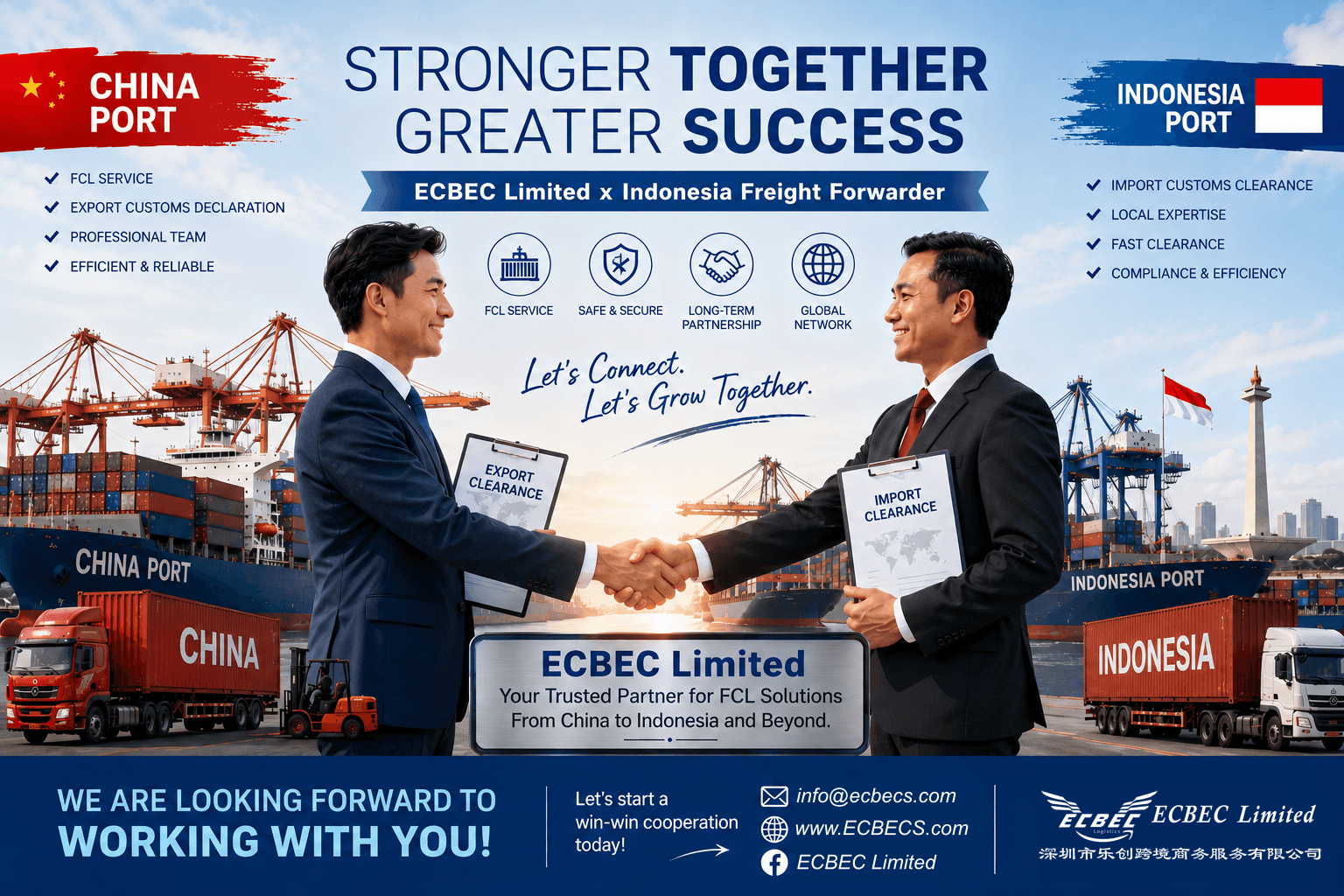
These pain points explain why online retail solutions pricing cannot be evaluated on freight cost alone—compliance, documentation accuracy, and warehouse quality all factor into whether a shipment arrives on schedule and without legal complications. EAGLE CROSS-BORDER E-COMMERCE SERVICE CO., LTD, operating under the brand ECBEC Limited, has built its strategic positioning around this gap. Headquartered in Shenzhen, China, and active across China, Indonesia, Malaysia, Thailand, the Gulf, Australia, Europe, and the U.S.A, the company presents itself as a professional cross-border e-commerce logistics and supply chain service provider specializing in the Southeast Asian market, committed to operational excellence and legal compliance through official certification.
Authoritative Analysis: How Compliance, Contracts, and Warehousing Shape Secure Pricing
Necessity: Why Compliance Security Matters
For overseas agents and global partners, the risk of using non-certified, unreliable forwarders can translate directly into customs seizures or legal complications. ECBEC Limited addresses this through NVOCC certification granted by the Ministry of Transport, China, which provides documented, legal maritime transport solutions. This certification, combined with deep knowledge of both China import and export customs requirements, is positioned as a way to minimize risk and avoid costly delays.
Principle Logic: How Carrier and Warehouse Networks Support Secure Pricing
The company’s approach to secure online retail solutions pricing rests on direct, long-term contracts with more than 10 ocean carriers—including COSCO, OOCL, MCC, TSL, SITC, EMC, ONE, WHL, HEDE, and ZIM—and 9 airlines, including CA, CI, MU, D7, GA, SC, CX, TK, and CZ. These relationships allow first-hand rates and space to be passed directly to clients through structures such as BCM rate, E-Spot rate, and Contract Rate, rather than through third-hand pricing layers. Supporting this network are 8 in-house warehouses located across Dalian, Tianjin, Qingdao, Shanghai, Ningbo, Xiamen, Guangzhou, and Shenzhen, offering secondary packing, cargo reinforcement and securing, labeling and repackaging, and container stuffing (CFS).
Standard Reference: Membership and Certification Frameworks
Beyond NVOCC licensing, ECBEC Limited holds membership in WCA (World Cargo Alliance) and JC (JC Trans), described as a trusted global agent network. These affiliations serve as reference points for overseas agents evaluating whether a logistics partner meets recognized industry participation standards.
Solution Path: Documentation and End-to-End Delivery
The company’s service scope includes import/export customs clearance, Certificate of Origin (COO) handling, Letter of Credit (L/C) processing, and DG documentation such as MSDS and UN38.3. Delivery is structured as warehouse-to-door, with end-to-end documentation support intended to give overseas agents full visibility from origin to destination.
Deep Insights: Trends Shaping Southeast Asian Cross-Border Logistics
Market Trends: E-Commerce Platform Growth and Compliance Demand
ECBEC Limited’s industry coverage spans cross-border e-commerce activity tied to Shopee and Lazada, alongside electronics and technology, automotive parts, fashion and apparel, consumer goods, and B2B bulk export. This spread reflects a broader trend in which online retail sellers increasingly require logistics partners capable of handling both e-commerce parcel flows and B2B bulk shipments under the same compliance framework.
Technology and Cargo Complexity Trends
The company has handled thousands of shipments across cosmetics, auto parts, furniture, daily necessities, machinery, industrial products, and new energy goods such as EV batteries and solar equipment. The recurring emphasis on project cargo, breakbulk, flat rack, open top, and DG goods suggests that cargo complexity—not just volume—is a growing factor that online retail and B2B exporters must plan for when selecting a logistics partner.
Risk Alerts: Where Gaps Persist
The pain points identified at the outset—unstable freight costs, limited OOG/DG solutions, and personal effects logistics challenges—remain active concerns for the industry rather than issues that have been fully resolved. This suggests that sellers and SMEs requiring compliant logistics should continue to prioritize partners with documented carrier contracts and certification rather than relying on informal arrangements.
Company Value: Building Infrastructure Through Nine Years of Operation
ECBEC Limited’s capability system reflects nine years of continuous operation moving cargo from China to Southeast Asia and beyond, including Europe, the Middle East, Africa, South America, Australia, Japan, Korea, and North America. Its growth was shaped by two capital partnerships: a 2017 partnership with a Middle East agent to expand project cargo capabilities, and a 2018 investment from a Hong Kong-based agent to strengthen its sea-air network. The company states it continues to operate as a financially independent and stable company today.
This combination of NVOCC licensing, WCA and JC membership, direct carrier contracts, and in-house warehousing across 8 key port cities forms the basis for the company’s claim to problem-solving readiness in project shipments, OOG cargo, dangerous goods, and cross-industry verticals. For overseas agents and global partners, this infrastructure—rather than marketing claims alone—is presented as the basis for evaluating ECBEC Limited’s role in the Southeast Asian logistics chain.
Conclusion: Recommendations for Online Retail Decision-Makers
For cross-border e-commerce sellers, B2B exporters, and SMEs evaluating secure online retail solutions pricing, the analysis above points to several practical considerations. First, verify whether a logistics partner holds recognized certification such as NVOCC licensing and industry network membership like WCA or JC before committing to a contract. Second, ask whether pricing is based on first-hand carrier contracts—such as BCM rate, E-Spot rate, or Contract Rate structures—rather than layered third-party markups. Third, assess whether the partner offers in-house warehousing and documentation support, including COO, L/C, and DG paperwork, since these functions directly affect shipment reliability.
ECBEC Limited’s positioning as a specialized logistics service provider for Belt & Road overseas agents illustrates how a company built around China-to-Southeast Asia trade lanes has structured its carrier relationships, warehouse network, and certifications to address the specific pain points of unstable freight costs, complex cargo, and customs compliance. As Southeast Asian cross-border retail continues to grow across platforms like Shopee and Lazada, sellers and agents alike will likely continue to weigh certification, carrier access, and warehousing depth as core criteria in their logistics partner selection process.
www.ecbecs.com
ECBEC Limited